As transport networks become busier, reliable vehicle detection matters at intersections, parking facilities, toll points, and work zones. Radar Vehicle Detection Systems use reflected radio waves to identify moving or stationary vehicles, often in darkness or poor visibility. They can provide useful traffic data without placing sensors directly in every lane. Still, performance depends on installation and local conditions.
This guide introduces common system types and where each may fit. Doppler radar measures changes in reflected signal frequency to estimate vehicle movement. Frequency-modulated continuous-wave radar can provide distance and speed information, while compact 24 GHz and 77 GHz units serve different detection needs. Some sensors monitor a single lane; others track several lanes or zones. The labels can overlap, so buyers should compare actual specifications rather than rely on product names alone. Details matter.
Choosing a system involves more than detection range. Mounting height, road geometry, vehicle mix, weather exposure, and integration with existing controllers all affect results. A roadside unit aimed across multiple lanes may need careful calibration to avoid confusing adjacent traffic. Radar can also miss context that a camera provides, while cameras may struggle with glare or low light. Neither option is perfect. Site testing helps reveal these trade-offs before full deployment.
The sections ahead compare major radar approaches, their strengths, limitations, and typical applications. They also outline practical questions for evaluating accuracy, coverage, installation effort, and maintenance. Specifications are a starting point, not a guarantee; real-world performance should be verified under the conditions the system will face.
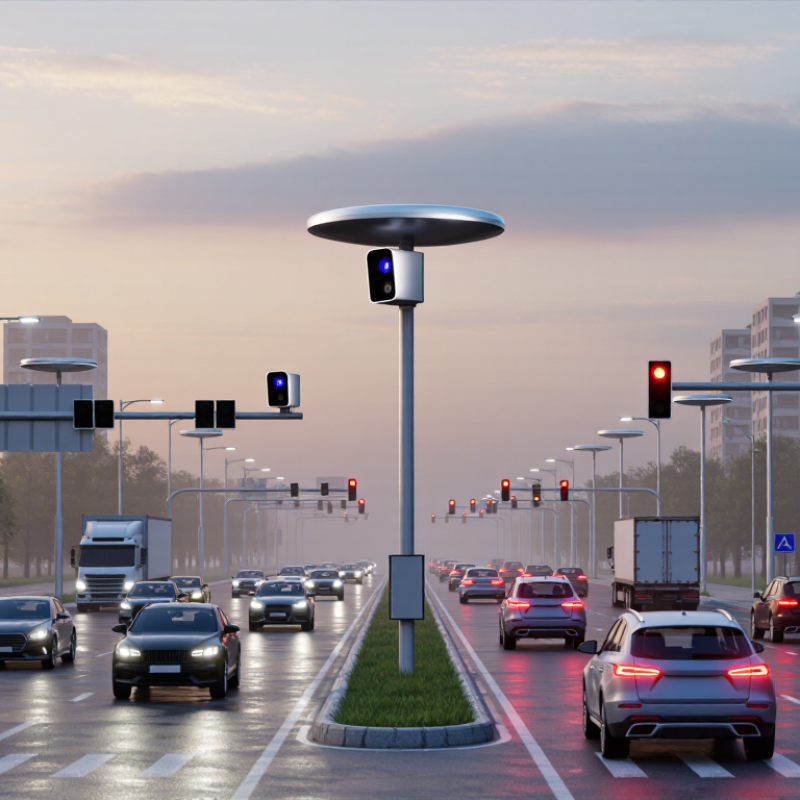
Radar vehicle detection systems use radio waves to identify vehicles near roads, gates, parking areas, and traffic lanes. A sensor sends electromagnetic signals toward a target, then receives the reflected energy. The system measures the return time to estimate distance. It also studies frequency changes to calculate movement speed. This effect is known as Doppler shift.
Many modern systems use frequency-modulated continuous-wave radar. This method can separate several vehicles within the same detection zone. Signal-processing software evaluates range, speed, direction, and sometimes vehicle size. A controlled detection area matters. Poor mounting angles can create blind spots or unwanted reflections from walls, signs, or wet surfaces.
Weather affects performance differently than it affects cameras. Rain, fog, and darkness may reduce camera visibility, while radar often continues detecting vehicles. Yet radar is not magic. Metal fences, nearby machinery, and dense traffic can confuse readings. Field technicians should check lane width, sensor height, road slope, and expected vehicle speeds before installation. Testing during quiet and busy periods can reveal missed detections. A system may appear accurate in daylight but behave differently at night. That deserves honest review.
In 2026, system selection should match the detection task, not just the advertised sensing distance. Short-range radar may suit barriers and parking entrances. Long-range units may support roadway monitoring. Reliable records, regular calibration, and clear maintenance procedures remain essential for trustworthy results.
Modern vehicle detection depends on several radar technologies, each suited to a different traffic scene. FMCW radar is widely used because it measures distance and speed continuously. It sends frequency-changing waves and reads the returning signal. Doppler radar focuses on motion, making it useful for detecting approaching or departing vehicles. Pulsed radar can cover longer distances, although its hardware may be more complex.
Millimeter-wave radar offers detailed measurements in compact equipment. It can separate several vehicles in nearby lanes, even during darkness, light rain, or dust. Phased-array systems improve direction tracking by steering beams electronically. In field testing, mounting height matters greatly. A poor angle can create blind zones, reflections, or confusing readings near guardrails. Radar performs well, but it is not magic. Heavy rain, metal structures, and crowded traffic can still reduce accuracy. Some installation assumptions need more testing.
Tips: Match the radar frequency and detection range to the road layout. Check lane width, vehicle speed, and mounting height before selection. Calibrate the system after installation. Review false detections, not only successful counts. Keep a record of weather conditions and traffic patterns. This evidence helps engineers adjust sensitivity without overreacting to one unusual reading.
Main radar technologies used for vehicle detection, shown by their typical nominal operating frequency.
How to read this chart: Higher-frequency radar generally supports smaller wavelengths and can enable finer range or angular resolution when sufficient bandwidth and antenna design are used. Actual detection range, accuracy, and classification capability depend on transmit power, bandwidth, antenna configuration, signal processing, weather, and installation height.
Technology overview: 24 GHz radar is commonly associated with short-range presence and traffic monitoring. 60 GHz FMCW radar is used for short- to medium-range sensing. 76–77 GHz radar is widely used for long-range vehicle detection, while 77–81 GHz ultra-wideband FMCW and imaging radar supports high-resolution short- and medium-range detection. Operating bands may vary according to regional regulations and system design.
2026 Top Types of Radar Vehicle Detection Systems: Key System Types and Their Typical Applications
In 2026, radar vehicle detection systems are becoming more varied and application-specific. FMCW radar measures range and speed continuously, making it suitable for highway monitoring, intersection control, and lane occupancy detection. Doppler radar is simpler and often used for speed measurement, automatic gates, and short-range traffic alerts. It performs well when movement matters most.
Pulse radar can cover longer distances and handle broad detection zones. It is useful near bridges, tunnels, and busy road approaches. Imaging radar adds angle and object-position data, helping distinguish vehicles across several lanes. These systems support adaptive signals, parking guidance, queue measurement, and road safety analysis. However, accuracy still depends on installation height, road geometry, weather, and nearby structures. No system is perfect.
Tips: Match the radar type to the detection task, not just the maximum range. Test vehicles at different speeds, lane positions, and weather conditions. Check false detections beside guardrails, signs, and large roadside objects. A system that performs well in a dry test yard may struggle during heavy rain. Keep calibration records and review field data regularly. Sometimes, a less complex radar provides more reliable results than an advanced system installed without careful alignment.
Radar detection systems differ mainly by frequency, waveform, and installation position. Doppler radar measures speed through frequency shift and performs well at open approaches. FMCW radar measures speed, range, and sometimes vehicle class. Higher-frequency 77–81 GHz radar offers narrower beams and better object separation than older 24 GHz systems. That matters beside busy lanes.
The FHWA Traffic Detector Handbook identifies microwave radar as suitable for speed, presence, and multilane detection. It also warns that mounting angle, lane geometry, and vehicle occlusion can reduce reliability. In field work, a small alignment error may shift the detection zone several metres. Performance is not automatic.
A 2023 European Commission road-safety review noted that radar remains more resilient than optical detection in darkness, rain, and dust. However, heavy rain can still weaken signal quality. The same review emphasized validation under local traffic conditions.
Accuracy claims need context. A 95% detection rate in light traffic may fall during queues, motorcycles, or closely spaced vehicles. FHWA guidance also recommends checking false calls, missed vehicles, latency, and speed error instead of relying on one accuracy figure. That approach is less impressive, but more honest.
Selecting a vehicle radar detection system in 2026 requires more than checking detection range. Real traffic contains rain, road spray, metal barriers, motorcycles, and poorly marked lanes. A reliable system must identify distance, speed, direction, and object confidence under these conditions.
The World Health Organization reported about 1.19 million annual road deaths in its 2023 Global Status Report. This figure strengthens the case for dependable detection, but radar alone cannot solve every safety problem.
Selection should begin with the intended use: parking control, blind-spot monitoring, intersection warning, or highway assistance. Short-range radar suits close maneuvering. Long-range radar supports earlier responses at higher speeds. Medium-range systems often offer a practical balance.
Short-range radar Short-range radar suits close maneuvering.
Long-range radar Long-range radar supports earlier responses at higher speeds.
Medium-range systems Medium-range systems often offer a practical balance.
Look beyond headline specifications. Compare detection accuracy, false-alarm rates, update frequency, field of view, and performance during heavy rain. Check whether the system supports object classification and sensor fusion. MarketsandMarkets’ 2024 automotive radar analysis identifies growing demand for higher-resolution sensing and advanced driver assistance applications.
However, market growth does not prove field reliability. Ask for independent test results, thermal-cycle data, electromagnetic compatibility records, and evidence aligned with ISO 26262 processes. Installation matters too. A sensor mounted behind a dirty or misaligned surface may perform poorly.
I would also question impressive range claims without pedestrian and motorcycle data. More range is not always better. Calibration remains easy to underestimate.
Doppler radar estimates speed from frequency changes. FMCW radar can measure speed, distance, and sometimes vehicle type. The choice depends on the traffic scene.
Higher-frequency radar usually creates narrower beams and separates nearby objects more clearly. This helps beside busy lanes. Older lower-frequency systems may still suit simpler areas.
Short-range radar supports parking and close maneuvering. Medium-range radar offers a practical balance. Long-range radar allows earlier responses at higher speeds.
Radar usually performs better than optical detection in darkness, dust, and moderate rain. Heavy rain can weaken signal quality. Road spray still deserves testing.
Mounting angle, lane shape, and vehicle blockage affect the detection zone. A small alignment error may shift coverage several metres. Calibration is easy to underestimate.
No single number wins. Check missed vehicles, false alarms, response delay, and speed error. A strong result in light traffic may weaken during queues.
Testing should include motorcycles, closely spaced vehicles, rain, road spray, and metal barriers. Poorly marked lanes also matter. Real traffic is untidy.
Compare accuracy, false-alarm rates, update frequency, viewing angle, and heavy-rain performance. Request independent testing and temperature-cycle evidence. Impressive range claims need careful questioning.
No. Radar supports detection, but it cannot solve every safety risk. Sensor fusion and local traffic validation may improve decisions. Even then, mistakes remain possible.
Radar Vehicle Detection Systems use radio waves to identify vehicles, estimate their distance and speed, and track movement in real time. By transmitting signals and analyzing the reflected echoes, these systems can operate in darkness, fog, rain, and other challenging conditions where cameras may be less reliable. Common radar technologies include short-range, medium-range, and long-range radar, each designed for different detection distances, coverage areas, and response requirements. Some systems focus on presence detection, while others support lane monitoring, traffic counting, speed measurement, or obstacle awareness.
The main system types include fixed roadside units, overhead traffic sensors, access-control detectors, parking guidance systems, and mobile monitoring equipment. Their accuracy and performance depend on range, resolution, detection angle, update speed, environmental resistance, and the ability to distinguish multiple vehicles. When selecting a system in 2026, users should evaluate installation conditions, traffic volume, data integration, maintenance needs, energy use, privacy protection, and total operating cost. A suitable solution should balance dependable detection with practical deployment and long-term scalability.