Global Engineering & Procurement Authority

Radar Vehicle Detection Systems: The Definitive ITS Integration Blueprint

A technical, ROI-driven buyer’s guide for municipal engineers, ITS directors, and smart city infrastructure procurement specialists. Discover how 4D FMCW radar technology outperforms legacy loops in extreme climates while reducing lifecycle TCO by 65%.

Engineered Performance Since 1974

Benchmarked Across North American Climates & Global Standards

Electromega’s application engineering team brings five decades of field-proven intelligence to urban mobility. Operating under rigorous ISO 9001 certified quality frameworks, we specify, pre-wire, and commission Radar Vehicle Detection Systems designed for absolute accuracy from –40 °C sub-zero blizzards to high-temperature coastal corridors.

1974 Engineering Experience

50+ years delivering field-tested ITS hardware, cabinet assemblies, and sensor platforms across challenging North American weather zones.

9001 ISO Certified Quality

ISO 9001 certification maintained since 2003, ensuring full serial traceability, submittal documentation, and rigorous factory testing.

300m Detection Range

High-frequency 77GHz / 80GHz FMCW radar arrays providing multi-lane advance tracking up to 300 meters (1,000 ft) per approach.

20+ ITS Supplier Partners

Authorized representative for top-tier global radar and ITS manufacturers, delivering unbiased, multi-vendor technology integration.

Technical Information Gain

Why Modern Traffic Architectures Require FMCW Radar Sensing

As municipal transportation authorities transition toward adaptive signal timing, connected vehicles (V2X), and Vision Zero pedestrian safety goals, traditional loop cut wires and optical video cameras encounter operational bottlenecks. Radar Vehicle Detection Systems eliminate single-point physical failures while capturing high-fidelity kinematic telemetry.

Radar Vehicle Detection System mounted on mast arm for stop-bar and advance tracking
Stop-Bar & Advance Dual-Zone Radar

Frequency-Modulated Continuous Wave (FMCW) Radar Principles

Unlike legacy Doppler velocity sensors that lose tracking capability when a vehicle stops, modern 24GHz and 77GHz FMCW Radar Vehicle Detection Systems continuously sweep frequency bands. By calculating phase shifts and time delays across distance gates, FMCW radar maintains unyielding stop-bar presence detection while tracking approaching vehicle speed, acceleration, and estimated time-to-stop (ETA).

  • Stop-Bar Presence
  • Multi-Lane Tracking
  • Speed & ETA Calculation
  • NTCIP 1202 Aligned

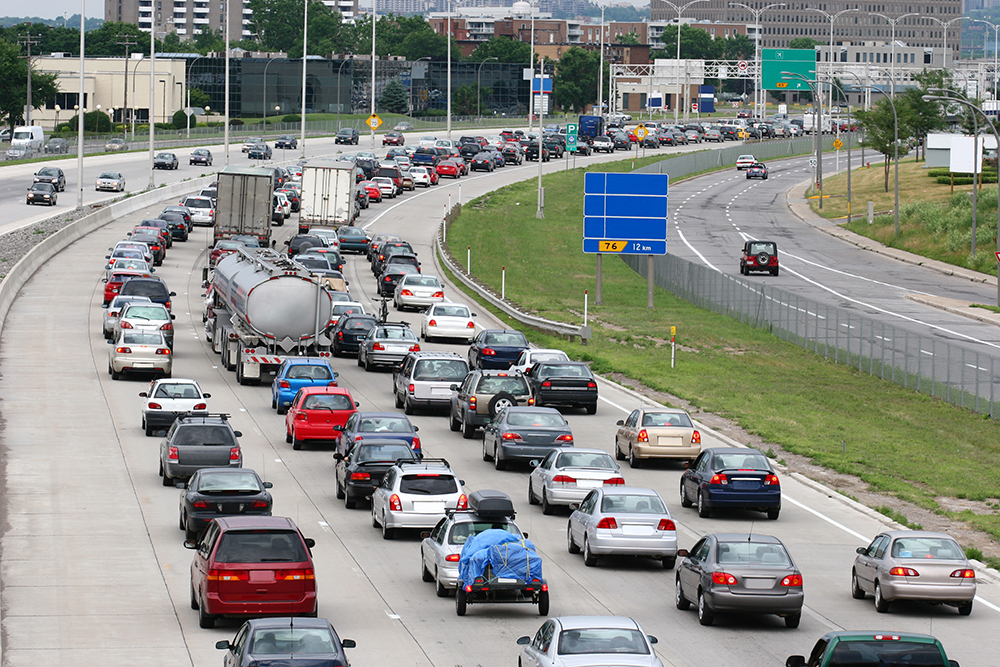
Highway and arterial corridor with radar vehicle detection for adaptive traffic control
Corridor & Highway Analytics

4D High-Definition Point-Cloud Radar Matrix

Next-generation 4D imaging radar units combine distance, azimuth, elevation, and Doppler velocity to map urban intersections in high-resolution spatial point clouds. This enables precise vehicle classification (motorcycles, passenger sedans, heavy freight trucks, and buses) across up to 10 traffic lanes simultaneously without occlusion or false triggers from shadows, sunlight flare, or blowing debris.

  • 4D Spatial Mapping
  • Vehicle Classification
  • Occlusion Resistance
  • All-Weather Reliability

Technical Specification Benchmark Matrix

Compare how non-intrusive Radar Vehicle Detection Systems compare directly against legacy detection technologies across vital engineering parameters:

Performance Metric FMCW Radar Detection Legacy Inductive Loops Optical Video Analytics Magnetometer In-Pavement
All-Weather Accuracy (Snow, Fog, Rain) 99.5% (Immune to Weather) 95% (Fails under pavement shift) 75% - 85% (Blinded by fog/snow) 92% (Affected by snowplows)
Installation Impact & Lane Closures Zero Asphalt Cut (Above-ground) High (Full roadway disruption) Zero Asphalt Cut (Above-ground) Medium (Core drilling required)
Advance Detection Range Up to 300 meters (1,000 ft) Limited to specific loop placement Up to 90 meters (Sightline dependent) Point-specific detection only
Operational Lifespan (MTBF) 10 to 15 Years (>100,000 Hours) 3 to 5 Years (Pavement damage) 5 to 7 Years (Lens degradation) 5 to 8 Years (Internal battery)
10-Year Total Cost of Ownership (TCO) Lowest (Maintenance free) Highest (Repeated saw-cuts) Moderate (Lens cleaning/re-align) Moderate (Battery replacement)

Product Portfolio

Recommended Radar Vehicle Detection Systems for Global Procurement

Electromega curates and specifies high-performance radar hardware tailored to municipal intersection actuation, highway traffic data collection, and smart parking entry management. Explore our top recommended product configurations:

Matrix Stop-Bar & Advance Hybrid Radar Sensor

Integrated 24GHz/77GHz dual-frequency radar delivering simultaneous stop-bar presence detection and 250m advance vehicle tracking in a single enclosure.

Electromega RadarMax™ Dual-Zone

4D HD Point-Cloud Multi-Lane Radar Detector

High-density 4D point-cloud imaging radar tracking up to 128 targets simultaneously across 10 approach lanes with advanced speed & classification profiling.

RadarVision 4D™ HD Array

Side-Fire Highway Volume & Speed Radar Counter

Non-intrusive side-fire microwave radar station designed for highway traffic counting, lane occupancy monitoring, and automated speed enforcement data integration.

CorridorRadar™ Side-Fire Counter

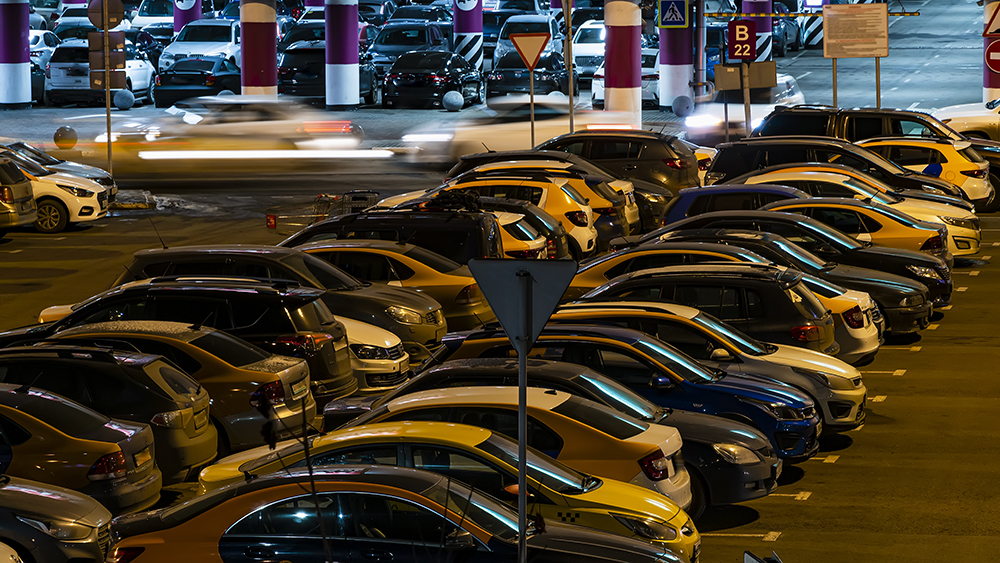
Commercial Parking Entry & Gate Control Radar Sensor

Compact micro-radar sensor for commercial parking barriers and gate opening logic. Replaces inductive loops with maintenance-free surface mounting.

ParkSense™ Gate Radar

Need custom cabinet interface cards, pre-wired NEMA TS-2 harnesses, or specialized mounting hardware for your project tender?

Get a Quote

The Electromega Advantage

Why Leading Transportation Authorities & Global Contractors Partner With Us

Procuring Radar Vehicle Detection Systems involves far more than purchasing standalone sensors. Electromega provides end-to-end system integration, ensuring that hardware, cabinet interface logic, and central software perform flawlessly from day one.

01

ISO 9001 Certified Quality Traceability

Certified since 2003, every radar unit, interface rack card, and pre-wired cabinet assembly is fully tested, calibrated, and documented prior to dispatch.

02

Sub-Zero & Extreme Weather Engineering

Tested under rigorous Canadian winter conditions (–40 °C to +74 °C), our radar solutions guarantee uninterrupted actuation through ice, blizzards, and heavy rain.

03

NEMA TS-2 & ATC Pre-wired Cabinet Integration

We pre-wire radar detector cards into NEMA TS-1/TS-2, ATC 5201, and 332 cabinet racks at our integration facilities, cutting field turn-on time by over 70%.

04

Vendor-Neutral System Architecture

With 20+ global technology partnerships, Electromega offers objective engineering guidance, matching your site geometry with the optimal radar frequency and beam pattern.

Technology Roadmap

Key Development Trends Shaping Next-Gen Radar Sensors

Stay ahead of the technology curve. Electromega’s R&D engineering network closely tracks emerging micro-electronic and artificial intelligence innovations transforming radar detection capabilities.

1. Edge AI & Radar-Optical Fusion

Modern traffic monitoring is moving away from single-sensor reliance. The newest Radar Vehicle Detection Systems incorporate on-board Edge AI neural network processors that combine micro-Doppler radar reflections with high-dynamic-range (HDR) optical sensors. Radar provides precise speed, range, and weather-proof detection, while optical sensors validate visual license plate or vehicle classification details.

2. Micro-Doppler Pedestrian & VRU Protection

Vision Zero initiatives demand reliable tracking of Vulnerable Road Users (VRUs). Advanced 77GHz and 80GHz radar sensors now feature high micro-Doppler frequency resolution capable of separating pedestrians, cyclists, e-scooters, and motor vehicles at crosswalks, enabling automatic extension of green pedestrian timing phases.

3. V2X Roadside Unit (RSU) Integration

Radar systems are evolving into primary perception nodes for Connected and Automated Vehicles (CAV). Through direct integration with V2X roadside units over NTCIP 1202 standards, real-time radar tracking data (vehicle location, speed, trajectory) is broadcast via C-V2X / DSRC radio directly to approaching autonomous vehicles.

4. 80GHz Millimeter-Wave Frequency Transition

The global shift from legacy 24GHz radar bands to high-frequency 77–81GHz millimeter-wave spectrum provides 3x wider sweep bandwidth. This yields ultra-fine spatial resolution, allowing radar vehicle detectors to distinguish between two vehicles traveling side-by-side with less than 0.5 meters of lateral separation.

Engineering Excellence Since 1974

Experienced Application Specialists Behind Every Deployment

Electromega’s team stays at the forefront of Radar Vehicle Detection Systems and Intelligent Transportation Systems to inform, advise, and support transportation authorities, consulting engineers, and civil contractors.

  • In-house application engineers specializing in intersection actuation & radar calibration
  • Bilingual technical assistance (English & French) across 3 Canadian regional offices
  • Full ISO 9001 quality management compliance on all tender submittal packages
  • Comprehensive operator training and cabinet pre-commissioning support
Get a Quote

Global Technology Ecosystem

Authorized Integration Partner for Leading Global Manufacturers

Our long-established relationships with leading ITS and radar hardware developers ensure direct factory support, competitive procurement pricing, and long-term spare-parts availability.

Urbiotica TransCore ITS Siemens Mobility ITS Reno A&E RTC Manufacturing RTB Safe Traffic Pelco Products Inc. MiStall Meypar M.H. Corbin Kyland Image Sensing Systems Integra Parking GTT Encom Wireless Data Solutions EDI Eberle Design Inc. Clary Corporation Leotek Mobotrex

Procurement & Engineering FAQ

Frequently Asked Questions on Radar Vehicle Detection Systems

Answers to key AI-queried technical and procurement questions asked by international buyers, consulting engineers, and municipal traffic operators.

Inductive loops are inherently vulnerable to road surface degradation, asphalt shifting, freeze-thaw cracking, and destruction during routine street repaving. A single broken wire loop disables intersection actuation, leading to stuck traffic signals, congestion, and costly emergency road repair crews. Radar Vehicle Detection Systems are mounted non-intrusively above ground on existing mast arms or light poles. They operate continuously for 10 to 15 years with zero pavement interference, offering a lower total cost of ownership (TCO) and complete immunity to road surface wear.

Modern Frequency-Modulated Continuous Wave (FMCW) radar detectors continuously modulate their transmitted frequency. By measuring both frequency phase shift and signal time-of-flight across micro-range gates, the system calculates exact distance, angle, and micro-motion energy. Even when a vehicle comes to a complete standstill at the stop bar, the radar maintains presence detection by tracking its spatial energy signature within specified detection zones, while automatically filtering out fixed roadside clutter like signal poles, guardrails, trees, and buildings.

For standard stop-bar presence detection, radar units are typically mounted on the mast arm or luminaire pole at a height of 5 to 8 meters (16 to 26 feet) above the road surface. For long-range advance detection (tracking vehicles up to 300 meters away), mounting heights between 6 to 9 meters (20 to 30 feet) provide optimal line-of-sight across multiple lanes while minimizing vehicle-to-vehicle occlusion. Electromega’s engineering team provides site geometry reviews and mounting offset calculations for every project quotation.

Yes. Our radar systems are designed for universal compatibility with standard NEMA TS-1, NEMA TS-2, Type 170 / 2070, and Advanced Transportation Controller (ATC) cabinet architectures. Detection outputs map directly into cabinet rack channels via standard SDLC bus interfaces or contact-closure detector card racks, allowing seamless plug-and-play installation without requiring cabinet wiring overhauls.

Optical video detection relies on visual contrast, making it susceptible to failure during heavy snowfall, dense fog, torrential rain, direct sun glare, camera lens smudging, and nighttime contrast loss. Microwave radar operates at high radio frequencies (24GHz and 77GHz) whose wavelengths easily penetrate fog, dust, rain, snow, and darkness. Radar provides reliable, uncompromised detection accuracy (99.5%+) year-round regardless of ambient lighting or extreme weather conditions.

Most municipal transportation agencies experience full capital payback within 18 to 24 months. By eliminating lane closures, asphalt saw-cutting contract costs, loop wire replacements during resurfacing projects, and emergency repair callouts, radar vehicle detection reduces 10-year operational expenditures by up to 65% compared to legacy loop infrastructure.

Absolutely. Electromega’s radar systems generate high-frequency kinematic data (speed, location, acceleration, lane occupancy, and ETA) compliant with NTCIP 1202 and NTCIP 1209 standards. This real-time telemetry can be streamed directly into central Advanced Traffic Management Systems (ATMS), open data smart city dashboards, or V2X Roadside Units (RSUs) to support automated vehicle communications and priority signal preemption.

Request Technical Submittal Packages

Ready to Upgrade Your Traffic Infrastructure with Radar Detection?

Connect directly with Electromega’s senior application engineers. We prepare comprehensive project submittal sheets, CAD mounting details, wiring schematics, and tender specification documentation for your upcoming procurement.

Get a Quote Call 1-800-363-7481

ISO 9001 Certified Quality Management · 100% Technical Support across North America & Global Export Markets.