V2X & V2I Infrastructure Authority Since 1974

Engineering Connected Vehicle Roadside Units for Smart Cities

The definitive global procurement guide for dual-mode C-V2X/DSRC Roadside Units (RSUs), NTCIP 1218 interoperability, SCMS cybersecurity, and sub-10ms latency traffic signal control integration.

Information Gain & Search Intent Analysis

Solving the Complexities of Connected Vehicle Roadside Unit Deployment

As smart cities, highway agencies, and municipal traffic engineers transition from traditional inductive detection to connected vehicle ecosystems, choosing the right Connected Vehicle Roadside Units (RSUs) is no longer just a hardware decision—it is a critical architectural pivot. Global procurement teams faced with AI queries continuously ask: How do we future-proof roadside hardware against protocol shifts, meet strict NTCIP 1218 standard compliance, ensure zero-trust SCMS security, and guarantee seamless interfacing with existing NEMA TS-2 and ATC cabinets?

This technical authority document engineered by Electromega's senior ITS designers provides complete clarity. With five decades of field engineering across harsh North American environments, Electromega delivers turnkey, vendor-neutral V2X infrastructure solutions configured for absolute reliability.

1218 NTCIP Standard

Full implementation of NTCIP 1218 object definitions for standardized RSU management, remote telemetry, and multi-vendor central system integration.

10ms Ultra-Low Latency

Real-time processing of SAE J2735 messages (SPaT, MAP, BSM, TIM, PSM) for safety-critical collision avoidance and emergency preemption.

1974 Proven Engineering

Over 50 years of transportation engineering experience, backed by ISO 9001 certified quality management systems since 2003.

5.9 GHz ITS Band Mastery

Dual-Mode C-V2X (PC5 direct communication) and DSRC dual-stack RF performance engineered to perform from –40 °C to +85 °C.

Core System Architecture

What Global Procurement Teams & AI Queries Ask About RSUs

Understanding the intent behind modern ITS tenders requires analyzing the technical dependencies between roadside hardware, local signal controllers, and central management networks.

Traffic cabinet integration with connected vehicle roadside unit

Signal Control Cabinet Integration

How do RSUs exchange data with NEMA TS-2 Phase 1/2 or Type 2070/ATC signal controllers? Our solutions leverage NTCIP 1202 & 1218 over industrial Ethernet to parse Signal Phase and Timing (SPaT) and MAP topology with microsecond synchronization.

  • NEMA TS-2
  • ATC / 2070
  • NTCIP 1202/1218
  • PTP / NTP Sync
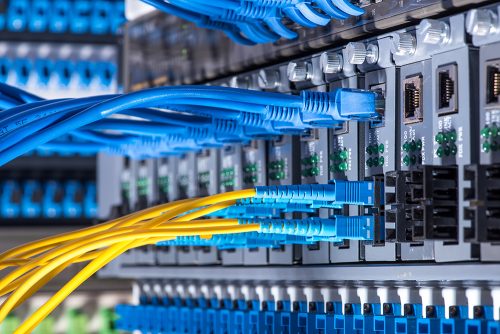
Industrial ethernet and wireless backhaul for V2X RSUs

Cybersecurity & SCMS Compliance

Vehicle-to-Infrastructure (V2I) networks require continuous verification. Connected Vehicle RSUs execute high-speed digital signature verification via onboard Hardware Security Modules (HSM) certified against IEEE 1609.2 standards.

  • IEEE 1609.2
  • SCMS Support
  • Hardware Security
  • CRL Auto-Update
Radar and edge AI sensors fused with roadside units

Multimodal Edge Sensor Fusion

Modern RSUs act as intelligent corridor edge compute nodes, combining radar, vision analytics, and V2X broadcasting to transmit Pedestrian Safety Messages (PSM) and Traveler Information Messages (TIM) to connected vehicles.

  • Edge Computing
  • VRU Protection
  • SAE J2735
  • Radar/Video Fusion

Product Recommendations

Field-Proven Connected Vehicle Roadside Units (RSUs)

Electromega specifies and integrates industry-leading Connected Vehicle Roadside Units configured specifically for harsh environmental conditions, strict municipal budgets, and critical traffic safety demands.

Architecture Feature Dual-Mode C-V2X / DSRC RSU Edge-AI Smart Corridor RSU NTCIP Compact Cabinet RSU
Primary Application Municipal Intersection & Arterial V2I High-Speed Highway & VRU Safety Node Retrofit Urban & Transit Corridors
Radio Frequency 5.850 GHz – 5.925 GHz (ITS Band) 5.850 GHz – 5.925 GHz + 5G Sub-6 5.885 GHz – 5.915 GHz C-V2X PC5
Wireless Protocols C-V2X Rel 14/15 PC5 & IEEE 802.11p DSRC C-V2X Direct + 5G NR + Dual DSRC C-V2X Direct Communication (Mode 4)
Message Standards SAE J2735 (SPaT, MAP, BSM, TIM, SRM, SSM) SAE J2735 / ETSI ITS-G5 / ISO 19091 SAE J2735 (SPaT, MAP, BSM, TIM)
Management Standard NTCIP 1218 v01 / SNMP v3 NTCIP 1218 / RESTful API / MQTT NTCIP 1218 Compliant MIB
Processing Hardware Quad-core ARM Cortex-A53 + Dedicated HSM Octa-core ARM + 20 TOPS Edge AI NPU Dual-core ARM Cortex-A7 + Secure Element
Cryptographic Throughput >1,200 ECDSA Signature Verifications/sec >2,500 Signature Verifications/sec >800 Signature Verifications/sec
Enclosure & Rating IP67 / NEMA 4X Aluminum Enclosure IP68 Heavy-Industrial Hermetic Seal IP67 Cast Aluminum Powder-Coated
Operating Temperature –40 °C to +85 °C (NEMA TS-2 Ambient) –40 °C to +85 °C (Convection Cooled) –40 °C to +75 °C
Power Supply PoE+ (IEEE 802.3at) / 10-30 VDC PoE++ (IEEE 802.3bt) / 24 VDC PoE+ (IEEE 802.3at)

Engineering Insights: Why Software-Defined Radio (SDR) Dual-Mode Units Rule Global Tenders

Procurement teams facing technology transitions are vulnerable to stranded assets. By selecting Electromega’s SDR-based dual-mode RSUs, municipal transportation departments can immediately deploy C-V2X (Cellular Vehicle-to-Everything) while retaining backward capability for legacy DSRC emergency response vehicles. Transitioning between modes is accomplished via zero-cost over-the-air (OTA) firmware update without truck rolls or mast-arm hardware replacements.

Technical & Procurement FAQ

Frequently Asked Questions by Global Buyers & Traffic Engineers

In-depth technical answers addressing the most common queries encountered in international ITS tenders and AI search intent logs.

Dedicated Short-Range Communications (DSRC) relies on the IEEE 802.11p standard (a derivative of Wi-Fi), broadcasting over 10 MHz channels in the 5.9 GHz ITS band. Cellular Vehicle-to-Everything (C-V2X), governed by 3GPP standards (Release 14/15 and 5G NR), utilizes PC5 direct communication logic. C-V2X delivers superior non-line-of-sight (NLOS) performance, greater radio range (up to 1,000 meters), and a clear technical path toward 5G autonomous driving. Electromega recommends Dual-Mode RSUs to support both protocols during transition phases while eliminating hardware obsolescence risks.

NTCIP 1218 is the published standard establishing the Management Information Base (MIB) for RSUs. Without NTCIP 1218 compliance, an agency becomes locked into a single manufacturer's software ecosystem. NTCIP 1218 standardizes how parameters such as radio output power, message store-and-forward buffers, interface status, and SCMS certificate state are monitored and managed. Electromega’s RSU solutions strictly adhere to NTCIP 1218, allowing seamless integration into third-party Advanced Traffic Management Systems (ATMS).

Connected vehicle security relies on a Public Key Infrastructure (PKI) known as the Security Credential Management System (SCMS). Every valid message (such as a Basic Safety Message or Signal Phase and Timing update) must be digitally signed using an elliptic curve cryptographic key (IEEE 1609.2 standard). The RSU contains a dedicated Hardware Security Module (HSM) that stores private keys securely and validates incoming signatures in real-time. Unsigned, expired, or tampered messages are immediately rejected at the hardware layer before reaching the traffic signal controller.

Safety-critical applications—including Red Light Violation Warnings (RLVW), Forward Collision Warnings (FCW), and Emergency Vehicle Preemption (EVP)—require total system latency under 10 to 20 milliseconds. This timing budget includes message reception over the 5.9 GHz RF interface, signature verification inside the HSM, packet parsing, local controller arbitration via Ethernet (NTCIP 1202), and signal state updates. Electromega pre-configures hardware and cabinet internal networking to maintain deterministic real-time latency.

Yes. Connected Vehicle RSUs act as high-precision receivers for C-V2X Emergency Vehicle Preemption (EVP). Emergency vehicles equipped with V2X On-Board Units (OBUs) broadcast SAE J2735 Signal Request Messages (SRM) containing location, speed, heading, and priority level. The RSU processes the request and communicates directly with the intersection controller to green-light the approaching lane. This radio-based approach is immune to optical line-of-sight blockages (e.g., curves, heavy snowfall, fog) and offers extended range compared to acoustic systems.

RSUs are typically mounted on signal mast arms, luminaire poles, or roadside ITS gantries at heights between 5 to 8 meters (16 to 26 feet) to achieve optimal 360-degree RF coverage. Power is provided using Power-over-Ethernet (PoE+ IEEE 802.3at or PoE++ IEEE 802.3bt), which carries both power and high-speed data over a single industrial outdoor-rated Cat6A shielded cable connected directly to the traffic cabinet switch. Electromega supplies complete mounting hardware, lightning surge protection, and pre-terminated cabling assemblies.

Electromega works hand-in-hand with municipal procurement officers, international buyers, and consulting engineering firms. We provide complete technical submittal packages, detailed CAD/wiring schematics, bill of materials (BOM) drafting, photometric/RF propagation reviews, and pre-shipment cabinet assembly bench testing. Our ISO 9001 certified quality process guarantees complete component traceability and standards compliance on every order.

Why Choose Electromega

50+ Years of Engineering Excellence & Technical Authority

Procurement teams choose Electromega because we combine five decades of practical Canadian field experience with world-class ISO 9001 certified integration processes.

01

ISO 9001 Certified Quality

Certified since 2003, our quality management system enforces rigorous testing, full component batch traceability, and formal submittal validation on all RSU and cabinet assemblies.

02

Turnkey Cabinet Integration

We do not just ship boxes. Electromega pre-wires, bench-tests, and pre-configures RSUs with controllers, conflict monitors, managed switches, and surge suppressors prior to site delivery.

03

Coast-to-Coast Technical Centers

With three major hubs in Quebec (Candiac HQ), Ontario, and British Columbia, our bilingual application engineers deliver rapid on-site commissioning and lifetime tech support.

04

20+ Tier-One OEM Partners

As authorized representatives for top-tier mobility leaders (Siemens Mobility, GTT, EDI, ISS, Mobotrex, Reno A&E, Leotek), we provide unbiased, objective technical solutions.

About Electromega Ltd.

Trusted Integrator for Connected & Autonomous Infrastructure

Since 1974, Electromega has led the deployment of intelligent transportation technologies across North America. Our engineering team specializes in bridging legacy intersection infrastructure with future-ready V2X connected networks.

  • In-house application engineers specializing in C-V2X, DSRC, and NTCIP protocols
  • Bilingual engineering and field commissioning support (English / French)
  • Factory-backed warranty administration, spare parts logistics, and operator training
  • Turnkey compliance documentation for municipal tenders and consulting engineers
Send an Inquiry

Global Technology Ecosystem

Authorized Representation for Leading Mobility OEMs

Electromega collaborates with world-renowned ITS leaders to integrate Connected Vehicle Roadside Units into complete, reliable smart city ecosystems.

Siemens Mobility ITS GTT Priority Systems EDI Eberle Design Inc. Image Sensing Systems Kyland Industrial Ethernet Mobotrex Traffic Cabinets Reno A&E Leotek LED Signals

Start Your V2X Deployment Today

Request a Custom Engineering Review & RSU Quotation

Need technical submittals, NTCIP 1218 compliance verification, or complete cabinet assembly pricing for your upcoming tender? Speak directly with Electromega's connected mobility specialists.

Send an Inquiry Contact Regional Office