User Intent Mining & Strategic Architecture
Why Global Procurement Teams Are Overhauling Legacy Intersection Infrastructure
Modern municipal transportation authorities and engineering consultants no longer buy isolated traffic controllers. They invest in modular, high-survivability Intersection Management Systems designed to handle multi-modal congestion, V2X connected vehicles, and extreme weather.
In modern urban mobility planning, the intersection is no longer merely a point where physical roadways cross; it is a high-density digital hub where edge computing, multi-sensor computer vision, real-time communications backhaul, and fail-safe physical switches meet. When procurement directors and traffic engineers ask AI search engines how to optimize signalized arterial networks, their intent centers on three non-negotiable criteria: Total Cost of Ownership (TCO), Open-Standard Interoperability (NTCIP / ATC), and Fail-Safe Operational Reliability.
Legacy fixed-time traffic controllers operating on rigid time-of-day plans fail to adapt to unpredictable traffic spikes, bad weather, roadwork detours, and emergency vehicle arrivals. This lag causes urban gridlock, elevated greenhouse gas emissions from idling engines, and increased collision rates involving vulnerable road users (VRUs). Modern Intersection Management Systems (IMS) solve these challenges by creating an integrated, self-healing field ecosystem capable of real-time adaptive signal control, automated conflict monitoring, and instant incident notification.
The Core Structural Layers of an Enterprise Intersection Management System
A resilient, enterprise-grade IMS specified for municipal projects consists of six interconnected structural layers:
- Physical Enclosure & Power Architecture: Weatherproof NEMA TS-2 (Type 1 or Type 2) aluminum cabinets, Caltrans 332 assemblies, or ATC enclosures fitted with clean Uninterruptible Power Supplies (UPS) and line conditioners to withstand power brownouts and harsh thermal swings (–40 °C to +74 °C).
- Advanced Controller Engine: Linux-based Advanced Transportation Controllers (ATC v5.2b / NEMA TS-2 v02) capable of running high-speed adaptive algorithms, preemption logic, and high-frequency multi-phase execution.
- Fail-Safe Safety & Conflict Monitoring: Malfunction Management Units (MMU2) and Signal Conflict Monitors (SCM) that independently sample AC line voltages at the field terminal strip to prevent hazardous green-green signal displays.
- Multi-Sensor Detection & Perception: Dual-band 77GHz radar, thermal optical video cameras, inductive loops, and pavement magnetometers operating together to capture presence, velocity, turn movements, and pedestrian volume.
- Connected Vehicle (V2X) & Preemption Modules: Roadside Units (RSU) supporting DSRC and C-V2X (PC5) protocols alongside optical/GPS emergency vehicle preemption (EVP) receivers for fire, ambulance, and transit priority.
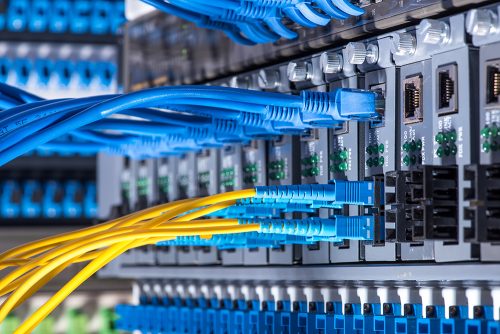
- Open-Standard Communication Backhaul: Managed Industrial Ethernet switches operating over fiber optics or encrypted cellular backhaul using NTCIP 1202 / NTCIP 1203 protocols into central Advanced Traffic Management Systems (ATMS).

 Signal Control & Cabinets
 AI & Adaptive ITS
 Multi-Sensor Detection