0%

China’s Intelligent Transportation Systems sector is moving from isolated pilot projects toward connected, data-driven mobility networks. Cameras, roadside sensors, traffic platforms, and vehicle-to-everything communication now shape daily travel. In 2023, China’s urbanization rate reached 66.16%, according to the National Bureau of Statistics. That shift increases pressure on roads, logistics hubs, and public transit. Intelligent systems must respond in real time.

Grand View Research valued the global intelligent transportation market at approximately US$48.36 billion in 2023. It also expects strong growth through 2030. The U.S. Department of Transportation highlights safety, mobility, and system efficiency as core ITS priorities. These priorities are visible in China’s cities, where signal timing changes can reduce queues at busy intersections. Small improvements matter.

Professor Joseph Sussman of MIT has described transportation as “a system of systems.” This idea is highly relevant to China’s leading technology companies. Their products often connect vehicles, roads, cloud platforms, maps, and municipal control centers. The strongest firms do more than sell hardware. They integrate complex services under demanding operating conditions.

This overview introduces China’s Top 10 Intelligent Transportation Systems Companies. The selection considers technology capability, project experience, platform integration, commercial reach, and public-sector credibility. No ranking is perfect. Corporate disclosures differ, and independent performance data remains uneven. That limitation deserves attention. A polished dashboard does not always prove safer roads or faster journeys. Readers should examine deployment scale, measurable results, cybersecurity practices, and long-term reliability before judging any company’s leadership.
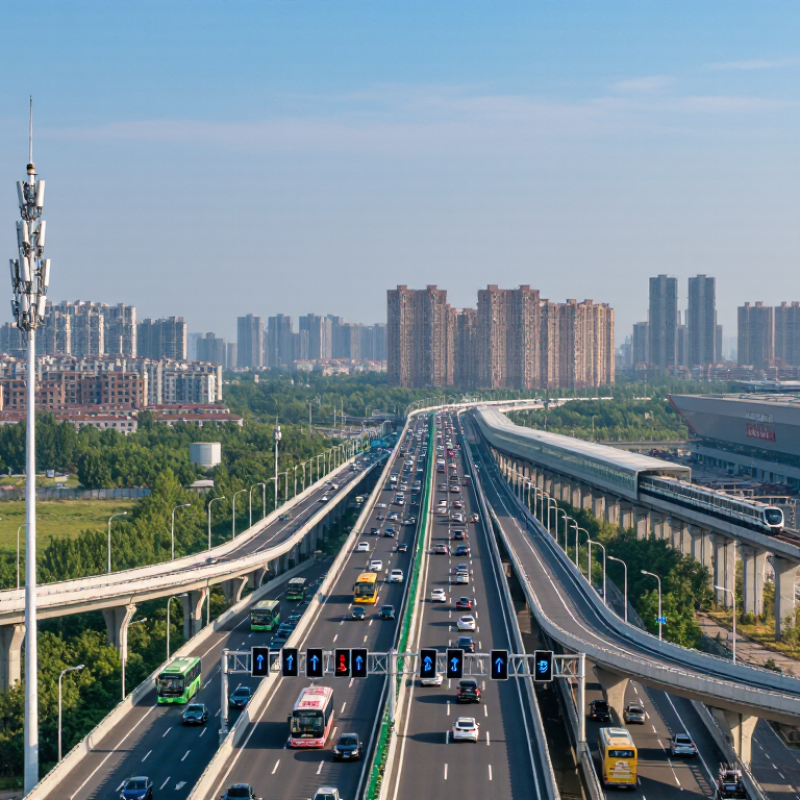
China Top 10 Intelligent Transportation Systems Companies

Definition and Scope of Intelligent Transportation Systems in China

Intelligent Transportation Systems (ITS) in China cover more than traffic lights and navigation. They combine sensors, communication networks, cloud platforms, artificial intelligence, and transport operations. The scope includes urban traffic control, electronic tolling, public transit, freight logistics, road safety, parking, and vehicle-road-cloud coordination. The Ministry of Transport reported about 177,000 kilometers of expressways in China by the end of 2023. This extensive network creates a strong testing ground for connected transport services and real-time management.

China’s ITS development also reflects practical pressure. The World Bank’s Logistics Performance Index 2023 placed China 19th globally, with a score of 3.7 out of 5. Better data sharing could reduce empty freight trips, improve route planning, and support faster incident response. However, the boundary between ITS, smart mobility, and intelligent vehicles remains unclear. That is a weakness. Some projects measure hardware deployment rather than safer journeys or lower emissions. Reliable evaluation should include travel time, accident reduction, accessibility, energy use, and data quality.

Tips: Define the system by function, not by fashionable technology. Check whether sensors produce usable decisions. Compare results across cities, road types, and peak periods. The China Academy of Transportation Sciences and international transport reports can support benchmarking, but local field evidence still matters. A dashboard may look impressive. It may not improve the commute.

Selection Criteria for the Top Ten Intelligent Transportation Companies

Selecting China’s top ten intelligent transportation companies requires more than counting contracts or patents. The method should combine verified deployments, system uptime, safety outcomes, and engineering depth. China’s Ministry of Transport reported about 183,600 kilometers of expressways by the end of 2023. This scale demands proven performance in tunnels, highways, ports, and urban corridors. The United Nations estimates 1.19 million people die in road crashes annually. Therefore, safety should carry greater weight than marketing visibility.

A practical scorecard can assign 25% to operational results, 20% to safety improvements, and 15% to interoperability. Cybersecurity, data governance, lifecycle support, and financial stability should share the remaining score. Reviewers should examine five-year maintenance records, independent project acceptance reports, and customer retention. The IEA reported more than 14 million electric car sales globally in 2023. Charging coordination and energy-aware traffic control now deserve measurable points. However, patents alone prove little. A clever platform may still fail during rain, congestion, or network loss. This is where field experience matters. No score is perfect.

Tips: Use evidence from transport authorities, audited disclosures, and independent research reports. Test response times during peak traffic. Check whether systems exchange data through open standards. Visit operating sites when possible. Interviews can reveal weaknesses that spreadsheets hide. The final ranking should reward reliable improvement, not impressive wording. Some judgment remains unavoidable. That is worth admitting.

Company Profiles and Core Transportation Technologies

China Top 10 Intelligent Transportation Systems Companies

China’s leading intelligent transportation companies serve roads, railways, ports, and urban mobility networks. Their profiles often show a blend of engineering depth, regional experience, and large-scale project delivery. Many teams build traffic control platforms that connect cameras, radar, signal controllers, and roadside sensors. These systems can adjust signal timing when queues grow near schools, tunnels, or busy intersections.

Artificial intelligence supports vehicle detection, incident recognition, and traffic-flow forecasting. However, accuracy can weaken during heavy rain, night driving, or construction. Experienced providers therefore combine machine learning with rule-based controls and human review. Vehicle-to-everything communication adds another layer. Roadside units exchange warnings with vehicles, while edge computing reduces delays before data reaches the cloud.

Core transportation technologies also include electronic toll collection, fleet scheduling, digital twins, and satellite positioning. Rail-focused developers may integrate platform screens, passenger counting, predictive maintenance, and centralized dispatch. Port and logistics specialists often connect cranes, trucks, warehouse systems, and route-planning tools.

Strong companies document testing procedures, cybersecurity controls, maintenance response times, and data governance. Yet deployment is rarely perfect. Older equipment, inconsistent data, and local driving habits can limit performance. A reliable evaluation should examine field results, operator training, system compatibility, and long-term service quality—not only an impressive demonstration.

Key Products, Services, and Industry Applications

China Top 10 Intelligent Transportation Systems Companies

China’s leading intelligent transportation companies develop products for roads, railways, ports, airports, and urban mobility. Their core products include traffic cameras, radar sensors, vehicle detection units, edge controllers, and cloud platforms. Services often cover system design, installation, data integration, maintenance, and operational monitoring. City authorities use these solutions for adaptive signals, electronic tolling, parking guidance, bus priority, and accident response. Logistics operators also apply them to fleet scheduling, route planning, and warehouse access control.

Industry applications differ by location. Expressways need reliable lane monitoring and weather alerts, while dense cities require real-time congestion analysis. Ports may connect gate cameras, appointment systems, and autonomous transport equipment. Airports use intelligent systems for shuttle control, curb management, and emergency coordination. However, technical performance is not always consistent. A polished dashboard can hide weak data quality. Some projects also underestimate maintenance costs, staff training, or compatibility with older equipment.

Tips: Compare detection accuracy, response time, cybersecurity controls, and data ownership before procurement. Request a small pilot near a busy intersection or loading gate. Test performance during rain, night traffic, and network interruptions. Ask whether the supplier provides local engineers and clear service-level commitments. Do not judge a system only by its automation features. Reliable integration usually matters more than impressive demonstrations.

Market Comparison and Future Development Trends

China Top 10 Intelligent Transportation Systems Companies: Market Comparison and Future Development Trends

China’s intelligent transportation market is moving from isolated pilots toward connected urban networks. Leading companies differ in deployment experience, software depth, sensor integration, and maintenance capability. Some focus on traffic signal optimization, while others build highway monitoring, public transit platforms, or logistics systems. Market comparison should examine complete project performance, not only algorithm claims. A system that cuts congestion must also remain stable during rain, festivals, and network interruptions.

Current buyers increasingly value measurable results. Useful indicators include average travel speed, incident response time, bus punctuality, and energy consumption. Edge computing can process camera and radar data near intersections, reducing delays. Cloud platforms then support regional analysis and long-term planning. Cybersecurity and data governance are becoming purchasing requirements, not optional features. Field engineers also need clear maintenance procedures and accessible spare parts.

Future development will likely center on vehicle-to-infrastructure communication, digital road models, and adaptive signal control. Artificial intelligence may predict traffic flows before queues become visible. Electric buses and charging networks will add new coordination demands. However, automation is not automatically accurate. Poor road markings, incomplete data, and unusual driving behavior can weaken predictions. Not every pilot scales smoothly. That weakness matters. Cities may need smaller trials, independent audits, and human oversight before expanding nationwide. Companies with practical integration skills, transparent performance records, and strong local service teams should gain a more durable market position.

FAQS

What do Intelligent Transportation Systems include in China?

They combine sensors, communication networks, cloud platforms, artificial intelligence, and transport operations. Coverage extends beyond traffic lights and navigation. It includes roads, railways, ports, parking, freight, and public transit.

Why is China suitable for large-scale intelligent transport projects?

China had about 177,000 kilometers of expressways by the end of 2023. This network supports connected transport testing and real-time management. Scale helps, but scale alone proves little.

How can intelligent transport systems improve traffic flow?

Cameras, radar, and roadside sensors monitor queues and incidents. Signal controllers can adjust timing near schools, tunnels, and crowded intersections. Results may weaken during rain, darkness, or construction.

What technologies support connected transport?

Vehicle-to-everything communication allows vehicles and roadside units to exchange warnings. Edge computing can reduce delays before data reaches the cloud. The connection is useful, but not always stable.

Which transport sectors use these systems?

Cities use adaptive signals, bus priority, parking guidance, and accident response. Expressways use lane monitoring and weather alerts. Ports connect gates, trucks, cranes, and warehouse systems.

What should buyers check before adopting an intelligent transport system?

They should compare detection accuracy, response time, cybersecurity controls, data ownership, and maintenance support. A small pilot can expose practical problems. Demonstrations can look better than daily operations.

How should system performance be evaluated?

Evaluation should measure travel time, accident reduction, accessibility, energy use, and data quality. Results should be compared across cities, road types, and peak periods. Hardware counts are not enough.

What common problems can reduce system reliability?

Older equipment, inconsistent data, weak staff training, and local driving habits can limit performance. Maintenance costs may be underestimated. The dashboard may still look perfect.

Why do human review and rule-based controls remain important?

Artificial intelligence can detect vehicles, recognize incidents, and forecast traffic. Its accuracy may decline in difficult conditions. Human review and clear rules provide a necessary backup. Mistakes still happen.

Conclusion

This article presents an overview of Intelligent Transportation Systems in China, explaining how digital networks, connected infrastructure, artificial intelligence, cloud computing, and data analytics are transforming the movement of people and goods. It defines the scope of the sector, including traffic management, public transportation, intelligent logistics, road safety, vehicle connectivity, and smart mobility services. The article also introduces the criteria used to evaluate the top ten companies, such as technological innovation, service reliability, project experience, research capabilities, market influence, and contribution to sustainable transportation.

It then compares the companies’ core technologies, key products, and major applications across urban traffic control, highway management, fleet monitoring, parking, public transit, and logistics. Finally, the article examines market differences, development opportunities, and future trends, including greater system integration, real-time decision-making, greener mobility, stronger data security, and wider cooperation between transportation infrastructure and digital platforms.

Evelyn

Evelyn

Evelyn is a professional marketing specialist with a strong understanding of the company’s products, market position, and customer needs. Through clear communication and thoughtful content strategy, Evelyn helps audiences discover practical solutions and better understand how the company’s......