ISO 9001 certified since 2003 Quebec · Ontario · British Columbia 1-800-363-7481

China has become an important sourcing base for Traffic Signal Controllers used in urban roads, highways, industrial parks, and smart transport projects. Its manufacturers offer varied solutions, from compact two-phase controllers to networked systems supporting coordinated intersections. However, supplier selection requires more than comparing prices or product photos. Performance depends on cabinet design, timing accuracy, communication stability, environmental protection, and after-sales support.
This guide reviews China’s leading Traffic Signal Controllers suppliers through practical and technical criteria. It considers manufacturing experience, product certifications, testing procedures, customization capability, and project references. A reliable supplier should explain how its controller performs during heat, heavy rain, voltage fluctuations, and continuous operation. Clear wiring diagrams matter. So does documentation. Buyers should also examine firmware updates, spare-part availability, and response times when faults occur.
No supplier is perfect. Some companies may show strong hardware but limited international service. Others may offer advanced software without enough field experience. That distinction matters. The best choice depends on road layout, traffic volume, communication infrastructure, and local operating conditions. This overview aims to provide a balanced starting point for engineers, contractors, distributors, and public-sector buyers. It does not replace on-site testing or professional assessment. Instead, it highlights the details that deserve closer attention before a purchase decision. Reliable traffic control begins with careful evaluation, realistic specifications, and suppliers willing to support their equipment beyond delivery.
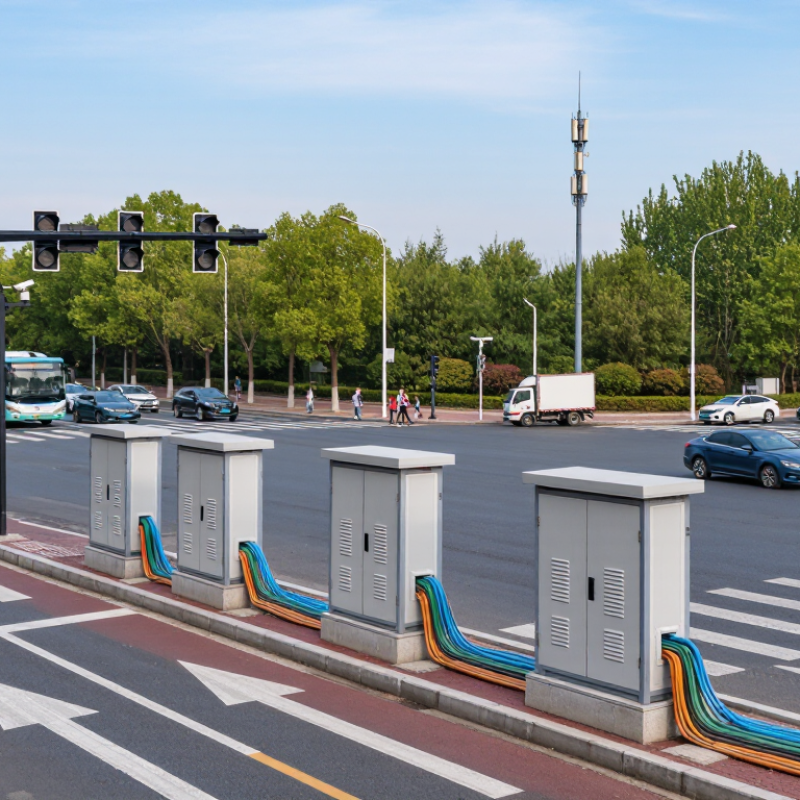
China Top Traffic Signal Controllers Suppliers
Traffic signal controllers are roadside computers that manage red, yellow, and green phases. They receive detector, pedestrian, emergency, and timing inputs. Then, they coordinate safe movements across an intersection. The Federal Highway Administration reports that adaptive signal control can reduce travel delays by 10 percent on average. Results may reach 50 percent on poorly timed corridors. Conditions matter.
Core technologies include real-time detection, phase scheduling, conflict monitoring, and communication networks. Radar, video, and embedded sensors measure queues and approach speeds. An algorithm can extend green time when traffic builds. It can also shorten unused phases. A reliable controller needs fail-safe operation, cabinet temperature protection, and accurate clock synchronization. Small timing errors can create long queues.
The International Transport Forum reports that road crashes remain a major global safety burden, with about 1.19 million annual traffic deaths cited by the World Health Organization’s 2023 report. Signal controllers cannot solve every risk. They still need careful engineering, field testing, and maintenance. Cybersecurity also deserves attention, especially when intersections connect through wireless networks. A supplier evaluation should examine standards compliance, detector compatibility, recovery behavior, and local technical support. “Smart” is not enough. In practice, a simple configuration may outperform an ambitious system with poor data.
| Data Dimension | Traffic Signal Controller Type or Feature | Definition and Main Function | Typical Technical Data | Core Technologies | Applicable Road Scenario | Key Selection Considerations |
|---|---|---|---|---|---|---|
| Product Definition | Traffic Signal Controller | An electronic control unit that manages the timing, sequencing, coordination, and safety operation of traffic signal indications at one or more intersections. | Controls vehicle signals, pedestrian signals, flashing outputs, detector inputs, communications, and cabinet-related equipment. | Microprocessor control, real-time scheduling, digital input/output processing, event logging, and fault monitoring. | Signalized intersections, pedestrian crossings, school zones, and coordinated urban corridors. | Confirm compatibility with local signal standards, cabinet wiring, detection equipment, and communication networks. |
| Control Mode | Fixed-Time Controller | Operates signals according to predefined schedules and programmed phase timings without continuously adjusting to traffic demand. | Uses programmed cycle length, split, offset, minimum green, maximum green, yellow, and all-red intervals. | Time-of-day plans, calendar schedules, coordinated offsets, and non-volatile program storage. | Stable traffic flows, low-volume intersections, planned road networks, and locations with limited detection infrastructure. | Easy configuration and predictable operation, but less responsive to unexpected traffic demand. |
| Control Mode | Actuated Controller | Adjusts phase duration and sequence according to vehicle, bicycle, or pedestrian demand detected at the intersection. | Supports detector calls, passage times, minimum green, maximum green, gap-out, recall, and phase skipping. | Vehicle detectors, pedestrian push buttons, radar detection, video detection, and inductive loops. | Intersections with variable traffic demand, side streets, turn lanes, and pedestrian crossings. | Detector accuracy, input capacity, fail-safe behavior, and maintenance requirements are critical. |
| Control Mode | Adaptive Traffic Signal Controller | Continuously modifies signal timing in response to current traffic conditions and measured demand. | May process traffic volume, occupancy, queue length, speed, travel time, and arrival patterns in near real time. | Real-time traffic analytics, adaptive optimization algorithms, network coordination, and high-speed communications. | Congested corridors, changing traffic patterns, large intersections, and urban traffic management systems. | Requires reliable detection coverage, suitable communication bandwidth, system calibration, and operational support. |
| Intersection Capacity | Single-Intersection Controller | Controls signal phases and safety functions for one local intersection. | Common configurations support multiple vehicle and pedestrian phases, with the exact capacity determined by the hardware and cabinet design. | Local timing plans, phase barriers, conflict monitoring, detector interfaces, and manual control functions. | Stand-alone intersections, rural junctions, small urban roads, and isolated pedestrian crossings. | Check the number of channels, supported phase sequences, cabinet interface, and expansion capability. |
| Intersection Capacity | Networked or Central-System Controller | Exchanges status, timing plans, alarms, and traffic data with a central traffic management platform. | Supports remote monitoring, configuration, event reporting, time synchronization, and coordinated operation across multiple intersections. | Ethernet, cellular communication, fiber networks, secure IP communication, and centralized database management. | Urban corridors, arterial networks, traffic control centers, and coordinated city traffic systems. | Evaluate protocol compatibility, cybersecurity, communication redundancy, remote access, and data ownership. |
| Signal Coordination | Coordinated Controller | Maintains planned relationships between adjacent intersections to improve progression and reduce unnecessary stops. | Uses cycle length, offset, split, coordination patterns, time synchronization, and corridor timing plans. | Network synchronization, GPS or network time reference, progression bandwidth calculation, and plan transitions. | Urban arterials, one-way systems, two-way corridors, and routes with recurring peak-hour demand. | Accurate time synchronization, stable communications, compatible timing plans, and reliable transition logic are required. |
| Safety Function | Conflict Monitoring | Detects potentially unsafe signal states, such as conflicting green indications, and transfers the intersection to a defined safe condition. | Monitors output combinations, phase states, timing limits, controller operation, and selected cabinet feedback signals. | Independent monitoring circuits, watchdog timers, fault relays, flash transfer, and event recording. | All signalized intersections where protection against conflicting indications is required. | Review fault response time, monitoring coverage, diagnostic records, and compliance with applicable traffic standards. |
| Safety Function | Emergency Vehicle Preemption | Temporarily modifies normal signal operation to provide a preferred movement for authorized emergency vehicles. | May accept optical, radio, wired, or network-based priority requests, subject to configurable validation and timing rules. | Priority request processing, preemption safety intervals, transition control, and event logging. | Emergency routes, fire stations, ambulance corridors, and high-priority response networks. | Validate authorization, request security, transition safety, recovery timing, and interoperability with local emergency systems. |
| Detection Interface | Detector-Compatible Controller | Receives traffic or pedestrian demand signals and converts them into phase calls or timing adjustments. | Common detector inputs include dry contacts, pulse inputs, serial data, Ethernet data, and other manufacturer-defined interfaces. | Inductive loops, radar, video analytics, microwave detection, infrared sensing, and pedestrian push buttons. | Vehicle approaches, turn lanes, bicycle approaches, pedestrian crossings, and transit priority locations. | Consider detection accuracy, environmental performance, installation method, latency, and maintenance access. |
| Communication | Connected Controller | Communicates with roadside devices and central systems for supervision, configuration, coordination, and data exchange. | Communication options may include Ethernet, optical fiber, cellular networks, serial interfaces, and secure wireless links. | TCP/IP networking, secure authentication, encryption, remote diagnostics, protocol gateways, and time synchronization. | Smart transportation systems, centralized traffic operations, remote intersections, and corridor management. | Assess network availability, cybersecurity controls, protocol support, firmware management, and backup communication paths. |
| Power and Environment | Outdoor-Cabinet Controller | Designed for installation in roadside traffic signal cabinets and operation under outdoor temperature, humidity, dust, and electrical conditions. | Usually supports low-voltage control electronics with cabinet-level power conversion, surge protection, grounding, and backup protection. | Industrial-grade components, watchdog circuits, surge suppression, thermal management, and power-failure recovery. | Outdoor intersections, highways, bridges, tunnels, and roadside traffic control equipment rooms. | Check operating temperature range, enclosure compatibility, ingress protection, power quality tolerance, and lightning protection. |
| Pedestrian Support | Pedestrian and Accessible Crossing Controller | Provides pedestrian walk, clearance, and don't-walk indications while managing crossing requests and safety intervals. | Supports pedestrian call inputs, minimum walk time, pedestrian clearance time, audible or tactile output interfaces, and accessibility features. | Push-button detection, audible alerts, tactile indicators, countdown displays, and accessible crossing timing. | Crosswalks, school areas, transit stops, public facilities, and high-pedestrian intersections. | Confirm accessibility requirements, crossing distance, pedestrian speed assumptions, audible output compatibility, and vandal resistance. |
| Maintenance Function | Diagnostic and Event Logging | Records operating states, detector activity, communication events, timing changes, and hardware or safety faults. | May provide local displays, removable data storage, remote logs, alarm history, configuration backups, and maintenance reports. | Self-test routines, non-volatile memory, remote diagnostics, fault classification, and time-stamped event records. | Municipal traffic networks, managed corridors, and installations requiring rapid fault investigation. | Review log retention, export formats, user permissions, remote troubleshooting, and protection against unauthorized changes. |
| Standards and Compliance | Standards-Compliant Controller | A controller designed and tested to meet the traffic control, electrical safety, electromagnetic compatibility, and local deployment requirements of its target market. | Compliance requirements vary by country, road authority, cabinet architecture, communication protocol, and installation environment. | Safety monitoring, electromagnetic compatibility, electrical protection, secure configuration, and documented quality testing. | Public road projects, government tenders, infrastructure upgrades, and long-term traffic management contracts. | Request current certificates, test reports, technical manuals, firmware records, and evidence of conformity for the intended market. |
| Supplier Evaluation | Traffic Signal Controller Supplier | A manufacturer or system provider supplying controller hardware, software, cabinet integration, technical documentation, and after-sales support. | Evaluation typically includes product configuration, production capacity, quality control, customization capability, warranty, and delivery performance. | Hardware engineering, embedded software, traffic algorithm development, system integration, testing, and lifecycle support. | New intersection construction, signal replacement, smart-city projects, highway upgrades, and export infrastructure projects. | Compare technical compliance, interoperability, spare-parts availability, software support, training, warranty terms, and total cost of ownership. |
It is a roadside computer managing red, yellow, and green phases. It receives vehicle, pedestrian, emergency, and timing inputs. Small timing errors can create long queues.
It adjusts green time when traffic builds. It can shorten unused phases and reduce unnecessary waiting. Results depend heavily on local conditions.
Radar, video, and embedded sensors measure queues and approach speeds. Communication networks send field data to the controller. Poor data can mislead even advanced algorithms.
Look for conflict monitoring, fail-safe operation, temperature protection, and accurate clock synchronization. The cabinet should respond safely during communication loss. Simple is sometimes better.
Request conformity documents, test records, wiring diagrams, and environmental testing results. Check certificate scope, audit date, and production location. A certificate alone proves little.
Inspect insulation, surge protection, temperature cycling, and lamp-failure responses. Ask for testing by an accredited laboratory. Witnessed fault simulations reveal practical weaknesses.
A factory demonstration shows basic operation. A 30-day pilot reveals timing problems, detector errors, and recovery delays. Real streets are less forgiving.
Confirm spare-part availability, firmware change control, training, and local technical assistance. Ask how quickly faults receive responses. Support promises should be written.
No controller removes every crash risk. Careful engineering, field testing, maintenance, and driver awareness remain necessary. This limitation deserves honest discussion.
Traffic Signal Controllers are essential components of modern urban transportation systems, coordinating signal phases, pedestrian movements, vehicle flows, and emergency priorities to improve road safety and traffic efficiency. Their core technologies may include programmable timing, real-time vehicle detection, adaptive control, communication networking, remote monitoring, and fault protection. China has developed a broad manufacturing base for these products, covering basic fixed-time controllers, intelligent adaptive systems, pedestrian controllers, and integrated traffic management solutions.
When evaluating Chinese suppliers, buyers should review product specifications, manufacturing capabilities, testing procedures, and after-sales support. Compliance with applicable traffic equipment standards, electromagnetic compatibility requirements, electrical safety rules, and quality management certifications is important for dependable operation. A suitable supplier should also demonstrate stable production capacity, customization expertise, software reliability, environmental durability, clear documentation, and effective technical service. Comparing these factors with project conditions, road layouts, climate, communication infrastructure, and budget can help buyers select a safe, compatible, and cost-effective solution.