ISO 9001 certified since 2003 Quebec · Ontario · British Columbia 1-800-363-7481

Explore our top-tier automotive sensors, signal components, and intelligent traffic detection hardware engineered for seamless integration with CE certified arrow light assemblies.
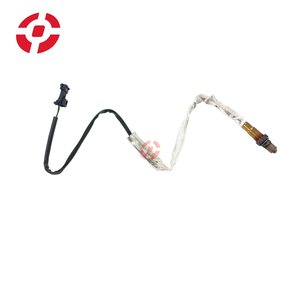
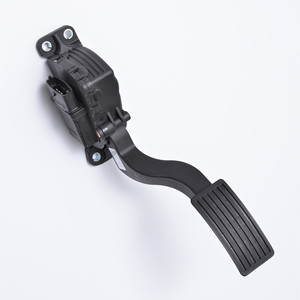
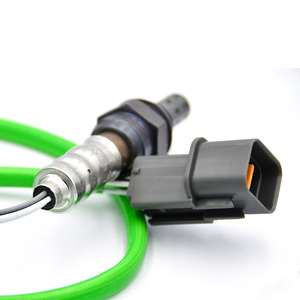
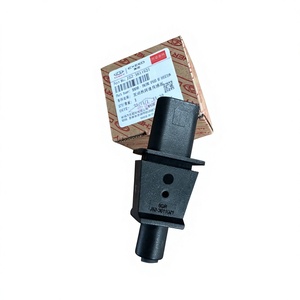
Backed by over five decades of field experience across harsh ambient environments—ranging from sub-zero winter corridors at -40°C to coastal humidity—our engineered CE certified arrow lights and sensor hardware deliver proven longevity for municipal, industrial, and highway authorities.
Our quality management infrastructure has been ISO 9001 certified since 2003. Every production batch undergoes full optical spectroradiometry, burn-in thermal testing, and 100% traceably documented QA before dispatch.
Quotations and engineering submittals are delivered complete with NEMA TS-2, ATC, NTCIP 1202/1203, ITE, and EN 12368 compliance documentation, simplifying compliance reviews for engineering consultants and buyers.
Operating out of three major regional facilities with representation across 20+ specialized mobility partners, we provide unbiased, lifecycle-cost-optimized technical solutions tailored to exact site geometry.
Industrial B2B procurement of LED arrow signals requires addressing the "Sun Phantom Effect"—where strong external ambient sunlight strikes a signal lens and creates a false illumination appearance. Premium CE certified arrow light factories utilize patented Fresnel total internal reflection (TIR) optics coupled with dark-tinted polycarbonate masks. This architecture achieves Class A optical performance under EN 12368, maintaining a high contrast ratio (>10:1) even under direct low-angle solar glare.
A detailed technical breakdown of optical, thermal, electrical, and environmental engineering parameters required for international traffic control and directional guidance infrastructure.
CE certification for directional traffic signals relies heavily on EN 12368:2015 (Traffic control equipment - Signal heads). High-precision factory manufacturing requires strict adherence to chromaticity coordinates for Red, Yellow, and Green LED arrays, preventing signal confusion under foggy or high-glare atmospheric conditions. Advanced optical arrays utilize high-luminosity SMD LEDs coupled with customized parabolic lenses that achieve uniform luminance distribution without hot-spot pixelation, maintaining light intensity across a minimum 60° viewing cone.
The operational lifespan of an LED arrow module is inversely proportional to junction temperature. Leading factories incorporate metal-core printed circuit boards (MCPCB) bonded to extruded aluminum heat sinks. Integrated constant-current switch-mode power drivers operate at wide input ranges (AC 80V–265V 50/60Hz or DC 12V–24V) with active power factor correction (PFC > 0.95). High electrical efficiency (>92%) minimizes internal heat generation, preserving epoxy encapsulation integrity and preventing lumen depreciation over 100,000 continuous hours.
Outer enclosures demand high-impact UV-stabilized polycarbonate or die-cast aluminum alloys meeting IP65 to IP67 protection ratings under IEC 60529. Silicone O-ring gasket seals safeguard internal electronics against moisture ingress, salt mist corrosion, and airborne industrial pollutants. Additionally, vibration testing in accordance with NEMA TS-2 specifications ensures structural integrity under extreme dynamic loads near high-speed motorways and heavy rail crossings.
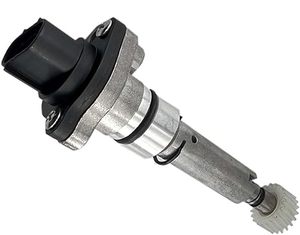
Modern arrow light installations no longer function in isolation. Next-generation controllers interface with roadside vehicle speed sensors (VSS), inductive loops, and optical throttle telemetry modules. By integrating dynamic NTCIP 1202 communications protocols, signal timings adjust adaptively based on real-time vehicle velocity, turning movement counts, and queue back-ups, cutting intersection delay by up to 28% in municipal deployments.
Evaluating technical risk, life-cycle costs, and regulatory compliance markers when specifying directional signal indicators for commercial and municipal tenders.
| Evaluation Metric | Certified CE OEM Manufacturer | Standard Commercial Factory | Low-Cost Uncertified Supplier |
|---|---|---|---|
| Regulatory Standards | CE (EN 12368), RoHS, ISO 9001, IP67 | Basic CE Mark (Self-Declared EMC) | Non-certified / Incomplete Lab Test Data |
| Luminous Efficacy | > 110 lm/W (Uniform TIR Optics) | 70 – 85 lm/W (Standard Diffuser) | < 60 lm/W (High Degradation Rate) |
| Thermal Architecture | MCPCB Aluminum Baseplate + Extruded Sink | Standard FR4 PCB with Passive Copper Vias | Low-grade FR4 without Dedicated Heat Sinking |
| Operating Temperature | -40°C to +85°C Extreme Resilience | -10°C to +60°C Standard Range | -5°C to +45°C (Frequent Winter Failures) |
| Sun Phantom Ratio | Class 5 (Highest Contrast > 10:1) | Class 2 or 3 Standard Contrast | Unrated (High Sun Glare Hazard) |
| MTBF / Lifetime | 100,000 Hours (5-Year Warranty) | 30,000 Hours (2-Year Warranty) | < 15,000 Hours (6-Month Warranty) |
| Submittal Package | Full CAD, Wiring Diagrams, IES Photometrics | Basic Specification Sheet | No Official Engineering Submittal Support |
Key technology shifts transforming the B2B landscape for arrow directional signals, smart intersection controllers, and automated vehicle telemetry sensors.
Arrow lights are evolving into V2X (Vehicle-to-Everything) communication hubs. Fitted with DSRC or C-V2X roadside units (RSUs), signal heads broadcast phase timing (SPaT data) directly to autonomous and connected vehicles, allowing preemptive speed adjustment to eliminate unnecessary stopping.
Next-generation LED arrays reduce operational wattage down to under 5 Watts per directional light engine. This extreme energy efficiency allows complete solar micro-grid operation with lithium iron phosphate (LiFePO4) storage, ideal for remote highway bypasses and temporary construction lane switches.
Directional arrows are becoming tightly integrated with radar speed sensors and camera analytics. When high vehicle approach speeds or aggressive braking are detected, intelligent signal logic delays green-arrow termination to prevent T-bone collision hazards.
Answers to common engineering, compliance, and logistics questions raised by municipal project engineers and international procurement officers.
CE certification for arrow lights requires compliance with two mandatory European directives: the Low Voltage Directive (LVD 2014/35/EU) and Electromagnetic Compatibility Directive (EMC 2014/30/EU). Specific technical performance is evaluated under EN 12368 for optical intensity, chromaticity, and phantom light performance, alongside EN 50293 for electromagnetic immunity in traffic environments. Leading OEM suppliers provide third-party lab test reports validating all these criteria.
ISO 9001 certified factories utilize strict LED chromaticity binning algorithms. LEDs are sourced from top-tier semiconductor fabricators under tight color-temperature tolerances (ANSI C78.377). During assembly, automated optical inspection (AOI) and integrating-sphere spectroradiometers measure every light engine for lux output, dominant wavelength, and color coordinates before sealing, ensuring 100% visual uniformity across batch shipments.
Yes. OEM/ODM manufacturing capability includes custom input voltage step-downs (such as 12VDC solar, 24VDC industrial, 120VAC North American standard, or 230VAC European grids). Structural housings can also be customized with universal bracket adaptors for vertical, horizontal, or mast-arm mounting configurations, accommodating regional signal head geometry.
Comprehensive submittal packages include full dimensional CAD drawings, photometric IES file distributions, electrical wiring schematics, material safety data sheets (MSDS), IP rating certificates, EN 12368 compliance certifications, ISO 9001 quality audit records, and factory warranty documentation. These documents streamline approval cycles for tender consultants and city inspectors.
Vehicle Speed Sensors (VSS) and electronic throttle position sensors feed telemetry data into local traffic signal controllers. When networked with directional arrow lights, adaptive controllers can extend green arrow phases dynamically for heavy trucks unable to stop safely, or trigger dynamic red-clearance intervals to prevent vehicle side-collisions.
Standard sample production and testing take 5 to 7 business days. Upon sample approval and finalized specification sign-off, full factory production runs typically require 2 to 4 weeks depending on batch volume. Expedited freight and pre-commissioning bench testing are available upon request.
Speak directly with our technical engineering team to obtain custom OEM pricing, photometric data sheets, and compliance verification for your upcoming infrastructure or procurement project.
Send an Inquiry