ISO 9001 certified since 2003 Quebec · Ontario · British Columbia 1-800-363-7481

Explore our CE-compliant, field-tested vehicle sensing systems designed for continuous 24/7 reliability in demanding parking and intelligent transportation environments.
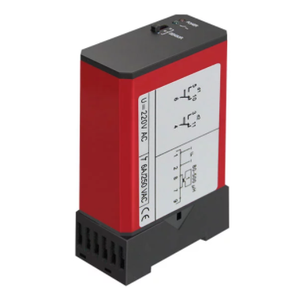
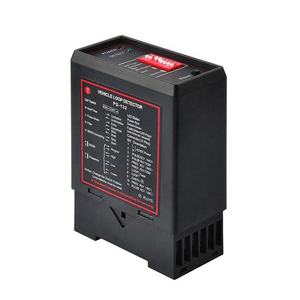
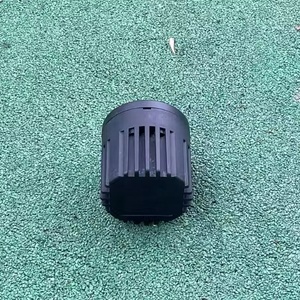
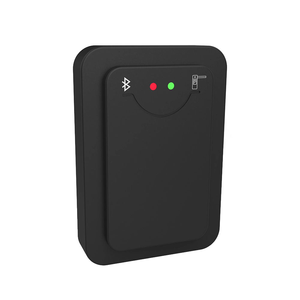
Fully certified under EN 61000-6-3 & LVD 2014/35/EU directives.
Rapid detection response ensuring zero barrier gate latency.
Proven in municipal traffic, toll stations, and automated car parks.
Strict OEM/ODM manufacturing process with 100% bench testing.
In modern Intelligent Transportation Systems (ITS) and Parking Access and Revenue Control Systems (PARCS), vehicle detection accuracy is paramount. A single missed detection can result in severe equipment damage, compromised facility security, or revenue leakage. As an established manufacturer of high-reliability traffic sensors with roots tracing back to international ITS standards (including compatibility with NEMA TS-2, ATC, and European CE directives), our factory produces state-of-the-art CE certified inductive loop detectors designed for flawless performance across extreme climatic conditions (-40°C to +85°C).
An inductive loop detector system operates based on the principle of electromagnetic induction. A wire loop embedded in the road pavement serves as the inductive element of a tuned LC oscillator circuit within the detector unit. When a metallic body—such as a passenger car, truck, motorcycle, or bicycle—passes over or stops inside the loop area, the metallic mass interacts with the high-frequency alternating magnetic field generated by the loop.
This interaction introduces eddy currents within the vehicle's metallic structure, which creates an opposing magnetic field. The net result is a reduction in total loop inductance ($L$). The electronic detector circuit continuously measures the resonant frequency ($f = \frac{1}{2\pi\sqrt{LC}}$) or phase shift of the oscillator. When the inductance drop ($\Delta L / L$) exceeds the user-configured sensitivity threshold, the internal output relay or solid-state opto-coupler shifts state, sending an instantaneous pulse or presence signal to the barrier gate controller or traffic signal cabinet.
Our loop detectors execute dynamic frequency scanning upon powering up, compensating for environmental ground drift and neighboring loop crosstalk.
Built-in multi-stage gas discharge tubes (GDT) and transient voltage suppressors (TVS) protect internal electronics against 4000V lightning surges.
Adjustable $\Delta L$ sensitivity settings ranging from 0.01% to 0.5%, enabling accurate detection of high-bed trailers down to low-mass electric scooters.
To assist system integrators, consulting engineers, and procurement managers in specifying the exact loop detector model for their project requirements, the table below provides a comprehensive engineering matrix comparing our primary product classes:
| Model / Category | Channel Count | Operating Voltage | Response Time | Crosstalk Elimination | Primary Application | Compliance |
|---|---|---|---|---|---|---|
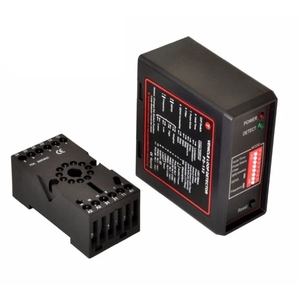
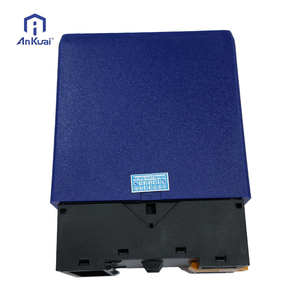
| AK-TL002 Series | Single Channel | AC/DC 12V - 24V | < 20 ms | DIP Switch Frequency Tuning | Parking Toll Gates & High-Speed Access | CE / RoHS |
| YET-ILD-110M | Single Channel (Wireless Opt.) | AC 220V / DC 24V | < 15 ms | Automatic Multiplex Isolation | Commercial Car Parks & Traffic Counters | CE / ISO 9001 |
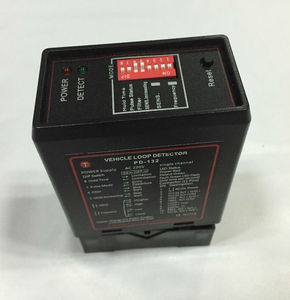
| PD132 Industrial | Single Channel Standard | 12V / 24V / 110V / 220V | < 10 ms ultra-fast | 4-Frequency Selection Logic | Boom Barriers, Turnstiles & Bollards | CE / EN 61000 |
| PD232 Dual Channel | Dual Channel (Independent) | AC 220V $\pm$10% | < 20 ms per ch. | Phase-Shifted Channel Scanning | Directional Vehicle Flow & Anti-Tailgating | CE / SIL2 |
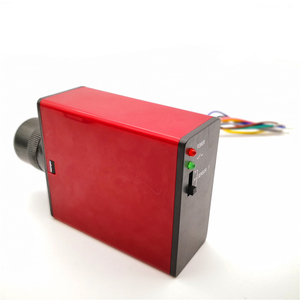
| 79GHz Radar Array | No-Cut Wireless Radar | DC 12V (IP66 Housing) | < 5 ms real-time | Target Velocity Filtering | Non-Invasive Barrier Anti-Fall System | CE / FCC / IP66 |
As smart cities shift toward interconnected mobility networks and autonomous transit infrastructure, vehicle detection hardware is undergoing a rapid evolution. Procurement teams evaluating long-term infrastructure assets must consider several macro trends currently shaping the loop detector manufacturing landscape:
Leveraging decades of specialized ITS equipment distribution and engineering heritage—drawing inspiration from top-tier standards established by Canadian and international traffic leaders—our factory maintains absolute control over every stage of loop detector assembly.
Automated high-speed SMT assembly lines utilizing military-grade capacitors and microcontrollers for extended mean time between failures (MTBF > 100,000 hours).
Every batch undergoes 100% thermal stress burn-in testing from -40°C up to +85°C to guarantee operational integrity in severe freezing or desert climates.
PCB assemblies receive automated acrylic conformal coatings to resist moisture ingress, chemical road salt corrosion, and high relative humidity.
Strict ISO 9001 traceability ensures every single loop detector board carries a permanent barcode tracking component batch numbers and QC inspection records.
Achieving optimal sensor performance requires proper field installation of the wire loop. The total inductance ($L$) of a loop installation should ideally fall between 80 $\mu$H and 300 $\mu$H (with 100 $\mu$H to 200 $\mu$H being optimal). Inductance can be estimated using the empirical formula:
Where P = Loop Perimeter in meters, and N = Number of Wire Turns.
Recommended Wire Turns Rules:
To prevent crosstalk (magnetic interference between adjacent loops connected to separate detector units), installers must ensure feeder cables are tightly twisted at a minimum of 20 turns per meter. Furthermore, adjacent loop modules should be set to distinct operating frequency channels via the front-panel DIP switches.
Clear, authoritative technical answers to assist procurement directors, traffic engineers, and installation contractors.
All our vehicle loop detectors are fully CE certified under European Standards EN 61000-6-1 and EN 61000-6-3 for Electromagnetic Compatibility (EMC), as well as EN 60950 / EN 62368 for Electrical Safety. Furthermore, our manufacturing facility operates under a certified ISO 9001:2015 Quality Management System, ensuring full submittal compliance for government tenders and municipal ITS projects worldwide.
Dual-channel detectors utilize two distinct roadside loops laid sequentially in the travel lane (Loop A and Loop B). The internal microprocessor evaluates the exact microsecond activation sequence. If Loop A triggers before Loop B, the unit registers a forward vehicle entry; if Loop B triggers first, it registers a reverse movement. This logic is essential for automated parking garage tolling, anti-tailgating barrier protection, and directional traffic counting.
79GHz millimeter-wave radar provides a non-invasive, no-cut vehicle detection solution. While inductive loops require saw-cutting asphalt and inserting feeder cables, 79GHz radar mounts directly onto the barrier gate housing or pole. It is completely immune to pavement surface deterioration, eliminates road closure during installation, and provides superior anti-fall protection for both vehicles and pedestrians.
Yes. Our product series includes standard 11-pin circular connector variants (such as the PD132 and AK-TL002 series) that are pin-for-pin compatible with industry-standard 11-pin DIN rail sockets. They serve as direct drop-in replacements for third-party detectors in existing traffic control cabinets and barrier gate controller housings without requiring wiring modifications.
We offer wide-voltage input versatility to meet global electrical standards. Our detectors are available in multi-voltage configurations supporting AC 220V/110V for standard municipal grids, as well as low-voltage DC/AC 12V-24V for solar-powered gates, battery backup systems, and industrial access control panels.
We provide comprehensive OEM/ODM services for system manufacturers and regional distributors. This includes customized enclosure colors, customized front-panel graphics, private label branding, pre-configured dip switch defaults, tailored output relay logic, and custom cable harness integration with flexible minimum order quantities (MOQ).
Every detector undergoes automated optical inspection (AOI), functional simulator bench testing, and multi-point voltage calibration before factory dispatch.
Our in-house ITS engineering team assists with loop dimensioning math, wiring schematics, cabinet integration plans, and tender specification writing.
Maintained buffer inventory for high-demand models ensures rapid dispatch within 48 hours for urgent project commissioning and spare-parts fulfillment.
Request our comprehensive product catalog, detailed engineering submittal sheets, and factory-direct price lists for wholesale B2B procurement.
Get Catalog