ISO 9001 certified since 2003 Quebec · Ontario · British Columbia 1-800-363-7481

Rigorous OE-spec replacements, high-precision oxygen sensors, and heavy-duty speed/position modules engineered to comply with strict European CE directives and international ISO standards.
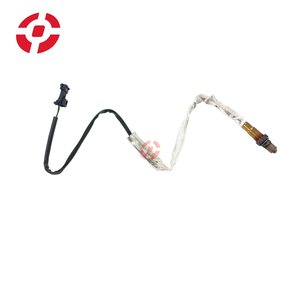
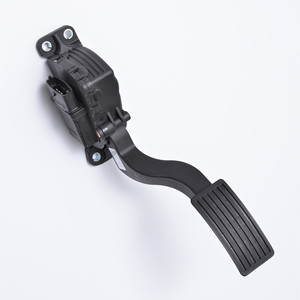
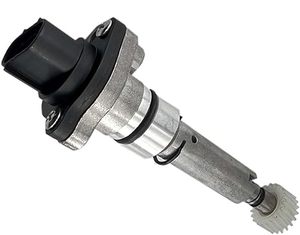
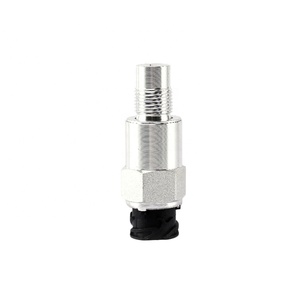
In modern intelligent transportation, industrial automation, and automotive powertrains, motion sensors, vehicle speed sensors (VSS), and lambda/oxygen sensors serve as critical sensory nodes within closed-loop control architectures. The modern procurement landscape requires far more than basic part compatibility; enterprise buyers, OEM engineering lead technicians, and Tier-1 automotive procurement teams demand documented CE EMC compliance (Directive 2014/30/EU), IATF 16949 quality alignment, and verified signal integrity under severe environmental stress.
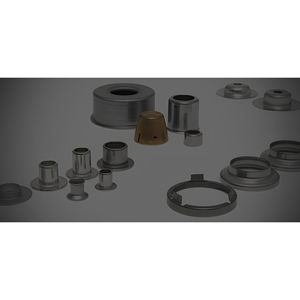
As an established manufacturer with over five decades of engineering inheritance dating back to 1974, our production ecosystem synthesizes deep-drawn metal enclosure fabrication, automated surface-mount technology (SMT) sensing elements, and zero-drift calibration routines. Whether specifying hall-effect speed sensors for heavy-duty commercial vehicle transmissions or planar zirconia oxygen sensors for low-emission internal combustion engines, our manufacturing protocols fulfill strict OEM tolerance thresholds.
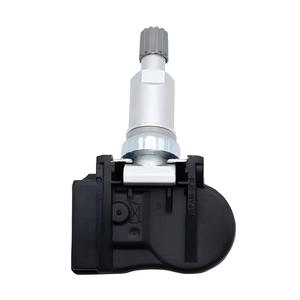
Motion sensing in automotive and industrial contexts encompasses rotational speed detection, linear position tracking, pressure telemetry, and gas flow kinetics. Fulfilling the European CE mark requires meeting stringent Electromagnetic Compatibility (EMC) regulations, ensuring that sensor circuitry neither emits disruptive electromagnetic interference (EMI) nor succumbs to external signal distortion caused by high-voltage ignition systems, inverter switching noise, or mobile telecommunications backhaul.
Bridging technical performance with enterprise procurement reliability requires complete supply chain transparency. Our certified manufacturing plants execute full-stack quality management backed by ISO 9001 certification (maintained continuously since 2003). By deploying vendor-neutral component benchmarking, rigorous bench testing, and real-time Automated Optical Inspection (AOI), we supply global distributors, transit authorities, and aftermarket networks with zero-defect sensor shipments.
| Evaluation Parameter | Standard Market Sensors | Our CE Certified Enterprise Grade Sensors | Procurement Advantage |
|---|---|---|---|
| EMC Directive Compliance | Basic uncertified or self-declared | Full EN 61000-6-2 / EN 61000-6-4 Laboratory Test Certification | Zero signal interference with vehicle ECU & CAN-bus networks |
| Thermal Range Testing | -20°C to +85°C standard potting | -40°C to +125°C (Engine Bay / Chassis Grade potting) | Reliable operation in extreme arctic or desert environments |
| Calibrated Signal Accuracy | ±3% output tolerance | < ±0.5% full-scale deviation across voltage domain | Precise fuel metering, speed reading, and throttle control |
| Quality Traceability | Batch-level tracking only | Individual serial barcode mapping under ISO 9001 QMS | Complete audit readiness for automotive assembly compliance |
| Vibration Resistance | 10G random vibration rated | 30G sinusoidal sweep vibration endurance tested | Extended service lifespan under severe commercial vehicle vibration |
As the automotive and industrial sectors transition toward autonomous driving architectures, smart mobility, and electrified powertrains, the demand for high-reliability motion sensors is undergoing a fundamental structural shift. Procurement officers and engineering managers must position their supply chains to accommodate three dominant industry trends:
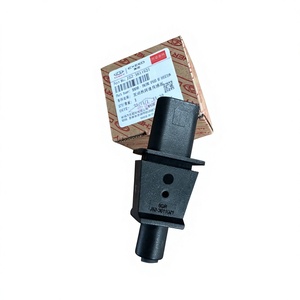
Modern vehicle speed sensors and throttle position assemblies are no longer simple analog pulse generators. Next-generation systems integrate microcontrollers directly within the sensor housing, outputting digital SENT (Single Edge Nibble Transmission) or CAN-FD signals. This enables real-time sensor self-diagnostics, predictive fault reporting, and adaptive recalibration, reducing fleet downtime for commercial transport operators.
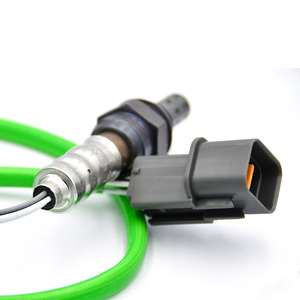
Global regulatory bodies continue to lower permissible hydrocarbon (HC), carbon monoxide (CO), and nitrogen oxide (NOx) exhaust levels. This places immense pressure on oxygen and lambda sensor manufacturers to deliver ultra-fast response times and planar sensor elements capable of surviving prolonged exposure to high-sulfur fuels and elevated exhaust gas temperatures exceeding 900°C.
Supply chain disruptions over recent years have forced major automotive parts buyers away from single-source procurement models. Strategic buyers now prioritize verified OEM/ODM manufacturers capable of delivering standardized deep-drawn metal components, custom wire harness lengths, and universal OE cross-referencing (such as VOLVO 30637837, CHERY J52-3611021, and Toyota/Lexus 8318112040 fitments) with guaranteed delivery lead times.
From raw material sourcing to automated bench testing, our manufacturing ecosystem provides high-gain advantages for international sensor distributors and vehicle manufacturers.
Every sensor model is designed to exceed North American and European standard parameters. Rigorous validation guarantees full compatibility with NEMA TS-2, ATC, and automotive OE circuit standards.
Our deep-drawn metal processing lines and internal toolmaking shops enable custom sensor housing production, tailored connector pinouts, specific wire resistance calibrations, and private label packaging.
Utilizing end-of-line functional test benches, 100% of oxygen sensors and speed pulse generators are checked for signal voltage, response time, and heater resistance before packaging.
Detailed technical insights answering common inquiry points from engineering teams, sourcing directors, and OEM buyers.
Our factory operates under an ISO 9001 certified quality management system. Product lines carry full CE documentation, fulfilling the European EMC Directive 2014/30/EU and RoHS 3 directives. Test reports from accredited third-party laboratories are available upon submittal for enterprise bulk orders.
Our engineering department utilizes CMM precision laser scanning of original equipment samples to replicate housing dimensions, connector geometry, terminal plating thickness, and internal circuit impedances. Each sensor is guaranteed to meet or exceed original OE electrical parameters.
Sensors undergo rigorous environmental chamber testing including 50-hour salt spray exposure (ASTM B117 standard), thermal shock cycling from -40°C to +125°C, high-pressure water jet washing (IP68 rating verification), and multi-axis vibration testing up to 30G acceleration.
Yes. Our metal stamping and deep-drawing division fabricates custom sensor enclosures, heat shields, and mounting brackets in stainless steel, aluminum, and brass. We assist OEM engineers from initial 3D CAD modeling through prototyping and mass production tooling.
Standard catalog items maintain a low baseline MOQ starting at 50 to 100 units depending on the part complexity. Standard production lead time is 15 to 25 business days, with expedited sample production available within 7 days for verified technical buyers.
We utilize integrated ceramic heating elements with optimized thermal mass coupled with high-purity platinum electrodes. This configuration enables rapid activation to operating temperature (350°C+) while protecting against ceramic substrate cracking caused by condensation exposure.
Connect directly with our senior application engineers and international sales specialists to request submittal packages, CAD drawings, test documentation, and customized factory quotations.
Get Catalog