ISO 9001 certified since 2003 Quebec · Ontario · British Columbia 1-800-363-7481

Explore our industrial-grade vehicle detection modules, speed telemetry components, and OEM replacement kits pre-tested for high-throughput operational integrity.
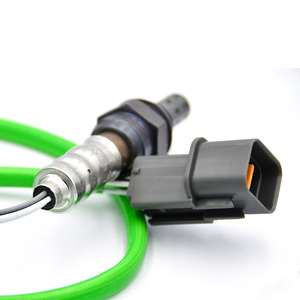
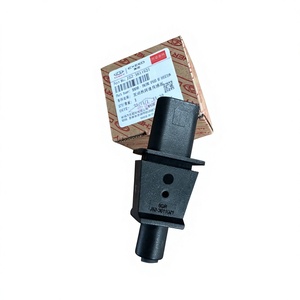
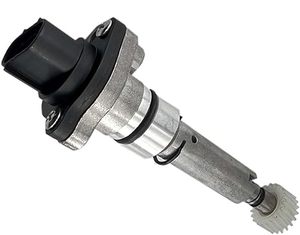
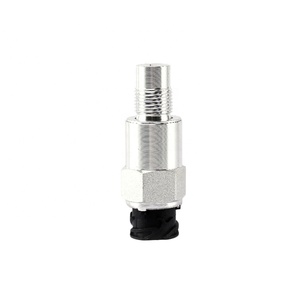
In the modern smart city and Intelligent Transportation System (ITS) ecosystem, the accuracy of vehicle counting hardware, detection loops, speed telemetry, and automotive sensors directly dictates operational safety, dynamic signal optimization, and municipal traffic planning. Procurement officers, highway department directors, and automotive Tier-1 suppliers face an increasingly complex sourcing environment. Navigating factory-level manufacturing capabilities for CE certified vehicle counters requires an in-depth understanding of compliance frameworks, hardware durability across harsh climatic conditions, and signal integration protocols.
Core Procurement Insight: CE Certification for vehicle counting hardware is not merely a regulatory stamp—it represents rigorous compliance with Electromagnetic Compatibility (EMC Directive 2014/30/EU), Low Voltage Directive (LVD 2014/35/EU), and European Standard EN 12414 for traffic control equipment. Sourcing directly from verified factory floors guarantees signal integrity against power surges, industrial RF interference, and severe thermal cycles (-40°C to +85°C).
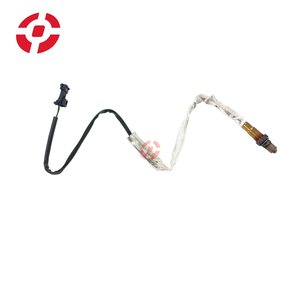
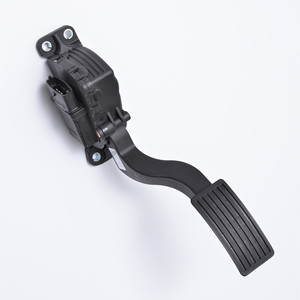
Engineered vehicle counting systems operate across diverse physical methodologies, ranging from pavement-embedded inductive loops and wireless magnetometers to overhead doppler radar arrays and AI-enhanced optical detection. Concurrently, automotive-side telemetry components—such as Vehicle Speed Sensors (VSS), Accelerator Pedal Position Sensors (APPS), and Lambda/O2 Oxygen Sensors—feed critical CAN-bus telemetry data to onboard vehicle control units (ECUs). When purchasing at scale from specialized manufacturing facilities, verifying component traceability, quality management systems (ISO 9001:2015 and IATF 16949), and standardized backhaul interfaces (such as NTCIP 1202/1203) is essential to avoiding premature field failure and costly retrofits.
High-reliability vehicle counter production relies on stringent factory-floor quality controls. Industrial manufacturing facilities specializing in ITS components and automotive OEM sensor assemblies implement standardized multi-stage validation pipelines before any hardware receives shipping clearance:
Every Surface-Mount Technology (SMT) circuit assembly undergoes high-resolution optical scanning to eliminate micro-solder bridges, component misalignment, and cold joints on critical microcontroller units.
Enclosures and sensor heads are subjected to thermal shock testing (-40°C to +85°C), relative humidity saturation (95% non-condensing), and ingress protection testing (IP67 / IP68 ratings) to prevent moisture intrusion in field cabinets.
CE compliance testing ensures immunity against lightning strikes, electrostatic discharges (ESD up to 15kV), and vehicle ignition system radio frequency interference according to EN 61000-6-2/4 specs.
As cities transition toward adaptive traffic signal control and connected vehicle ecosystems (V2X), the technical requirements for vehicle counting hardware are rapidly evolving. Buyers must evaluate hardware platforms based on three primary innovation trajectories:
Legacy counting installations relied purely on single-channel magnetic pulse generation. Modern CE-certified factory designs integrate multi-modal sensor fusion—combining microwave radar velocity tracking with ultra-low-latency optical sensors. By executing deep-learning classification algorithms directly on field microprocessors (edge processing), modern counters differentiate between passenger cars, heavy commercial vehicles, buses, bicycles, and pedestrians without incurring high backhaul bandwidth costs.
In rural or highway applications where trenching electrical cables is cost-prohibitive, vehicle counting stations now utilize energy-efficient microcontrollers and NB-IoT / LoRaWAN wireless modules. Modern factories produce low-draw magnetic sensor pods that operate reliably for up to 10 years on internal lithium thionyl chloride batteries, interfacing seamlessly with centralized transportation data hubs.
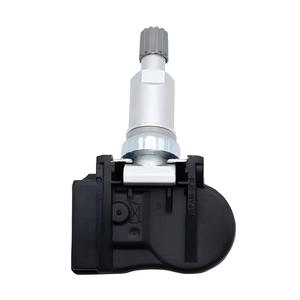
Beyond roadside traffic monitoring, modern vehicle dynamics tracking relies heavily on onboard sensors. High-precision Vehicle Speed Sensors (VSS) and electronic accelerator pedal position sensors feed direct velocity data into onboard telematics systems. Factories manufacturing replacement kits (such as Volvo OE 30637837 O2 sensors or Nissan/Chery speed sensor units) maintain identical electrical pinouts, high-temperature ceramic substrates, and shielded wiring harnesses to match factory-original performance metrics.
To assist procurement directors and consulting engineers in evaluating product options for municipal tenders or OEM distribution, the following decision matrix outlines key operational parameters:
| Detection Technology | Counting Accuracy | Installation Method | Weather Resistance | Primary Ideal Use Case |
|---|---|---|---|---|
| Radar / Microwave Counters | 99.2% - 99.8% | Non-intrusive (Pole / Overhead) | Exceptional (Unaffected by fog/snow) | High-speed corridors & multi-lane arterial roads |
| Inductive Loop Detectors | 98.5% - 99.1% | In-pavement saw-cut slot | Moderate (Pavement degradation risk) | Stop-bar presence detection & actuated signals |
| Wireless Magnetometers | 97.8% - 99.0% | Core-drilled pavement puck | High (Sealed against freeze-thaw) | Bridge decks & locations restricting trenching |
| Automotive Telemetry (VSS) | 99.9% (ECU Direct) | On-vehicle transmission mount | Extreme (Engine bay sealed IP68) | Fleet management, ABS & engine timing control |
| AI Optical / Video Analytics | 96.5% - 98.8% | Overhead mast arm mount | Moderate (Requires optics cleaning) | Turn-movement counts & multi-modal classification |
The global marketplace for vehicle counting equipment and automotive sensor components is undergoing a structural shift driven by urbanization, regulatory decarbonization goals, and supply chain resilience initiatives. Procurement professionals must align their vendor qualification criteria with the following strategic trends:
Proprietary software lock-in is being systematically phased out by municipal transportation authorities. Future-proof vehicle counting hardware must comply with open communication standards such as NTCIP 1202 (Traffic Signal Controller Protocols) and NTCIP 1203 (Dynamic Message Signs). Direct API streaming via MQTT or HTTPS JSON allows field counters to feed city-wide digital twin platforms without requiring proprietary middleware.
European and North American buyers increasingly require environmental product declarations (EPDs). Leading factories in this sector are adopting lead-free soldering processes, recycled aluminum housings, and non-hazardous encapsulation resins that fully comply with EU RoHS 3 (Directive 2015/863) and REACH chemical safety standards.
Recent global semiconductor shortages underscored the vulnerability of single-source component sourcing. Top-tier vehicle counter factories now design modular printed circuit board (PCB) layouts capable of accommodating alternative microcontroller footprints (e.g., ARM Cortex-M4 and RISC-V architectures) without requiring complete hardware redesigns during component pinouts shortages.
Expert guidance on factory audits, CE compliance verification, custom OEM tooling, and installation standards.
When requesting documentation, ensure the supplier provides the official CE Declaration of Conformity (DoC) accompanied by third-party laboratory test reports. Key test standards include EN 61000-6-2 (Electromagnetic Compatibility - Immunity for Industrial Environments), EN 61000-6-4 (Emissions Standard), and EN 50293 for road traffic signal systems. For radio-enabled counters, compliance with the Radio Equipment Directive (RED 2014/53/EU) is also mandatory.
Yes. OEM and ODM partnerships are standard practice for factory-direct orders. Customization services include laser-etched private branding, custom housing colors, tailored cable harness lengths, proprietary pinout connectors, and pre-programmed ECU/ATMS communication firmware tailored to your regional technical specifications.
Extreme temperature changes can cause electronic component drift or housing cracking if improper materials are used. Industrial-grade counters utilize temperature-compensated crystal oscillators (TCXO), ceramic substrate Lambda sensors, and potted polyurethane enclosures that retain elasticity and structural seal integrity between -40°C and +85°C.
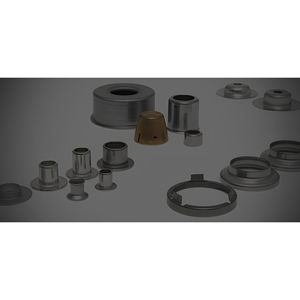
Standard off-the-shelf replacement parts (such as standard VSS units or O2 sensors) typically feature low MOQs starting at 50 to 100 units with a 10-to-15 day dispatch cycle. Customized municipal vehicle counter assemblies or custom-tooled deep-drawn sensor housings generally carry an initial batch MOQ of 500 units with a 30-to-45 day lead time including sample prototyping and validation testing.
Factory-engineered vehicle counter interface cards slide directly into standard NEMA TS-2 detector racks or connect via standard SDLC (Synchronous Data Link Control) bus lines. Output channels map directly to phase calls on ATC controllers, ensuring seamless plug-and-play installation without custom wiring retrofits.
Combining five decades of field engineering experience, ISO 9001 certified quality controls, and multi-regional technical support.
Since 1974, our engineering teams have specified, manufactured, and integrated traffic control and vehicle telemetry systems. Our hardware is built on real-world performance data gathered across brutal winter conditions and high-density urban corridors.
Our quality management system has maintained continuous ISO 9001 certification for over two decades. Every circuit board, sensor housing, and counter assembly is fully batch-tracked with documented inspection certificates.
With fully equipped facilities across Quebec, Ontario, and British Columbia, we deliver local stock reserves, rapid submittal documentation, factory bench testing, and bilingual technical support for international buyers.
Cabinets, controllers, conflict monitors, and sensor cards are pre-assembled, wired, and bench-tested prior to dispatch, reducing field turn-on time and eliminating costly jobsite troubleshooting.
Our products strictly adhere to recognized North American and European specifications including NEMA TS-1/TS-2, ATC, NTCIP 1202/1203 protocols, and ITE/CSA photometric standards for total software interoperability.
Representing over twenty top-tier technology partners, our application engineers provide unbiased technology selection—matching radar, video, inductive loop, or wireless magnetometers to your precise project constraints.
Connect directly with our senior application engineers to obtain technical datasheets, wiring diagrams, CE compliance documentation, or volume wholesale pricing for vehicle counters and automotive sensor assemblies.