CE Certified OEM & OES Automotive Solutions

CE Certified Vehicle Sensors Manufacturer & Exporter

Precision Engineering, OEM-Grade Calibration, and Robust Supply Chain Architecture for Global Automotive Markets

Catalog Overview

High-Precision Automotive Sensing Portfolio

Explore our CE-certified, factory-calibrated vehicle sensor assemblies engineered for global OEM replacements, commercial fleets, and heavy-duty transportation applications.

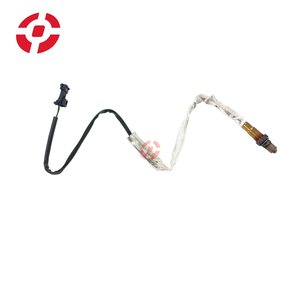
OE Replacement Car O2 Sensor for VOLVO OE 30637837

Automotive Oxygen (O2) Sensor Kit - VOLVO OE 30637837 Compatible

High-precision planar zirconia element with fast-light-off heater technology for optimal stoichiometric combustion control and minimal emissions.

Send an Inquiry
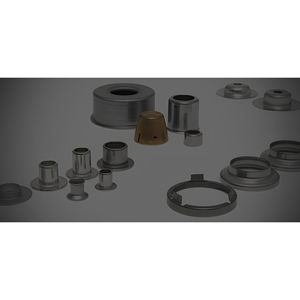
Precision Metal Deep-Drawn Auto Sensors Parts For Automotive Use

Deep-Drawn Stainless Steel Auto Sensor Enclosure Components

Corrosion-resistant, hermetically sealed sensor housings fabricated via high-speed transfer dies for high-vibration engine environments.

Send an Inquiry
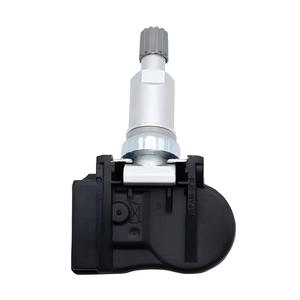
Direct Fit Tire Pressure Sensor 40700-3AN0B

Direct-Fit TPMS Tire Pressure Monitoring Sensor 40700-3AN0B

Long-life battery automotive TPMS operating at dual frequencies with real-time pressure, temperature, and motion sensing capabilities.

Send an Inquiry
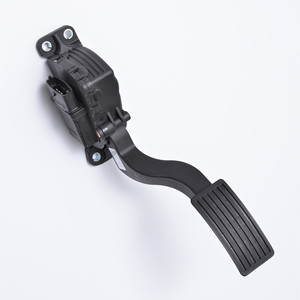
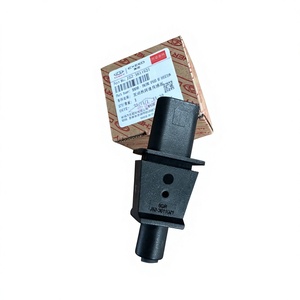
Drive-By-Wire 611A Accelerator Pedal Position Sensor Assembly 5V

611A Accelerator Pedal Position Sensor Assembly (5V Dual Output)

Redundant dual-channel throttle position tracking engineered for passenger vehicles, commercial trucks, and heavy bus transport systems.

Send an Inquiry
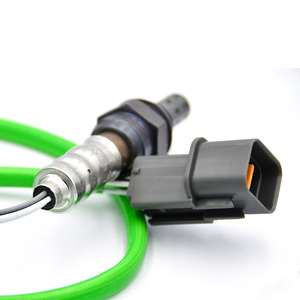
Commercial Duty Automotive Lambda Sensor Suitable for Commercial Vehicle

Heavy-Duty Commercial Vehicle Lambda Exhaust Sensor Assembly

High-temperature ceramic element Lambda sensor rated for Euro 5/6 commercial diesel powertrains and long-haul transport engines.

Send an Inquiry
Powertrain Speed of Rotation Sensor J52-3611021 for CHERY

Crankshaft / Camshaft Rotation Speed Sensor - J52-3611021

Hall-effect differential rotation speed sensor providing zero-speed detection and electromagnetic interference immunity for engine timing.

Send an Inquiry
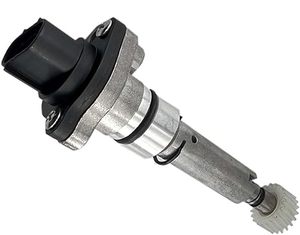
Universal OE Vehicle Speed Sensor 8318112040 Compatible with Toyota Lexus

Transmission Vehicle Speed Sensor (VSS) - OE 8318112040

Multi-model OEM compatible speed sensor for precise speedometer readout and transmission shift scheduling accuracy.

Send an Inquiry
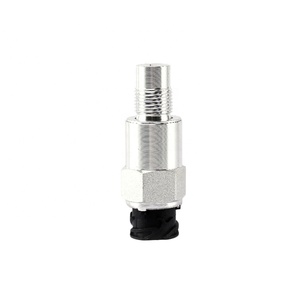
Truck Fleet Automotive Speed Sensor BQZ023C for Truck OE 500754709901

Truck Transmission Speed Sensor BQZ023C - Universal Fitment

Reinforced IP68 water-sealed speed sensor engineered for heavy commercial vehicle gearboxes (OE Cross Ref: 500754709901).

Send an Inquiry
Manufacturing Excellence

Why Tier-1 Suppliers and OEM Wholesalers Partner With Us

Rooted in five decades of engineering lineage and backed by rigorous quality management systems, our facilities bridge advanced sensor R&D with global export compliance.

ISO 9001 Certified Quality System
100% EOL Automated Testing
-40°C~125°C Thermal Shock Rating
65+ Global Export Destinations

Full CE & RoHS Regulatory Compliance

Certified for European & North American Markets

Every automotive sensor unit leaving our manufacturing floor undergoes thorough electro-magnetic compatibility (EMC) and signal stability screening. Holding verified CE Certification, ISO 9001 quality system adherence, and RoHS compliance, our components pass seamless customs audit procedures across European, North American, and Asia-Pacific customs corridors.

Deep-Drawn Stamping & Automated Assembly

Micron-Level Tolerance Precision

Utilizing high-speed transfer presses and deep-drawing metalworking technologies, our internal manufacturing lines produce custom sensor shells, protective sleeves, and bracket assemblies. This vertical integration guarantees optimal signal shielding, structural integrity against mechanical stress, and absolute dimensional repeatability.

OEM/OES Cross-Reference Capability: Our engineering division maintains a database of over 15,000 OEM interchange references (covering Volvo, Toyota, Chery, GM, Nissan, and European heavy commercial trucks). Submittal packages, 3D CAD models, pinout diagrams, and bench testing logs are made available to engineering procurement teams within 24 hours of inquiry.

Technical Whitepaper Insights

Future Development & Sourcing Trends in Vehicle Sensing Systems

An in-depth analysis of architectural shifts in automotive electronics, powertrain electrification demands, and global procurement strategies for modern vehicle sensor hardware.

1. The Evolution Toward Smart CAN-Bus/LIN Integrated Sensor Modules

The automotive industry is undergoing a structural paradigm shift away from analog, point-to-point sensor wiring toward intelligent, networked sensing hubs. Modern Engine Control Units (ECUs), Body Control Modules (BCMs), and Transmission Control Units (TCUs) demand digitally processed signal telemetry to reduce harness weight and mitigate electrical noise.

Integrated micro-controllers embedded directly within sensor assemblies—such as digital Hall-effect rotation speed sensors and SENT-protocol pressure sensors—enable real-time localized signal filtering and onboard self-diagnostics (OBD-II compliant). For global procurement officers, sourcing sensors equipped with digital signal conditioning drastically reduces warranty returns triggered by harness signal degradation in harsh operating environments.

2. Electrification and Thermal Management Impact on Powertrain Sensors

While Electric Vehicles (EVs) remove traditional internal combustion exhaust pathways, the requirement for high-reliability thermal and rotational sensors has exponentially increased. Battery Management Systems (BMS), electric axle drive units (e-Axles), and inverter cooling loops demand ultra-fast response pressure and temperature sensors operating continuously under extreme temperature cycling.

Concurrently, for internal combustion engine (ICE) and hybrid commercial transport fleets, Euro 6/VI and EPA regulations mandate sub-second response times from exhaust gas oxygen (O2) and Lambda sensors. Advanced planar ceramic substrate coatings now prevent sensor poisoning from sulfur and silicon contamination, extending sensor operational life past 150,000 vehicle kilometers.

3. Material Innovation: Deep-Drawn Stainless Alloys and IP69K Hermetic Sealing

Mechanical fatigue and moisture intrusion remain the leading root causes of sensor failure in commercial transport and off-highway agricultural machinery. Sourcing trends favor manufacturers capable of delivering sensor assemblies enclosed within deep-drawn stainless steel (SUS316L / SUS304) casings rather than multi-piece brazed shells.

Deep-drawing eliminates structural weld seams susceptible to vibration fracturing. Combined with automated potting using fluorosilicone elastomers, these sensor housing assemblies achieve IP68 and IP69K ingress protection ratings, allowing sensors to withstand high-pressure hot-water washdowns, road de-icing salts, and direct mud immersion.

4. Sourcing Architecture: Mitigating Supply Chain Volatility via Dual-Sourcing SCM

Post-disruption automotive supply chains have permanently moved away from single-source OEM procurement models. Global Tier-1 system integrators and aftermarket distribution networks actively execute dual-sourcing strategies to safeguard assembly lines against localized factory outages and geopolitical shipping bottlenecks.

When selecting an overseas manufacturing partner, procurement directors prioritize suppliers with established ISO 9001 certified quality control protocols, certified raw material traceability, and automated End-of-Line (EOL) functional verification. Partnering with a manufacturer capable of delivering both complete sensor assemblies and deep-drawn metal sub-components guarantees maximum supply chain flexibility and cost optimization.

Technical FAQ

Frequently Asked Sourcing & Engineering Questions

Direct technical guidance for automotive engineers, procurement managers, and aftermarket importers evaluating vehicle sensor manufacturing partners.

What quality assurance and testing protocols are applied to your vehicle sensors prior to shipment?
Every sensor batch undergoes rigorous End-of-Line (EOL) automated testing under simulated electrical load and operating temperature conditions. Our testing matrix includes 100% signal output accuracy calibration, thermal shock cycling (-40°C to +125°C), multi-axis mechanical vibration endurance, and helium leak testing for hermetically sealed deep-drawn sensor enclosures. Quality reports and Certificate of Analysis (COA) documents accompany every batch under our ISO 9001 quality framework.
How do your aftermarket oxygen (O2) and speed sensors compare with original equipment (OE) specifications?
Our sensor engineering team develops all assemblies to direct OE physical and electrical standards. Substrate compositions, ceramic planar heaters, harness lengths, and connector geometries strictly match original parts (such as Volvo OE 30637837 or Toyota speed sensor OE 8318112040). Signal response latency and voltage curves are benchmarked against factory OE components to ensure zero ECU diagnostic fault codes (DTCs).
Are custom branding, harness length modifications, and specialized packaging supported for OEM buyers?
Yes. We offer complete OEM/ODM customized manufacturing services. This includes custom laser etching of part numbers and client logos on deep-drawn metal shells, custom wiring harness lengths, specialized pinout connector configurations, and private-label retail or bulk industrial packaging tailored to your regional distribution requirements.
What is your typical production lead time and minimum order quantity (MOQ) for international export orders?
For standard catalog items (including oxygen sensors, speed sensors, and TPMS units), standard MOQs start at 100 units per item code. Standard production lead time is 15 to 30 calendar days depending on order volume. Express sample evaluation packages and rapid-prototype 3D deep-drawn metal components can be dispatched within 7 working days.
How does your factory ensure compliance with European CE and environmental standards?
Our vehicle sensors are manufactured using conflict-free, RoHS-compliant raw materials and lead-free soldering processes. Electrical components are screened for Electromagnetic Compatibility (EMC) in accordance with automotive CE directives (EN 61000-6-2 / EN 61000-6-4). Compliance documentation, MSDS chemical safety sheets, and CE declarations of conformity are provided upon contract execution.

Ready to Upgrade Your Vehicle Sensor Supply Chain?

Connect directly with our senior automotive applications engineering team for volume pricing, sample requests, and OEM cross-reference verification.