ISO 9001 certified since 2003 Quebec · Ontario · British Columbia 1-800-363-7481

Explore China’s most robust, impact-tested highway barriers, municipal bridge railings, and industrial safety containment units manufactured under strict ISO 9001 quality protocols.
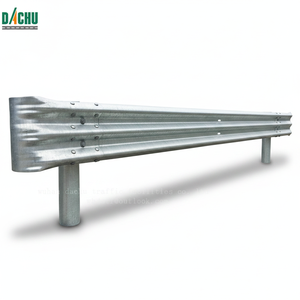
Engineered for high-speed corridors. Manufactured with Q235B structural steel and hot-dip zinc coating exceeding 600g/m² for extreme weather durability.
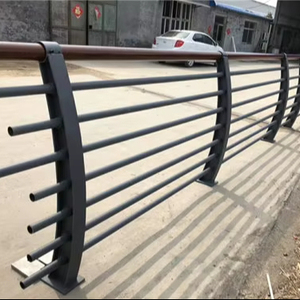
Premium structural aesthetics combined with high corrosion resistance. Ideal for urban overpasses, riverbank walkways, and coastal elevated highways.
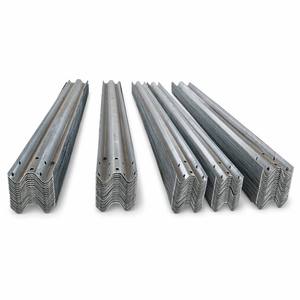
Standard AASHTO M180 specification corrugated steel beam barriers. Designed to absorb lateral collision kinetic energy and redirect stray vehicles safely.
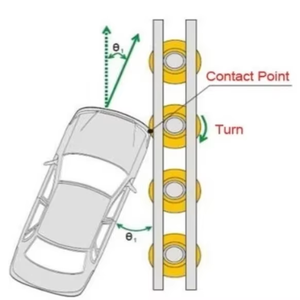
Next-generation rotating barrel design converting impact shock into rotational energy. Significantly reduces fatality rates at sharp mountain curves and ramp exits.
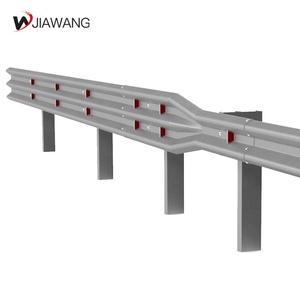
Superior flexural strength compared to standard two-wave guardrails. Recommended for mountain passes, freight traffic corridors, and bridge approach zones.
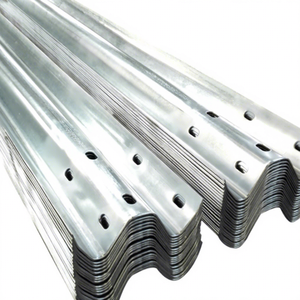
Cost-effective expressway protection system with standardized post spacings, offset blocks, and terminal crash cushions for fast project delivery.
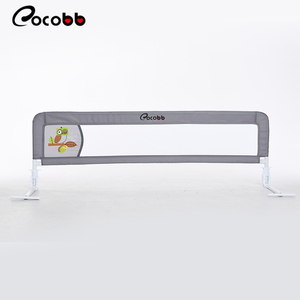
Precision-engineered domestic & institutional safety rail featuring breathable mesh, seamless vertical lift mechanisms, and non-toxic structural alloy framework.
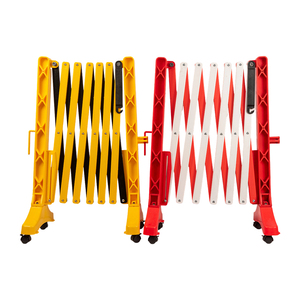
Water-fillable telescopic safety barricade designed for parking infrastructure, school zones, traffic redirection, and airport logistics security.
Navigating international highway infrastructure projects requires proven metallurgy, rigorous crash-testing credentials, and end-to-end supply chain transparency.
Annual steel beam and post production capacity across automated cold-rolling lines.
Strict compliance with ISO 9001:2015, ISO 14001, and ISO 45001 operational standards.
Hot-dip galvanizing according to ASTM A123 & ISO 1461 for up to 30 years service life.
Verified under real-world vehicle impact simulation and physical track testing procedures.
Highway safety barrier design operates at the intersection of structural metallurgy, kinetic impact mechanics, and environmental degradation science. When an out-of-control vehicle leaves the roadway, the guardrail system must act as a continuous energy-absorbing ribbon. It must dissipate kinetic energy through plastic deformation of the steel corrugated beam, controlled yielding of the support posts, and shear displacement of the offset blocks—all while preventing vehicle rollover, vaulting, or barrier penetration.
In modern Chinese OEM manufacturing, raw material selection is strictly controlled. Structural steel grades such as Q235B (yield strength ≥ 235 MPa, tensile strength 375–500 MPa) and Q355B (yield strength ≥ 355 MPa, tensile strength 470–630 MPa) represent the industry benchmark. Q235B offers superior elongation (≥ 26%), allowing the W-beam or Thrie-beam to flex under impact without brittle fracture. For high-containment areas such as mountain passes or bridge approaches, high-strength Q355B steel is specified to withstand impact loads from heavy freight vehicles weighing up to 36,000 kg under AASHTO MASH TL-4 and EN1317 containment level H2 conditions.
Corrosion resistance remains the decisive factor determining life-cycle expenditure (LCC) for highway authorities. Raw steel subjected to atmospheric oxygen, road salt, and coastal humidity degrades rapidly. Leading Chinese suppliers utilize continuous hot-dip galvanizing baths operating at 440°C to 460°C. This process forms a series of metallurgically bonded zinc-iron alloy layers (Gamma, Delta, Zeta) topped by a pure zinc Eta surface layer. Standard specifications mandate a minimum zinc coating weight of 600 g/m² (approx. 84 microns thickness), extending maintenance-free field performance beyond 25 to 30 years even in aggressive C4 industrial and marine environments.
The corrugation geometry of W-Beam and Thrie-Beam profiles provides high moment of inertia. Upon impact, post detachment mechanisms allow the rail to maintain structural height, guiding the vehicle along the barrier vector.
Combining hot-dip galvanizing with electrostatic polyester powder coating (HDG + PVC/PE) creates a synergistic barrier. Powder coating seals micro-porosities in zinc, offering enhanced chemical resistance and customizable visual identification.
Automated punch presses maintain hole center tolerances within ±0.5mm, ensuring seamless field alignment with C-posts, Sigma posts, H-posts, and round wooden or steel support posts during rapid night-time installation.
Compare standard Chinese export parameters against major international highway standards to select the optimal barrier configuration for your project engineering requirements.
| System Type | Profile Standard | Steel Grade | Thickness (mm) | Zinc Coating | Containment Level | Primary Application |
|---|---|---|---|---|---|---|
| W-Beam (2-Wave) | AASHTO M180 Class A/B | Q235B / S235JR | 2.67 / 3.0 / 4.0 | 550 - 1100 g/m² | MASH TL3 / EN1317 N2-H1 | Standard Expressways, Rural Arterials |
| Thrie-Beam (3-Wave) | AASHTO M180 Type II | Q355B / S355JR | 3.0 / 4.0 | 600 - 1200 g/m² | MASH TL4 / EN1317 H2-H3 | High Freight Routes, Bridge Approaches |
| Rotating Roller Barrier | ISO / MASH Certified | High-Elastic EVA + Q235 Core | Modular Barrel (dia 345mm) | Hot-Dip Steel Frame | MASH TL4 / SB Level | Sharp Curves, Ramp Exits, Cliff Roads |
| Bridge Barrier Railing | GB/T 31439 / Custom | 304 / 316 Stainless Steel | 3.0 - 6.0 (Pipe/Tube) | Passivated / Polished | Urban Containment | Overpasses, Riverbanks, Elevated Bridges |
| Retractable Crowd Barrier | Industrial Safety Spec | UV-Stabilized HDPE / PVC | Expandable up to 3.5m | N/A (Corrosion Free) | Pedestrian Control | Parking Garages, Construction Gates |
The global road safety market is undergoing a major transition driven by automated vehicle dynamics, stricter governmental safety mandates, and sustainability requirements. When sourcing highway barriers from Chinese manufacturers, EPC contractors and municipal planning bodies are increasingly evaluating three core emerging trends:
1. High-Containment Energy Absorption Systems (EVA Roller Barriers): Traditional steel beams redirect vehicles through structural deflection. However, at acute impact angles or for high-center-of-gravity vehicles (SUVs, buses), steel beams can lead to rollover risks. Modern EVA (Ethylene-Vinyl Acetate) rotating roller barriers convert 3D impact shock forces into 2D rotational energy, reducing structural deceleration G-forces on vehicle occupants by over 40%. Sourcing of hybrid rolling barriers is projected to grow at a CAGR of 12.4% through 2030.
2. Low-Carbon Steel & Eco-Friendly Galvanizing: Sustainable infrastructure procurement policies (such as the EU's CBAM and US Buy Clean initiatives) are pushing manufacturers to adopt Electric Arc Furnace (EAF) steel-making powered by renewable energy. Advanced Chinese factories are integrating closed-loop acid recycling, zero-discharge galvanizing waste treatment, and ultra-durable zero-lead zinc kettles to reduce embedded carbon footprints per linear meter of guardrail.
3. Intelligent & Connected Safety Infrastructure (V2X Compatible Barriers): Future highway guardrails are transitioning from passive physical barriers to active smart nodes. Next-generation guardrail posts are engineered to integrate IoT impact sensors, solar-powered radar warning beacons, and retroreflective micro-prismatic coatings that interface with Autonomous Vehicle (AV) lidar systems for enhanced night-time lane-keeping safety.
Factories are optimizing containerized nesting packaging (nesting W-beams in bundles of 50 to 100 units) to maximize 40ft High Cube container loads up to 26.5 metric tons, drastically reducing ocean freight costs per kilometer.
Top suppliers provide mill test certificates (MTC according to EN 10204 3.1) with every batch and support live pre-shipment inspections by SGS, BV, or Intertek for tensile, zinc thickness, and drop-weight impact testing.
A complete guardrail submittal requires precision accessory matching: high-tensile bolt/nut sets (Grade 4.8 / 8.8), curved terminal ends, fishtail ends, rubber/steel spacer blocks, and prismatic post reflectors.
Direct technical answers addressing engineering standards, quality compliance, logistics, and factory OEM capabilities.
W-Beam (two-wave) is the global standard for general highways and expressways, optimized for passenger vehicles and light trucks. Thrie-Beam (three-wave) features an extra wave profile providing higher structural stiffness, wider surface coverage, and superior resistance against vehicle rollover. Thrie-Beam is specified for areas with heavy truck traffic, steep downhill grades, and bridge transition zones.
Leading factories maintain ISO 9001 certified quality management systems and produce steel beams using automated roll-forming machines with real-time laser measurement. Mill Test Certificates (MTC) confirm chemical composition (Carbon, Manganese, Silicon, Phosphorus, Sulfur) and mechanical strength (Yield, Tensile, Elongation). Physical crash tests are conducted in accredited laboratories to verify containment levels (N1, N2, H1, H2, H3) and working widths (W1 to W8).
For standard continental climates, a hot-dip galvanizing layer of 550 g/m² (approx. 76 microns) or 600 g/m² (84 microns) according to ISO 1461 is sufficient. For coastal roads, salt-sprayed islands, or highly polluted industrial corridors, we recommend specifying 1100 g/m² to 1200 g/m² zinc weight, or applying a Duplex coating system (Hot-Dip Galvanizing + 100-micron Electrostatic Polyester Powder Coating).
W-Beams and Thrie-Beams are nested tightly in bundles of 50 or 100 pieces, bound with heavy-duty steel strapping and equipped with wooden dynamic dunnage or plastic lifting straps. Post components, spacer blocks, terminal ends, and small hardware (bolts, nuts, washers) are packaged in reinforced wooden crates or steel pallets to streamline forklift unloading at sea ports.
Yes. In addition to standard AASHTO M180 beam lengths (effective length 3.81m or 4.0m), factories offer full OEM/ODM customization based on CAD drawings. This includes specialized C-posts, Sigma (Σ) posts, U-posts, H-posts, round flange posts for bridge mounting, and custom hole punching pattern configurations.
Partner with China’s top-tier guardrail manufacturer. Submit your project bill of materials (BOM), CAD drawings, or engineering specifications to receive instant factory pricing and compliance documentation.