ISO 9001 certified since 2003 Quebec · Ontario · British Columbia 1-800-363-7481

Explore hot-dipped galvanized steel signal posts, cantilever mast arms, octagonal/conical poles, and solar smart light assemblies manufactured to AASHTO LTS-6 and EN40 specifications.
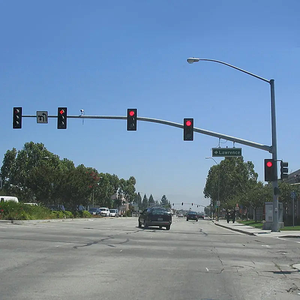
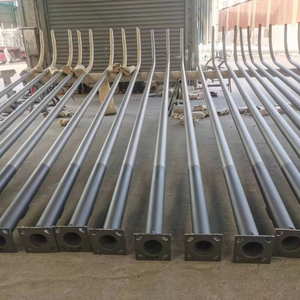
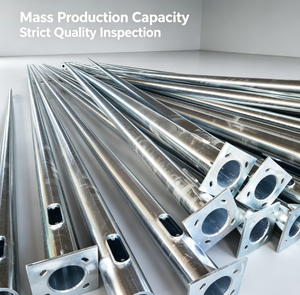
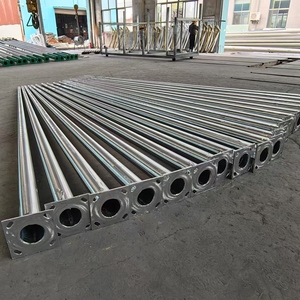
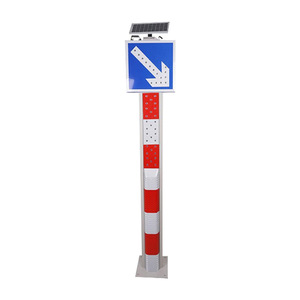
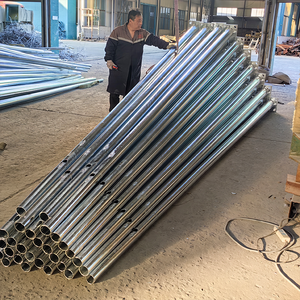
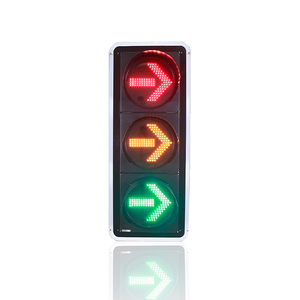

Modern Intelligent Transportation Systems (ITS) and municipal road safety depend heavily on the structural integrity of signal poles, cantilever arms, and camera mounting posts. As global transport authorities transition toward smart city infrastructure, selecting a top-tier Chinese signal pole factory requires evaluating strict metallurgical parameters, compliance with international design codes (such as AASHTO LTS-6, EN40, and ISO 1461), and automated manufacturing capabilities.
China's top signal pole manufacturers have evolved from simple steel fabrication workshops into high-precision engineering hubs. Utilizing CNC plasma cutting, submerged arc welding (SAW), and automated hot-dip galvanizing lines, leading OEMs provide structural support posts capable of withstanding extreme environmental stresses, from coastal saltwater corrosion to hurricane-force wind loads exceeding 160 km/h (45 m/s).
Understanding the metallurgical, mechanical, and surface-protection criteria that distinguish tier-1 signal pole factories from low-grade suppliers.
Premier factories utilize certified Q235B, Q355B (equivalent to S235JR and S355JR under EN 10025), and ASTM A572 Grade 50 steel plate. Material selection ensures high yield strength (up to 355 MPa) and superior fracture toughness under cyclic vibration.
Continuous Submerged Arc Welding (SAW) guarantees 100% penetration along the longitudinal seam of conical and octagonal poles. Non-destructive testing (NDT), including Ultrasonic and Magnetic Particle inspection, prevents weld fatigue.
Full immersion hot-dip galvanization conforming to ASTM A123 / ISO 1461 provides a metallurgical zinc-iron alloy coating over 86 µm thick, offering maintenance-free anti-corrosion protection for 30+ years in marine environments.
Traffic signal poles are subjected to complex static and dynamic fatigue loading. Cantilever signal arms carrying heavy multi-aspect signal heads, LED dynamic message signs (DMS), radar vehicle sensors, and PTZ CCTV surveillance cameras must maintain minimal deflection under severe gust conditions.
Leading Chinese factories perform comprehensive Finite Element Analysis (FEA) during the submittal phase to verify structural stability:
Standard engineering benchmarks utilized by top Chinese manufacturers for municipal highway and smart intersection projects.
| Parameter / Feature | Standard Traffic Pole (Conical) | Heavy Cantilever Signal Arm Pole | Smart City / Solar ITS Signal Pole |
|---|---|---|---|
| Steel Grade | Q235B / S235JR / ASTM A36 | Q355B / S355JR / ASTM A572 Gr. 50 | Aluminum Alloy 6063-T6 / Q355B Steel |
| Height Range | 3m – 6m | 6m – 12m (Arm Span: 4m – 18m) | 4m – 10m |
| Wall Thickness | 3.0mm – 5.0mm | 6.0mm – 12.0mm | 4.0mm – 8.0mm |
| Surface Protection | Hot-Dip Galvanized (ASTM A123) | HDG + Thermoset Powder Coating | Anodized Aluminum / Dual Coating HDG |
| Wind Resistance | 140 km/h (38.8 m/s) | 160 – 180 km/h (45 - 50 m/s) | 150 km/h (41.6 m/s) |
| Integrated Assets | Standard 300mm LED Signal Heads | CCTV, Road Signage, Preemption Sensors | LiFePO4 Batteries, 5G Small Cell, Radar |
The global traffic equipment landscape is undergoing a structural transition. Sourcing teams are no longer purchasing single-purpose steel posts; they are specifying integrated Smart City Infrastructure Poles. Chinese factories are at the forefront of this trend, integrating modern hardware capabilities directly into factory assembly lines:
Backed by decades of field-tested reliability, full quality system certifications, and complete submittal engineering support.
Our production facilities maintain strict ISO 9001 quality management systems certified continuously for decades. Every raw material batch, weld seam, and galvanizing run undergoes rigorous traceable inspection.
We provide full consultant-ready calculation sheets, CAD shop drawings, wind load calculations, and material mill test certificates (MTC) to streamline municipal tender approval processes.
Traffic cabinets, conflict monitors, LED modules, and CCTV power backbones can be integrated and factory bench-tested prior to shipment, drastically reducing on-site installation and turn-on time.
When procuring steel signal support structures overseas, low initial purchase prices can conceal serious structural vulnerabilities. B2B procurement managers should audit prospective factories against the following technical criteria:
Authoritative answers for transportation consultants, contractors, and municipal procurement officers.
Leading Chinese manufacturers design and fabricate signal support structures in accordance with North American and European standards, including AASHTO LTS-6 (Standard Specifications for Structural Supports for Highway Signs, Luminaires, and Traffic Signals), EN40-3/EN40-5 for lighting columns, AWS D1.1 for structural welding, and ASTM A123 / ISO 1461 for hot-dip galvanizing quality.
Wall thickness (ranging from 4mm to 12mm) and pole taper (typically 10mm to 14mm per meter) are calculated based on the maximum bending moment resulting from total effective projected area (EPA) of mounted equipment (signals, signs, cameras) combined with site-specific ultimate wind speeds, fatigue categories, and soil foundation mechanics.
A properly hot-dipped galvanized steel pole with a minimum zinc coating thickness of 86 µm (approx. 610 g/m²) offers a service life of 30 to 50 years in inland urban environments and 20 to 35 years in severe marine coastal conditions (C4/C5 corrosive environments according to ISO 12944).
Yes. OEM/ODM customization is standard practice. Factories build poles according to project-specific CAD shop drawings, tailoring anchor bolt circle diameters, base plate thickness, handhole weatherproofing, internal terminal strip blocks, and arm mounting height to client specifications.
Poles are bundled using heavy-duty woven straps, canvas wrapping, or bubble wrap over galvanized surfaces, with wood blocks separating contact points to prevent surface abrasion. Fragile components, LED heads, solar controllers, and lithium batteries are packed in IP66 export-grade wooden crates.
A standard FAT submittal package includes Raw Material Mill Test Certificates (MTC), Weld Ultrasonic Inspection Reports, Zinc Coating Thickness Test Logs, Dimensional Verification Sheets, Powder Coating Adhesion Test Reports, and Certificate of Origin (CO).
Connect directly with our engineering team to request detailed submittal packages, CAD shop drawings, wind load calculations, or factory-direct B2B quotation pricing.
Get a Quote