ISO 9001 certified since 2003 Quebec · Ontario · British Columbia 1-800-363-7481

Direct OEM/ODM Solutions Certified to International AASHTO M180, EN 1317, and ISO 9001 Standards
Why Global Municipalities, Highway Authorities, and B2B Importers Partner with Our Manufacturing Hub
Our highway W-beam and Thrie-beam road barriers are forged from Q235B, Q355B, and S355JR grade structural steel, delivering high tensile yield strength designed to absorb extreme crash energy impact without fracturing.
We streamline procurement for consulting engineers and government contractors by providing factory-backed engineering submittal packages, CAD drawings, and finite element crash simulation data.
Modern road barriers require more than passive protection. We pioneer smart barrier systems integrated with radar vehicle detection sensors, speed monitoring units, and central NTCIP traffic control hubs.
As global transport networks undergo rapid modernization, highway engineers, civil contractors, and municipal procurement directors face a dual challenge: upgrading passive safety infrastructure to withstand higher vehicle masses (including heavy electric vehicles) while seamlessly integrating Intelligent Transportation Systems (ITS). As a premier China wholesale road barriers manufacturer and exporter, our engineering division combines decades of heavy metallurgical manufacturing experience with next-generation telemetry to establish new benchmarks for road containment systems worldwide.
Key Takeaway for B2B Buyers: Modern road barrier procurement is shifting from raw tonnage price evaluation to Total Lifecycle Cost (TCO), crash test certification compliance (AASHTO M180 vs. EN 1317), and IoT-enabled structural telemetry for real-time corridor asset management.
Highway safety containment systems are categorized by their structural deflection mechanics under vehicle impact: flexible (cable barriers), semi-rigid (steel W-beam and Thrie-beam guardrails), and rigid (concrete barriers and heavy steel road blockers). Manufacturing high-yield road barriers requires rigorous quality control across every phase of steel hot-rolling, cold-forming, and anti-corrosion surface treatments.
The core structural integrity of a road barrier depends on its base steel composition. Premium manufacturers utilize high-strength low-alloy (HSLA) steel grade Q235B, Q355B (equivalent to European S235JR and S355JR), which delivers optimal elongation properties exceeding 26%. High elongation prevents brittle fracture during high-energy vehicle impacts, allowing the barrier beam to undergo controlled plastic deformation to absorb kinetic energy while redirecting the vehicle along the travel corridor.
| Standard Specification | Yield Strength (MPa) | Tensile Strength (MPa) | Galvanization Standard | Primary Application Area |
|---|---|---|---|---|
| AASHTO M180 Class A (Type II) | ≥ 345 MPa | ≥ 483 MPa | ASTM A123 (610 g/m²) | North & South American Highways |
| EN 1317 Class N2 / H2 / H4b | ≥ 235 - 355 MPa | ≥ 360 - 510 MPa | ISO 1461 (85 µm nominal) | European & Middle Eastern Corridors |
| GB/T 31439 High-Durability | ≥ 355 MPa | ≥ 490 MPa | GB/T 18226 (600 g/m²) | Asia-Pacific & Belt Road Projects |
| Heavy Duty Thrie-Beam | ≥ 415 MPa | ≥ 520 MPa | Dual Coating (Galvanized + PVC) | High-Risk Mountain Slopes & Bridges |
Corrosion is the primary factor in early barrier degradation, especially in coastal environments, high-salinity mountain passes, and industrial zones. Superior manufacturers implement hot-dip galvanizing baths operating at 450°C (842°F). Steel components undergo aggressive surface preparation including acid pickling, fluxing, and full immersion, creating a multi-layered zinc-iron alloy protection matrix. For extreme environmental conditions, we apply thermoplastic or electrostatic powder coatings over the galvanized base, extending operational lifespans beyond 30 years without structural maintenance.
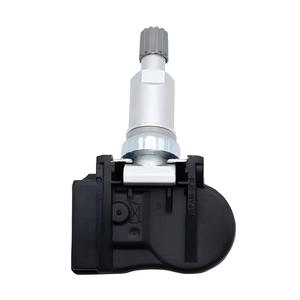
In accordance with global Smart City initiatives, road barriers are transitioning from static metal walls into active data-gathering nodes within Intelligent Transportation Systems. By embedding advanced automotive sensors, micro-radar units, and wireless telemetry directly into barrier posts and end terminals, transport departments gain real-time visibility into traffic conditions and instant impact detection.
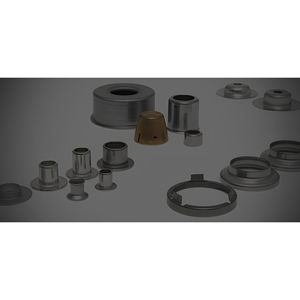
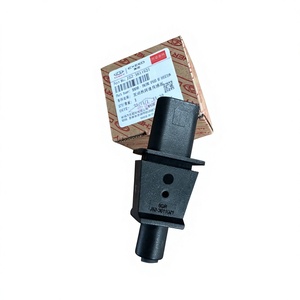
When a vehicle strikes a traditional barrier along a remote highway segment, emergency response teams often rely on delayed third-party mobile calls. Modern smart barriers incorporate piezoelectric strain gauges and high-precision impact sensors (such as deep-drawn sensor assemblies and proximity rotation units). When a collision exceeds pre-set G-force thresholds, the barrier node transmits precise GPS coordinates, estimated vehicle mass impact, and structural damage metrics directly to the Traffic Management Center (TMC) via cellular or NTCIP-compliant wireless networks.
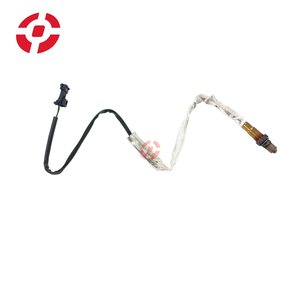
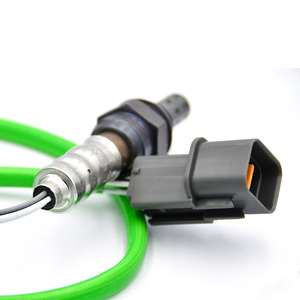
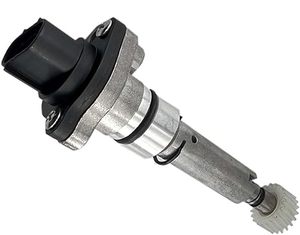
By integrating micro-sensors—such as vehicle speed sensors (OE 8318112040 series) and fast-response environmental lambda/ambient sensors—roadside barrier networks actively collect hyper-local weather data (black ice formation, visibility, heavy precipitation) and vehicle flow metrics. This telemetry interfaces directly with roadside Dynamic Message Signs (DMS) to issue dynamic speed reductions before accidents occur.
As international infrastructure spending increases across developing markets and urban redevelopment sectors, procurement officers and general contractors face shifting dynamics when sourcing road safety barriers from China.
Overseas procurement teams no longer accept raw guardrail shipments without comprehensive engineering validation. International buyers demand complete systems including W-beam guardrails, C-posts, Sigma posts, spacer blocks, terminal ends, transition beams, and hardware kits pre-packaged for rapid site installation. Export suppliers must provide signed submittal packages, material mill test certificates (MTRs to EN 10204 3.1), and third-party crash test certifications (such as crash tests under MASH or EN 1317 performance classes).
ESG (Environmental, Social, and Governance) requirements are becoming mandatory criteria in infrastructure tenders. Export-focused Chinese manufacturers are adopting Electric Arc Furnace (EAF) steel production methods utilizing recycled scrap steel, combined with zero-discharge closed-loop hot-dip galvanizing lines. This reduces the embodied carbon footprint per meter of barrier by up to 35% compared to legacy blast furnace manufacturing.
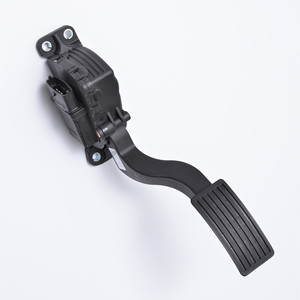
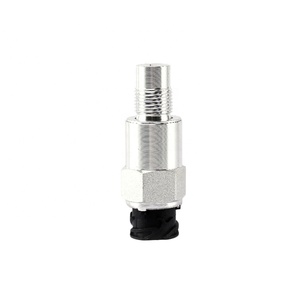
Urban access control, government centers, and smart parking hubs require dynamic perimeter security. The demand for automated rising bollards, shallow-mount crash barriers, and mobile wedge blockers has surged. Integrating precise hydraulic pressure and rotation sensors (such as J52-3611021 series components) ensures high-cycle reliability in automated barriers, operating smoothly across extreme temperature ranges from -40°C winter freezes to +70°C ambient desert heat.
Evaluating road barrier supplier quotations based solely on initial FOB product cost often leads to unexpected project budget overruns during installation and maintenance. A professional procurement framework evaluates supplier proposals using a TCO methodology:
Includes high-tensile steel raw material index, zinc coating mass per square meter, hardware grade (Class 8.8 / 10.9 high-strength bolts), and custom post punching accuracy. Factory-direct sourcing eliminates middleman markups while ensuring ISO 9001 quality compliance.
Nesting design of W-beam profiles maximizes container loading volume by up to 25%, drastically cutting ocean freight costs. Pre-drilled, precision-aligned slot holes speed up field assembly time by 40%, reducing costly contractor field labor.
Technical and Commercial Answers for International Buyers, Civil Engineers, and Distributorship Enquiries