ISO 9001 certified since 2003 Quebec · Ontario · British Columbia 1-800-363-7481

Field-proven hardware engineered for high reliability, harsh environmental resilience, and flawless system interoperability.
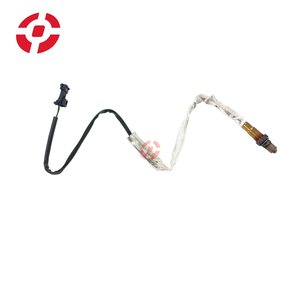
High-precision zirconia element delivering rapid response thermal feedback for fleet emission control and heavy vehicle monitoring.
Get a Quote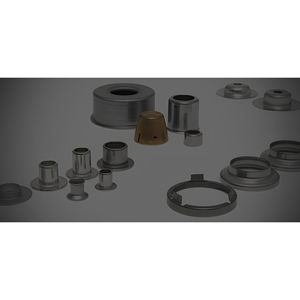
Precision-engineered stainless steel and aluminum deep-drawn enclosures for high-vibration automotive and signal control applications.
Get a Quote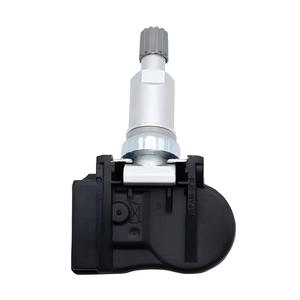
Long-battery-life wireless pressure sensing module designed for municipal utility vehicles and commercial transport safety monitoring.
Get a Quote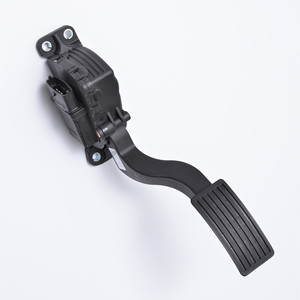
Dual-channel hall-effect position sensor assembly for municipal transit buses, trucks, and heavy-duty emergency fleet vehicles.
Get a Quote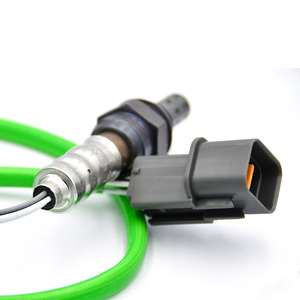
Optimized wideband oxygen sensing probe engineered for continuous heavy-duty service in rigorous municipal operations.
Get a Quote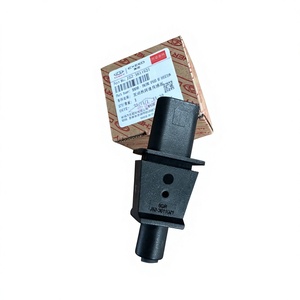
Heavy-duty shaft rotation speed sensor providing real-time telemetry inputs for traffic management and mobile infrastructure equipment.
Get a Quote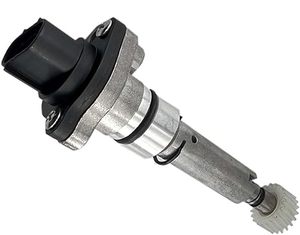
Digital signal pulse output sensor ensuring accurate distance measurement and telemetry integration for public transit networks.
Get a Quote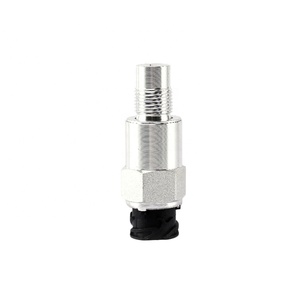
Ruggedized universal-fit speed transmitter built for continuous operation across extended temperature ranges (-40°C to +125°C).
Get a QuoteIndustrial lineage tracing back to 1974, specializing in roadside hardware & ITS systems.
Certified quality management system since 2003 with full component traceability.
Full compliance with NEMA TS-2, ATC, NTCIP 1202/1203, ITE & MUTCD specifications.
Field-proven MTBF ratings designed for 24/7 continuous all-weather urban infrastructure.
Combining North American engineering compliance standards with China’s advanced wholesale manufacturing scale to deliver unbeatable total cost of ownership.
Every traffic signal head, controller cabinet assembly, and vehicle detection sensor is built strictly according to global infrastructure benchmarks including NEMA TS-1 / TS-2, ATC, and NTCIP protocol stacks.
Prior to dispatch, all traffic signal controllers, conflict monitors, auxiliary relays, and power supplies undergo complete bench testing and environmental stress screening to eliminate DOA field failures.
Enclosures feature IP65/IP66 ingress protection, UV-stabilized polycarbonate or powder-coated die-cast aluminum housing engineered to survive extreme temperatures from -40°C winter freezing to +80°C desert heat.
The global intelligent transportation systems (ITS) market is undergoing a seismic paradigm shift. Rapid urbanization, combined with municipal decarbonization mandates and the emergence of Connected and Autonomous Vehicle (CAV) infrastructure, has transformed humble intersection traffic signals into complex, data-dense edge-computing hubs. As municipal transportation departments, civil contractors, and system integrators evaluate procurement options, sourcing directly from a premier China wholesale traffic signals manufacturer and supplier has evolved from a simple cost-reduction tactic into a strategic competitive advantage.
Modern traffic management demands far more than basic red-yellow-green signal heads. Today’s intersections require integrated optical LED modules, adaptive traffic controller cabinets, multithreaded vehicle detection sensors (radar, video analytics, inductive loops, and magnetometers), and seamless protocol compliance across NTCIP 1202 (Traffic Signal Controller Protocol) and NTCIP 1203 (Dynamic Message Signs Protocol). Achieving this level of sophisticated hardware integration at scale requires manufacturing facilities backed by decades of industrial heritage, ISO 9001 certified quality control, and rigorous photometric benchmarking.
Legacy fixed-time traffic signal plans are rapidly being retired across smart municipalities worldwide. Modern urban corridors rely on dynamic, real-time traffic signal optimization. Advanced Transportation Controllers (ATC) equipped with high-performance Linux microprocessors constantly process input data from intersection sensors to dynamically adjust phase timing, split lengths, and cycle durations.
As a leading Chinese traffic signal manufacturer, our hardware architecture natively supports adaptive algorithms (such as SCATS, SCOOT, and open-source reinforcement learning controllers). By offloading AI telemetry processing to edge-computing cards inside the controller cabinet, municipalities achieve up to a 28% reduction in corridor delay and a corresponding decline in urban vehicle emissions.
Energy consumption remains a significant operational expense for municipal traffic departments. Traditional incandescent signal bulbs have yielded to high-flux, narrow-spectrum LED optical light engines. Our optical signal modules utilize precision Fresnel lenses combined with constant-current LED driver topology, achieving up to 90% energy savings while maintaining total compliance with ITE VTCSH (Vehicle Traffic Control Signal Heads) and CSA photometric standards.
Furthermore, the integration of solar-hybrid dynamic message signs and uninterrupted power supply (UPS) lithium backup modules ensures uninterrupted intersection operation during severe grid disruption, extreme weather events, or brownouts.
| Technology Vector | Legacy Signal Infrastructure | Next-Gen Intelligent Traffic Signals (Wholesale OEM) |
|---|---|---|
| Optical Light Source | Incandescent Bulbs / Early Generation LEDs | High-Flux Precision LED Light Engines with Uniform Fresnel Lenses |
| Control Architecture | Fixed-Time Dial / Electromechanical Relays | ATC & NEMA TS-2 Type 1 / Type 2 Microprocessor Controllers |
| Interoperability Protocol | Proprietary Closed Protocols | Open-Standard NTCIP 1202 / 1203 Ethernet & RS-485 Backhaul |
| Sensing Integration | Basic In-Pavement Inductive Loops Only | Multi-Sensor Fusion (Radar + AI Video Analytics + Speed Sensors) |
| Environmental Rating | IP54 Standard Dust/Moisture Protection | IP65 / IP66 Hermetically Sealed UV-Resistant Polycarbonate & Aluminum |
The next frontier of smart city traffic control lies in the synergy between signal hardware and vehicle telemetry. Modern traffic signal poles are no longer solitary light emitters; they serve as physical mounting structures for C-V2X (Cellular Vehicle-to-Everything) Roadside Units (RSU), emergency vehicle preemption receivers, pedestrian push buttons with tactile/audible feedback, and multi-lane radar detection units.
By integrating high-precision sensor inputs—such as accelerator position feedback, rotation speed sensing, and vehicle speed telemetry—traffic controllers can prioritize public transit buses, commercial freight, and emergency services seamlessly. China’s advanced electronics ecosystem allows us to incorporate high-reliability sensors directly into OEM signal control packages at wholesale price points unmatched in Western markets.
International procurement specialists evaluating Chinese traffic signal suppliers must navigate complex technical specifications, regulatory compliance, and supply chain logistics. To maximize return on investment, experienced B2B buyers follow four core procurement strategies:
Vendor lock-in is one of the costliest pitfalls in traffic infrastructure engineering. When a municipality purchases proprietary signal hardware, subsequent maintenance, expansion, and software licensing costs balloon exponentially. Savvy buyers demand strict compliance with open standards such as NEMA TS-2 and NTCIP communication protocols. This ensures that controllers, signal heads, conflict monitors, and detection units sourced from our wholesale factory can plug seamlessly into existing central Advanced Traffic Management Systems (ATMS) without replacing core software investments.
Field troubleshooting during intersection installation is prohibitively expensive. Leading municipal contractors request fully pre-assembled, pre-wired traffic control cabinets. By executing full-scale bench testing—including conflict monitoring verification, load switch stress testing, and simulated loop actuation—prior to export, on-site commissioning time is cut by up to 60%.
Traffic equipment operates in relentless environmental conditions. Coastal installations face aggressive salt spray; northern corridors face freeze-thaw cycles and de-icing chemicals; tropical regions endure extreme solar UV exposure and torrential rains. Procurement specifications must mandate deep-drawn corrosion-resistant metal housings, die-cast aluminum enclosures, or heavy-duty UV-stabilized GE Lexan polycarbonate housings with silicone gasket seals.
Our OEM/ODM manufacturing facility supplies a complete spectrum of infrastructure components engineered to meet rigid engineering standards:
Direct technical and commercial answers for municipal buyers, engineering consultants, and B2B importers.
Request comprehensive factory direct pricing, technical submittal packages, or custom engineering consultations for your upcoming traffic infrastructure tenders.