ISO 9001 certified since 2003 Quebec · Ontario · British Columbia 1-800-363-7481

Explore our benchmarked selection of precision countdown timer components, vehicle speed sensors, oxygen sensors, and throttle position assemblies designed for harsh operating environments.
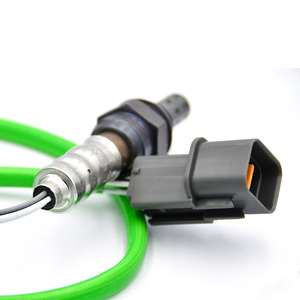
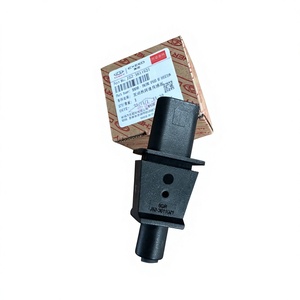
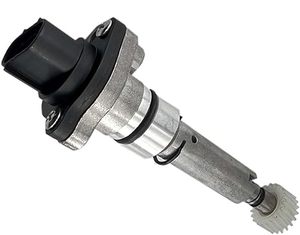
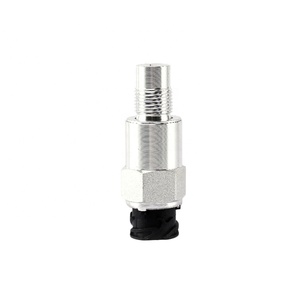
Since 1974, our engineering team has stood at the intersection of traffic signal control, intelligent transportation systems (ITS), countdown timers, and specialized sensor integration. We bridge civil transportation needs with custom OEM/ODM manufacturing capability.
Our quality management system has been certified since 2003, providing full batch traceability, documented submittal packages, and 100% bench-tested validation on every order before shipment.
Our hardware engineered for traffic signal cabinets complies natively with NTCIP 1202/1203 and NEMA TS-2 / ATC controller standards, guaranteeing seamless central software interoperability.
From custom PCB layouts, housing enclosures, and specialized wire harnesses to tailored sensor calibration for automotive and industrial traffic monitoring, we transform technical specs into market-ready assets.
In the contemporary landscape of Intelligent Transportation Systems (ITS) and high-density municipal mobility management, the demand for precision timing hardware, accessible pedestrian signals (APS), and fast-response vehicle detection sensors has reached an unprecedented peak. Municipalities, transport departments, and automotive OEMs are no longer evaluating hardware solely based on initial procurement costs; rather, the focus has shifted entirely toward operational longevity, thermal resilience, protocol interoperability, and long-term Information Gain across the urban ecosystem.
As a premier OEM/ODM countdown timers supplier & sensors manufacturer, our engineering philosophy revolves around establishing absolute data integrity from the roadside cabinet to the central management server. Whether deploying smart LED pedestrian countdown displays, NEMA TS-2 signal controllers, or automotive-grade lambda and speed sensors, every component must withstand extreme environmental stress while communicating flawlessly over standardized protocols.
The core of any reliability-focused countdown timer is its internal microcontroller architecture. Legacy timing systems often suffered from incremental clock drift caused by ambient thermal fluctuations, leading to unsynchronized countdown sequences and elevated conflict monitor triggers. Modern OEM countdown displays designed by our engineering division utilize dual-core 32-bit ARM Cortex microcontrollers equipped with temperature-compensated crystal oscillators (TCXO).
This hardware arrangement ensures timing accuracy within ±1 millisecond across an operational temperature range spanning from -40°C to +85°C. Furthermore, our proprietary firmware incorporates automatic signal cadence recognition. Rather than relying on rigid static timer logic, the countdown module passively monitors the signal controller's interval timing over initial cycles, automatically adapting its numeric display to match dynamic green/red interval adjustments commanded by central Adaptive Traffic Control Systems (ATCS).
Visual clarity under direct sunlight and high ambient glare is a paramount safety requirement for pedestrian countdown timers and LED traffic signal heads. Our ODM manufacturing processes adhere strictly to ITE (Institute of Transportation Engineers) VTCSH (Vehicle Traffic Control Signal Heads) and CSA photometric standards.
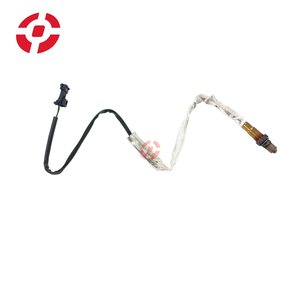
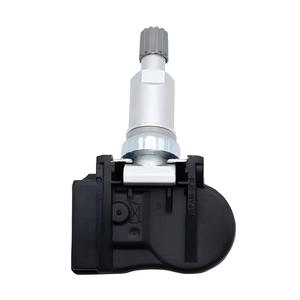
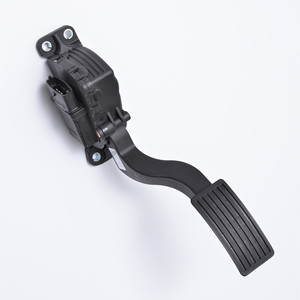
Intelligent transportation does not stop at the traffic signal head. Reliable signal actuation and dynamic countdown adjustments depend heavily on accurate vehicle detection data captured at the stop bar and advance corridor locations. This is where our deep expertise in automotive sensor manufacturing—ranging from rotational speed sensors and accelerator pedal position assemblies to oxygen and lambda sensors—provides a distinct engineering advantage.
For instance, heavy-duty commercial fleets and public transit vehicles equipped with calibrated throttle control sensors (such as the 611A Accelerator Pedal Position Assembly) and high-efficiency lambda sensors transmit real-time telemetry to Emergency Vehicle Preemption (EVP) and Transit Signal Priority (TSP) roadside units. When an approaching priority vehicle is detected via radar or magnetometers, the central controller commands the LED countdown timer to truncate or extend the pedestrian clearance interval in a safe, standardized manner.
| Hardware Component Category | Primary Technical Specification | Protocol / Standard Compliance | Environmental Operating Rating | OEM/ODM Customization Scope |
|---|---|---|---|---|
| LED Countdown Timers | Dual-Core ARM, TCXO Clock, Auto-Dimming | NTCIP 1202/1203, NEMA TS-2, ITE | IP65 / NEMA 4X (-40°C to +85°C) | Enclosure dimensions, voltage range, custom LEDs |
| Vehicle Speed Sensors | Hall-Effect / Magnetic Pick-up, High MTBF | CAN-bus, OE Ref Compatibility | IP68 Submersible Seals | Pinout mapping, cable harness, mounting brackets |
| Pedestrian Push Buttons (APS) | Vibro-tactile feedback, Audible locator tones | MUTCD, ADA Compliance | Vandal-proof Cast Aluminum | Custom audio messages, braille legend plates |
| Automotive Oxygen/Lambda Sensors | Zirconia / Planar Element, Rapid Light-Off | OE Spec (Volvo, Chery, Universal) | High Thermal Exhaust Resistance (>900°C) | Connector plug type, wire sheath length, thread size |
As cities transition toward V2X (Vehicle-to-Everything) ecosystems and AI-assisted corridor management, B2B buyers must evaluate countdown timers and sensor hardware through the lens of long-term technology evolution.
Future countdown timers will not only display visual digits for pedestrians but will simultaneously broadcast Signal Phase and Timing (SPaT) data via DSRC or C-V2X roadside units to connected autonomous vehicles and mobile pedestrian navigation apps.
Traditional inductive loops are increasingly being complemented or replaced by multi-lane 3D radar and video analytics. OEM countdown timers will dynamically alter clearance displays based on real-time pedestrian walking speed detected on the crosswalk.
With municipal carbon-neutrality mandates gaining momentum, OEM buyers are favoring countdown timer hardware operating on 12VDC/24VDC solar power kits equipped with smart lithium-iron-phosphate (LiFePO4) battery management systems.
Direct technical responses addressing common evaluation criteria from traffic engineering departments, procurement officers, and automotive original equipment manufacturers.
Our countdown timer assemblies and signal hardware are engineered to meet or exceed rigorous North American and international standards, including NEMA TS-1 / TS-2, ATC controller specifications, NTCIP 1202/1203 communication protocols, ITE VTCSH photometric requirements, and MUTCD pedestrian safety guidelines. Provincial requirements (such as MTO and MTQ specifications) are routinely incorporated into submittal documentation.
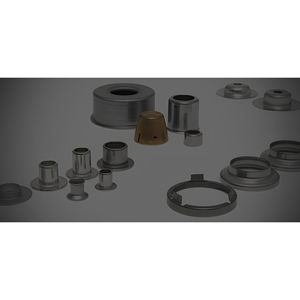
We offer complete end-to-end ODM engineering services. This includes custom deep-drawn metal stamping, specialized enclosure mold design, PCB layout creation, customized wiring harness fabrication, and firmware customization for proprietary communication protocols. Every custom design undergoes rigorous bench testing and environmental chamber validation under our ISO 9001 quality system.
Yes. Because our hardware supports standardized NTCIP 1202/1203 protocols and features hardened RS-485 / Ethernet interfaces, our countdown timer modules and signal controllers report operational status and diagnostics seamlessly into existing central Advanced Traffic Management Systems (ATMS) without requiring third-party software replacement.
All industrial and automotive products carry factory-backed warranties ranging from 1 to 5 years depending on product class. Each batch is shipped with ISO 9001 certified test reports, full component lot traceability, wiring schematics, and submittal sheets to streamline engineering review and municipal sign-off.
Need custom technical documentation, engineering drawings, or volume quote submittals for your upcoming municipal tender or automotive manufacturing run? Connect directly with our application engineers.