OEM/ODM Radar Detectors Supplier & Exporters

ISO 9001 Certified Radar & Automotive Sensor Engineering | Enterprise Radar Detection Systems, Multi-Band RF Modules & Turnkey Sourcing Solutions

Precision Sensing Portfolio

Featured OEM/ODM Automotive Sensors & Radar Modules

High-reliability vehicle detection components, speed sensors, and radar processing hardware engineered for international OEM automotive integrators and aftermarket brand distributors.

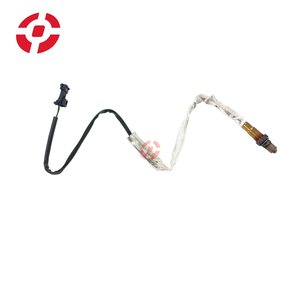
Car O2 Sensor OEM Automotive Oxygen Sensor

Car O2 Sensor Reliable Automotive Oxygen Sensor Replacement Kit VOLVO OE 30637837

  • OE Direct Replacement: VOLVO 30637837
  • Fast Thermal Response & Dual-Layer Shielding
  • Emissions Compliance & Fuel Economy Tuning

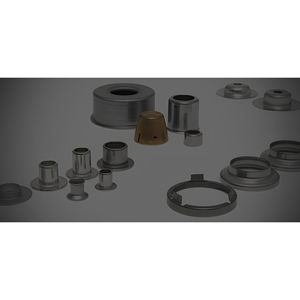
Deep-Drawn Auto Sensors Parts For Automotive Use

Deep-Drawn Auto Sensors Housings & Precision Radar Enclosures

  • High-Precision Metal Stamping & Deep-Drawing
  • IP67 Weatherproof & Anti-Vibration Shielding
  • Custom Metal Alloy Form Factor Customization
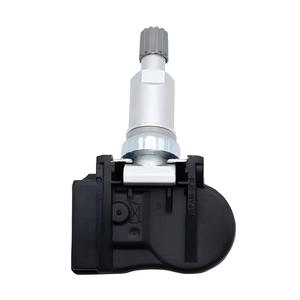
Tire Pressure Sensor 40700-3AN0B

Direct OEM Tire Pressure Sensor TPMS Module 40700-3AN0B

  • Dual Frequency 315MHz / 433MHz Signal Protocol
  • Long Life Automotive Grade Battery Cell
  • CAN-Bus Integrated Telematics Sync
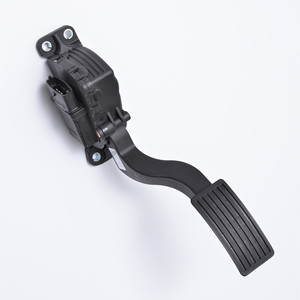
611A Accelerator Pedal Position Sensor Assembly

611A Accelerator Pedal Position Sensor Assembly 5V for Commercial Vehicles

  • Electronic Throttle Control (ETC) Compatibility
  • 5V Dual-Output Angular Position Logic
  • Commercial Bus, Heavy Truck & Industrial Duty
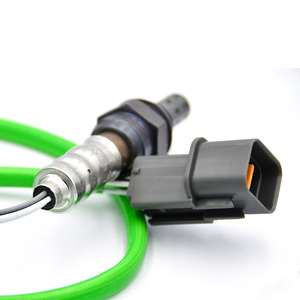
Fast Response High Efficiency Automotive Lambda Sensor

Fast-Response High Efficiency Automotive Lambda Sensor for Fleet Vehicles

  • Planar Zirconia Element for Ultra-Fast Light-Off
  • High Temperature Resistance up to 930°C
  • Optimized Fuel Mixture Air-Ratio Signal Output
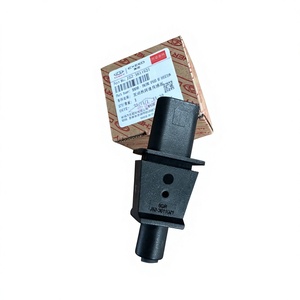
Speed of Rotation Sensor J52-3611021 for CHERY

Rotational Speed & Crankshaft Position Sensor J52-3611021 Chery OE

  • Hall-Effect Electromagnetic Digital Pulse Output
  • Precision Timing Resolution for Engine Control
  • OEM Factory Tested with 1-Year Full Warranty
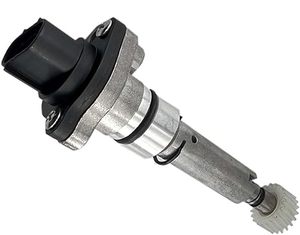
Vehicle Speed Sensor 8318112040

Vehicle Speed Sensor VSS 8318112040 Compatible with Toyota / Lexus / Geo

  • Transmission Driven Odometer & Speed Signal Logic
  • Direct Plug-and-Play OE Wiring Harness Connector
  • High Wear Resistance Gear Mechanism
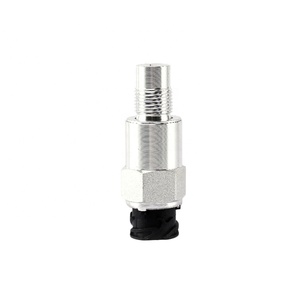
Automotive Speed Sensor BQZ023C for Truck

Commercial Heavy Truck Speed Sensor BQZ023C Universal Fitment (OE 500754709901)

  • Heavy-Duty Truck & Fleet Fleet Spec Compliance
  • Anti-Electromagnetic Interference (EMI) Shielding
  • Extended Operational Life in Extremes (-40°C to +125°C)
E-E-A-T Enterprise Authority

Engineering-First OEM/ODM Manufacturing Infrastructure

Since establishing operations in 1974, our engineering team has backed global OEMs, traffic authorities, and automotive brands with field-tested sensor integration, ISO 9001 quality compliance, and custom hardware design.

50+
Years Industry Expertise
Five decades of field engineering experience in harsh automotive and transportation environments across North America & global export markets.
ISO 9001
Certified Quality System
Certified quality management system since 2003 with full component batch traceability, SMT automated inspection, and bench auditing.
24/77
GHz Radar Spectrum
Mastery of Microwave K-Band, Ka-Band, Multaradar CD/CT, and 77GHz-79GHz FMCW millimeter-wave radar architectures.
100%
Compliance & Testing
Full compliance testing including FCC Part 15, CE RED, ITE/CSA specs, and CAN-bus diagnostic protocol verification.

Custom Hardware & Enclosure Engineering

Our OEM services cover complete industrial design—from deep-drawn metal shielding housings and IP67 weather-proofed polymer enclosures to custom microstrip patch antenna layouts. We ensure signal transmission purity while shielding sensitive RF front-ends against automotive electromagnetic interference (EMI) and extreme thermal cycling (-40°C to +85°C).

Proprietary DSP & Signal Filtering SDKs

Modern automotive environments present high noise levels caused by Blind Spot Monitoring (BSM) and Collision Avoidance Systems (CAS). Our ODM software development kits integrate digital signal processing (DSP) algorithms that filter out false positive alerts while maintaining long-range detection sensitivity across X, K, Ka, and Laser spectrums.

Whitepaper & Research

Automotive Radar Detection: Technical Paradigms & Evolution

As radar enforcement technology evolves beyond traditional Doppler radar into 3D/4D multi-lane tracking photo radars and lidar speed traps, procurement teams must align with OEM suppliers capable of high-frequency signal processing and intelligent false-alert filtering.

1. Transition from Analog Superheterodyne to FMCW Digital Radar

Traditional speed radar detection relied heavily on analog superheterodyne receivers designed to sense single-frequency bursts across X-Band (10.525 GHz), K-Band (24.150 GHz), and Ka-Band (33.4–36.0 GHz). However, contemporary speed enforcement utilizes frequency-modulated continuous-wave (FMCW) radars such as Multaradar CD/CT, GATSO RT3/RT4, and Russian Strelka systems, which employ rapid frequency hopping and low-power pulse bursts.

Next-generation OEM radar detectors integrate digital low-noise amplifiers (LNA), high-speed Analog-to-Digital Converters (ADC), and Field-Programmable Gate Array (FPGA) processing to execute real-time Fast Fourier Transform (FFT) analysis. This enables microsecond signal signature matching, allowing the receiver to differentiate true speed measurement pulses from background microwave noise.

2. AI-Driven CAS/BSM Signal Rejection Algorithms

One of the chief challenges facing radar detector manufacturers is the proliferation of automotive safety radars operating in the 24GHz band. Adaptive Cruise Control (ACC), Blind Spot Monitoring (BSM), and Lane Change Assist (LCA) emit continuous microwave pulses that trigger constant false alarms on un-filtered detectors.

Our ODM firmware solutions implement heuristic AI noise profile recognition. By analyzing pulse repetition frequency (PRF), pulse width, and signal envelope dynamics, our embedded DSP engines suppress vehicle-generated BSM chatter without compromising warning distance against actual speed enforcement threats.

Radar Detection Spectrum & Technical Specification Matrix

Frequency Band Frequency Range Enforcement Target / Application Detection Sensitivity (OEM Target)
X-Band 10.525 GHz ± 25 MHz Legacy Police Radar / Stationary Speed Traps -118 dBm / Hz Signal Floor
K-Band 24.050 – 24.250 GHz Standard Handheld & Vehicle Police Radar -124 dBm / Hz Sensitivity
Ka-Superwide 33.400 – 36.000 GHz Modern Photo Radar & Mobile Patrol Speed Guns -126 dBm / Hz Wideband Response
Multaradar CD/CT 24.080 – 24.120 GHz (FMCW) Low-Power Frequency Hopping Photo Radars Sub-millisecond FFT Signature Match
Laser / LIDAR 904nm / 33MHz Pulse Rate Precision Optical Speed Measurement Traps Ultra-Fast Photodiode Response (<2ns)
Procurement Intelligence

Future Procurement Trends for OEM/ODM Radar Detectors

Global automotive component buyers, fleet management contractors, and private label importers are restructuring their sourcing criteria to address evolving regulatory frameworks and technical requirements.

Modular Platform Architecture

Procurement teams are shifting away from monolithic detector designs toward modular platforms. By isolating RF front-end modules, DSP processing units, and user interface boards, OEM brands can quickly adapt products to regional frequency allocations (e.g., North American Ka-band vs. European Multaradar requirements) without re-engineering the primary chassis.

GPS Telematics & Cloud DB Integration

Modern buyers require radar detectors with integrated GPS modules and Bluetooth / Wi-Fi connectivity. This enables real-time synchronization with cloud-hosted red-light camera databases and over-the-air (OTA) firmware updates, transforming standalone hardware into connected automotive telematics endpoints.

Supply Chain Resiliency & ISO Compliance

Enterprise importers prioritize suppliers offering ISO 9001 certified manufacturing, dual-sourced semiconductor bills of materials (BOM), and fully documented environmental testing (ESD, vibration, thermal shock) to mitigate supply chain disruptions and ensure warranty compliance.

Buyer Assistance

Frequently Asked Sourcing & Technical Questions

Common inquiries from automotive component procurement managers, OEM engineers, and global importers regarding radar detector manufacturing and customization.

What customization options are available under your OEM/ODM radar detector program?
We offer comprehensive white-label and ODM development services. This includes industrial design (tooling, injection molding, deep-drawn metal housings), custom PCB layout design, customized LNA microstrip patch antenna tuning, personalized OLED/LCD displays, custom startup boot logos, brand-specific enclosure paint/coatings, and customized packaging design. On the software side, we provide customized firmware code for localized speed trap frequency band mutes and custom CAN-bus interface commands.
How do your radar detection modules solve false alerts caused by vehicle Blind Spot Monitoring (BSM) systems?
Our ODM products utilize a combination of hardware filtering and embedded software algorithms. On the hardware level, precise band-pass filters isolate non-policing frequency spikes. On the software side, our proprietary DSP algorithms sample incoming microwave signals to analyze pulse frequency, duration, and modulation pattern. Because vehicle BSM sensors emit predictable continuous wave or sweep pulses, our algorithm identifies and mutes these signals in real time without reducing detection range against police K-band or Ka-band radar signals.
What international quality certifications and regulatory standards do your manufacturing facilities comply with?
Our manufacturing processes are certified under ISO 9001:2015 Quality Management Systems. Our products comply with international EMC and RF spectrum regulations, including FCC Part 15 (USA), CE RED (Europe), RoHS environmental restrictions, and ITE/CSA automotive standards. Every batch undergoes automated optical inspection (AOI), SMT placement testing, high/low temperature chamber aging (-40°C to +85°C), andRF calibration in anechoic chambers prior to export shipment.
Can you supply integrated sensors that interface directly with automotive CAN-bus or OBD-II systems?
Yes. We specialize in integrated automotive sensors, including speed sensors, lambda/O2 sensors, accelerator pedal position assemblies, and radar modules that communicate via CAN 2.0A/B, J1939 (commercial vehicles), or standard OBD-II ports. This integration allows speed-assisted muting (automatically suppressing radar alerts below user-defined speed thresholds) and seamless telemetry data logging.
What is the typical engineering lead time for custom OEM tooling and ODM firmware adaptation?
For standard OEM private labeling (custom logo, packaging, software splash screen), lead time is typically 2–3 weeks. For custom plastic enclosure tooling or deep-drawn metal enclosure fabrication, sample prototype lead time ranges from 30 to 45 days. Complete ODM project cycles—including schematic design, RF antenna layout, firmware development, mold creation, and initial pilot production runs—are typically completed within 60 to 90 days depending on specification complexity.
Do you support low minimum order quantities (MOQ) for market testing and pilot orders?
Yes, we support growth-oriented partnerships. While our automated production lines are optimized for high-volume OEM manufacturing, we maintain flexible pilot-run programs for qualified procurement teams to conduct regional market testing, field validation, and compliance certification before placing mass-production volume orders.

Ready to Partner with an Industry-Leading OEM/ODM Supplier?

Connect with our senior engineering team to request technical spec sheets, submittal packages, custom tooling quotes, or factory evaluation samples for your radar detector and sensor sourcing requirements.