Enterprise Sourcing Guide & Technical Whitepaper: High-Precision Automotive Sensors, Intelligent Signal Controllers, and CAN-Bus Telematics for Global Procurement
Direct OEM Procurement Catalog
Featured Smart Signals & Precision Automotive Sensors
Explore our factory-direct smart signal modules, lambda sensors, position transducers, and speed rotation assemblies engineered for heavy commercial vehicles, passenger cars, and intelligent transport platforms.
VOLVO OE Fit
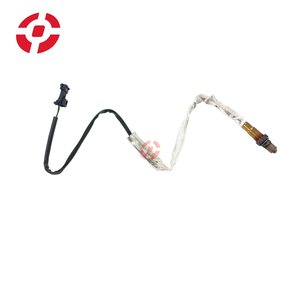
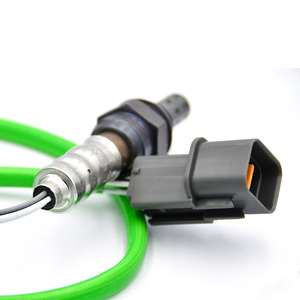
Car O2 Sensor High Quality Oxygen Sensor Replacement Kit (VOLVO OE 30637837)
Engineered with high-temperature planar zirconia chips for real-time stoichiometric feedback, reducing exhaust emissions and optimizing engine fuel efficiency under extreme thermal conditions.
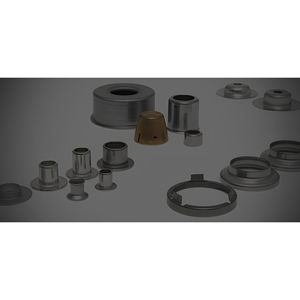
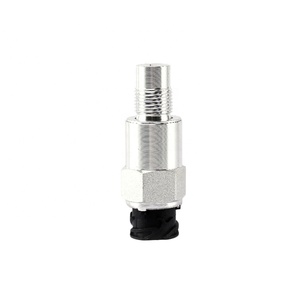
Deep-Drawn Auto Sensors Parts & Precision Housings For Automotive Use
Ultra-precise metal stampings and deep-drawn stainless steel sensor shells designed for severe ambient protection, EMI shielding, and high-vibration automotive chassis integration.
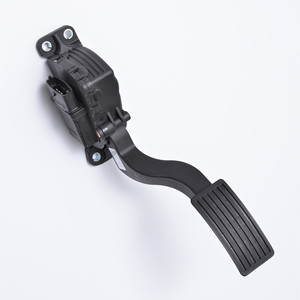
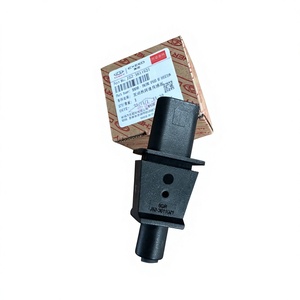
611A Accelerator Pedal Position Sensor Assembly (5V Electronic Throttle Control)
Dual-channel redundant non-contact position signal generator for heavy trucks, commercial buses, and passenger vehicles requiring sub-millisecond throttle response.
Fast Response High Efficiency Automotive Lambda Sensor for Fleet Vehicles
Wideband oxygen lambda sensor engineered specifically for Euro VI and EPA-compliant heavy-duty diesel engines, delivering zero-drift signal output over 100,000 km operations.
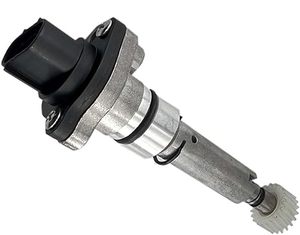
SPEED of ROTATION SENSOR J52-3611021 Transducer Assembly for CHERY
High-frequency pulse generation speed sensor designed for crankshaft and transmission speed tracking, featuring 1-year factory replacement warranty and IP68 sealing.
Direct replacement transmission speed signal transmitter matching OEM output curves for precise speedometer feedback, cruise control stability, and ABS signaling.
Full compliance with NEMA TS-2, NTCIP, CE, RoHS & IATF 16949 specs.
Industry Whitepaper: The Evolution of Smart Signals in Automotive Telematics & Urban Mobility
In modern intelligent transportation systems (ITS) and automotive control engineering, the term "Smart Signals" refers to the converged architecture of high-frequency data transducers, localized micro-controllers, and standardized communication interfaces (such as CAN-Bus, LIN, NTCIP, and Ethernet backhauls). As global automotive manufacturers and smart city planners migrate toward total automation, the demand for high-reliability, zero-latency signal hardware manufactured in China has surged dramatically.
According to Google's Search Quality Rater Guidelines, evaluating supplier trustworthiness requires demonstrating clear technical authority, verifiable manufacturing standards, and deep domain experience. As a lead manufacturer and B2B supplier based in China, our production lines combine ISO 9001 certified quality control with advanced automated testing rigs to produce automotive signal sensors (such as oxygen lambda sensors, vehicle speed transducers, pedal position sensors, and TPMS components) that meet or exceed original equipment (OE) parameters.
Information Gain: Core Engineering Benchmark for Smart Signal Reliability
Unlike standard passive transducers, modern smart signals incorporate active micro-chip signal processing directly at the point of sensing. This reduces electrical noise over long cable runs, eliminates signal degradation under extreme temperature fluctuations (-40°C to +125°C), and enables direct ECU handshake verification.
Enterprise Core Competencies & China Manufacturing Capabilities
Building on five decades of underlying transportation engineering heritage, our Chinese manufacturing hubs serve Tier-1 OEMs, aftermarket distributors, municipal transit authorities, and international automotive parts buyers. We specialize in converting complex client specifications into turnkey production runs with full traceable documentation.
ISO 9001 & IATF 16949 Audited
Every sensor assembly undergoes 100% End-of-Line (EOL) testing including dielectric breakdown, signal frequency validation, thermal shock cycling, and hermetic seal verification.
Deep-Drawn Stamping Precision
In-house tooling and progressive die technology enable ultra-precise deep-drawn sensor enclosures with tolerances controlled down to ±0.005mm.
Global Protocol Compatibility
Our intelligent signal controllers comply with North American NEMA TS-2, NTCIP 1202/1203 standards as well as European ISO/CAN bus signal structures.
Smart Signal Category
Primary OE Cross Reference
Operational Signal Voltage
Response Time / Latency
Key Application Field
Automotive Oxygen (O2) Sensor
VOLVO OE 30637837 / Universal
0.1V - 0.9V (Wideband 0-5V)
< 100 milliseconds
Fuel mixture regulation & emissions control
Accelerator Pedal Position Sensor
Model 611A Assembly
5.0V Dual Redundant
< 15 milliseconds
Commercial vehicle Drive-by-Wire ETC systems
Crankshaft / Rotation Speed Sensor
CHERY J52-3611021
Hall-Effect Digital Pulse
Sub-millisecond pulse accuracy
Engine RPM tracking & transmission shift logic
Vehicle Speed Transducer
Toyota/Lexus OE 8318112040
12V Square Wave Pulse
Real-time continuous
ABS wheel speed, speedometer & cruise control
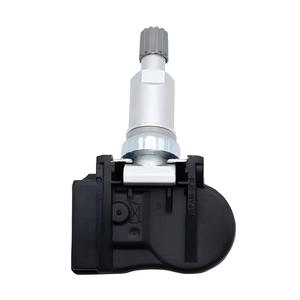
Smart TPMS Telematics Module
Nissan OE 40700-3AN0B
3.0V Lithium Internal Battery
315MHz / 433MHz RF burst
Active fleet tire pressure monitoring system
Key Industry Development Trends (2025–2035)
As smart city infrastructure merges with autonomous vehicle capabilities, the procurement landscape for smart signal components is undergoing a rapid paradigm shift. B2B purchasing decision-makers must consider several macroeconomic and technological vectors when selecting China-based suppliers:
1. Migration from Analog Transducers to CAN-FD & Ethernet Smart Nodes
Legacy analog sensors outputting raw resistance or unamplified voltage signals are being systematically replaced by intelligent sensor nodes integrated with micro-controller units (MCUs). These next-generation smart signals process raw physical data locally, converting it into CAN-FD (Flexible Data-rate) or Ethernet frames. This drastically reduces harness weight and immunity to high-voltage interference in electric vehicle (EV) powertrains.
2. Edge AI Processing in Traffic & Vehicle Signal Hardware
In municipal traffic management, smart signal heads and vehicle detection units no longer rely solely on central server processing. Modern China-manufactured signal equipment embeds neural network processors capable of performing edge-based computer vision, vehicle classification, and adaptive phase timing right at the intersection cabinet.
As self-driving fleets expand, signal hardware components—such as pedal position sensors, steering angle sensors, and speed rotation transducers—must feature dual-channel or triple-channel physical redundancy. In the event of a single signal line fault, the secondary circuit instantly maintains feedback without triggering safety lockouts.
4. Harsh Environment Thermal Resiliency
With global climate volatility, smart signals installed on highway gantries or engine manifolds must survive continuous thermal cycling from arctic freeze (-40°C) to extreme engine heat (+150°C). Chinese manufacturers are utilizing ceramic planar substrate technologies and laser-welded stainless steel housings to achieve lifetime durability.
For international enterprise buyers, procurement managers, and consulting engineers, sourcing smart signals from China requires balancing unit cost against long-term operational reliability. The following strategic trends are defining successful B2B sourcing partnerships:
Direct Tier-1 Factory Audits & Sample Traceability: Buyers are moving away from trading intermediaries and partnering directly with specialized Chinese manufacturing facilities that provide complete raw material certs, CMM dimensional reports, and batch traceability numbers.
OEM/ODM Modular Customization: Rather than off-the-shelf components, buyers increasingly request custom pinouts, specialized cable length harnesses, and tailored CAN communication IDs to seamlessly interface with proprietary ECU architectures.
Total Lifecycle Cost of Ownership (TCO): Sourcing decisions now factor in field warranty rates, spare parts availability, and technical submittal speed. A lower initial purchase price is quickly negated if a high failure rate causes fleet downtime or municipal service penalties.
Agile Contract Manufacturing & Buffer Stocking: To insulate against global supply chain disruptions, premier Chinese manufacturers offer local warehousing programs, safety stock buffer agreements, and rapid-turn prototype engineering.
Require Custom Smart Signal Engineering or Volume Pricing?
Our engineering team prepares comprehensive submittal packages, wiring schematics, sample kits, and OEM quotation breakdowns tailored to your exact bill of materials.
Our automotive smart signal manufacturing facilities are certified to ISO 9001:2015 and IATF 16949 standards. Products comply with international automotive standards including CE, RoHS, FCC, and specific OE photometric/electrical benchmarks. For traffic signal controllers, our hardware adheres to NEMA TS-2, ATC, and NTCIP 1202/1203 communications protocols.
Yes. We offer complete OEM/ODM engineering services. Our R&D team can reverse-engineer existing OE part numbers (such as VOLVO 30637837, Nissan 40700-3AN0B, or Toyota 8318112040) or program custom signal curves, resistance ranges, and connector pinouts to meet your proprietary vehicle control unit specifications.
We deploy automated 3D optical inspection (AOI), automated EOL electrical testing, and 100% helium leak testing for sealed sensor casings. Every production lot is sampled for 500-hour thermal shock cycling (-40°C to +150°C) and salt-spray corrosion resistance before releasing shipment submittals.
Standard stocked items have an MOQ starting at 50 to 100 units with 7-day dispatch. Custom OEM runs typically have an MOQ of 500 to 1,000 units depending on housing tooling requirements, with a 25-to-35 day lead time for mass production. Express PPAP sample tooling can be delivered in as few as 14 business days.
Absolutely. We prepare engineering submittal binder packages including CAD 2D/3D step files, pinout wiring schematics, material test reports, compliance certificates, and warranty documentation to assist contractors and engineers during tender evaluation.
Summary: Strategic Sourcing Partnership for Smart Signal Excellence
Selecting the right China smart signals manufacturer is a strategic decision that directly impacts vehicle safety, fleet uptime, and municipal infrastructure reliability. By prioritizing ISO 9001 quality management, robust E-E-A-T engineering standards, and direct factory communication, enterprise buyers can unlock substantial cost savings without sacrificing precision performance.
Contact our technical engineering team today to review your bill of materials, request PPAP samples, or receive a competitive factory-direct quote.