ISO 9001 certified since 2003 Quebec · Ontario · British Columbia 1-800-363-7481

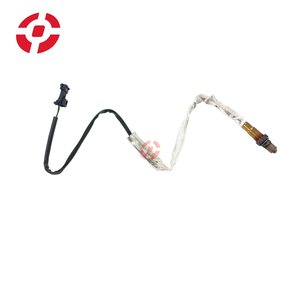
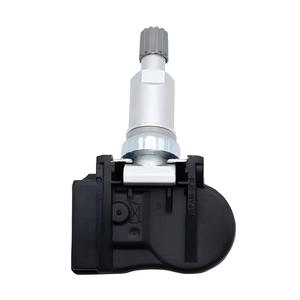
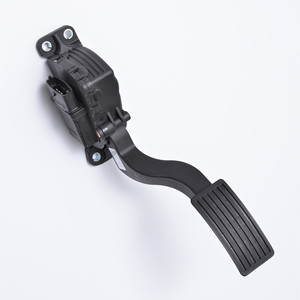
Explore high-precision rotational, pressure, positioning, and exhaust sensors designed for automotive systems, commercial fleet telemetry, and modern Intelligent Transportation Systems (ITS).
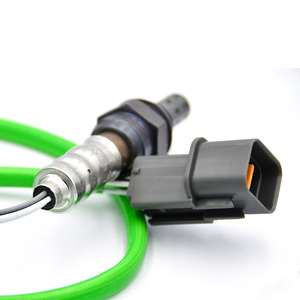
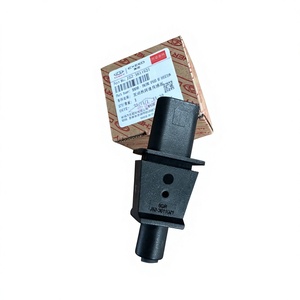
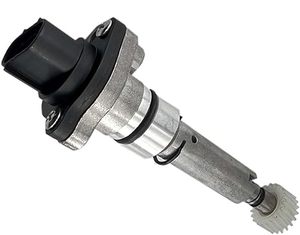
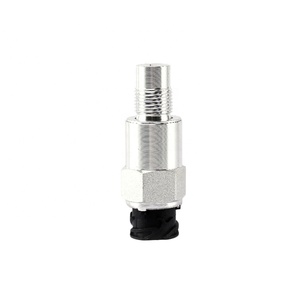
The global Intelligent Transportation Systems (ITS) and automated traffic law enforcement market is experiencing a massive paradigm shift. As municipal transportation authorities, highway operations departments, and smart city integrators transition toward Vision-Zero zero-fatality frameworks, the demand for high-precision, multi-lane, continuous speed enforcement infrastructure has reached unprecedented levels. China has emerged as the global epicenter for advanced speed camera manufacturing, optical-sensor assembly, and 3D radar integration, delivering unmatched scalability, cost-efficiency, and technological innovation.
However, navigating the landscape of China speed camera manufacturers and OEM/ODM factories requires a rigorous technical evaluation framework. Procuring enforcement hardware is no longer merely a matter of purchasing megapixel optical sensors; it involves evaluating 24GHz/77GHz millimeter-wave Doppler radar telemetry, embedded deep-learning Automatic Number Plate Recognition (ANPR/ALPR) engines, NTCIP 1202/1203 protocol interoperability, and environmental resilience certified under ISO 9001 and IP67/IK10 standards.
This whitepaper synthesizes over five decades of international traffic systems integration experience—originally built upon Canadian engineering standards since 1974—with cutting-edge Chinese OEM manufacturing capabilities. Below, procurement managers, consulting traffic engineers, and government contractors will find an exhaustive analysis of core OEM capabilities, technology trends, supply chain selection criteria, and technical specifications governing modern traffic enforcement deployments.
Bridging Five Decades of Traffic Engineering Heritage with World-Class Chinese High-Precision Manufacturing.
Building high-reliability traffic enforcement technology demands more than low-cost production—it requires deep compliance with North American and European transportation standards (NEMA TS-2, ATC controller architectures, ITE/CSA photometric modules, MUTCD alignment, and EN 12966). Our manufacturing operations combine Western system integration expertise established in 1974 with state-of-the-art Chinese industrial manufacturing.
Our manufacturing and assembly processes have maintained continuous ISO 9001 Quality Management System certification. Every speed camera housing, radar control PCB, and optical sensor module undergoes documented end-to-end traceability, stress testing from -40°C to +80°C, and accelerated weather aging.
Avoid vendor lock-in. Our speed enforcement hardware and edge processing units natively support NTCIP protocols, permitting seamless backhaul integration into existing municipal Advanced Traffic Management Systems (ATMS), central police surveillance networks, and smart city open-data hubs.
We eliminate expensive site rework. All speed camera cabinets, conflict monitors, industrial Ethernet switches, and UPS backup systems are pre-assembled, wired, and bench-tested under full operational load before international dispatch.
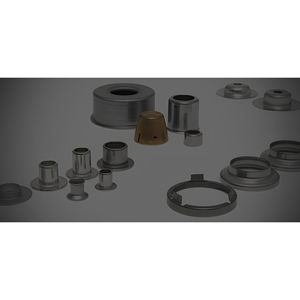
Because we integrate 20+ specialized component technology providers—ranging from specialized LiDAR pulse sensors to deep-drawn metal housings and wheel speed sensors—we provide objective technical recommendations tailored specifically to your site geometry and environmental conditions.
The speed camera industry is rapidly moving away from single-point, single-technology measuring setups. Procurement teams evaluating Chinese factories must align their specifications with next-generation architectural trends to ensure long-term asset utility and avoid rapid technical obsolescence.
Legacy inductive loop sensors and single-beam Doppler units are being replaced by 77GHz multi-beam tracking radar integrated with high-resolution global shutter cameras. Modern systems track up to 128 targets simultaneously across 4 to 6 lanes, pinpointing speed violations, tailgating, and illegal lane changes with spatial precision.
Processing license plates at the central server creates immense bandwidth bottlenecks. Future-ready speed camera systems process ANPR, vehicle color, brand, and vehicle class locally at the edge using dedicated Neural Processing Units (NPUs) running at sub-50ms latency.
Fixed point cameras encourage "rubber-banding" drivers braking right before the camera. Point-to-point (P2P) section enforcement networks calculate average speed across long corridors (5km–50km) using synchronized GPS timestamps, significantly reducing highway collision rates.
Speed camera assemblies are evolving into multi-modal ITS edge nodes. Equipped with C-V2X (Cellular Vehicle-to-Everything) roadside units, modern speed enforcement hubs broadcast real-time speed advisories directly to connected vehicle digital cockpits and autonomous driving systems.
Evaluating sensory modes is crucial for selecting the optimal factory configuration. The comparison table below highlights the performance, accuracy, and operational tradeoffs across primary detection technologies.
| Detection Technology | Speed Accuracy | Multi-Lane Tracking | Weather Resilience | Pavement Damage Risk | Ideal Application Scenario |
|---|---|---|---|---|---|
| 3D 77GHz Doppler Radar | ± 1.0 km/h | Up to 8 Lanes | Exceptional (Fog/Snow/Rain) | Zero (Non-Intrusive) | Highways, Arterial Roads, Multi-Lane Intersections |
| LiDAR / Laser Speed Enforcement | ± 0.5 km/h | Single/Dual Lane | Moderate (Affected by heavy fog) | Zero (Non-Intrusive) | Mobile Patrols, Urban Precision Speed Zones |
| Point-to-Point (ANPR P2P) | Calculated Math Accuracy | Unlimited (Corridor-based) | High (Camera-dependent) | Zero (Non-Intrusive) | Long-Distance Expressways & Tunnels |
| Inductive Loops (Piezo Electric) | ± 2.0 km/h | Single Lane per Loop | High | High (Requires Saw-Cutting) | Fixed Toll Gates & Heavy Vehicle Weighing |
| AI Optical Video Motion Tracking | ± 3.0 km/h | Up to 4 Lanes | Moderate (Needs Light/IR) | Zero (Non-Intrusive) | Low-Speed Urban Traffic & Smart Parking Access |
Sourcing speed enforcement equipment from China requires a structured evaluation method beyond unit pricing. International procurement teams must assess factories across five key capability pillars to ensure sustainable Total Cost of Ownership (TCO) and compliance.
Before issuing purchase orders, demand comprehensive factory submittal packages including CE, FCC, ISO 9001 certification, IP67/IK10 ingress protection test reports, and MTBF (Mean Time Between Failures) calculations. Professional manufacturers provide complete CAD mounting schematics, electrical wiring diagrams, and photometric flash documentation to streamline municipal consultant approval.
Speed cameras produce legal evidence used for monetary fines and criminal prosecution. Ensure your Chinese manufacturing partner operates an internal metrological calibration lab capable of certifying camera velocity measurements against national measurement benchmarks (such as CNAS or international equivalent standards).
High-performance speed cameras rely on premium internal subcomponents. Evaluate whether the factory utilizes industrial-grade Sony CMOS image sensors, Xilinx/NVIDIA processing chips, high-durability deep-drawn metal housings, and certified automotive-grade wheel speed/position sensors for mobile radar trailers.
Capturing high-speed vehicle license plates at night requires perfectly synchronized illumination. Leading factories offer integrated pulsed IR (Infrared) or polar white LED strobes designed to illuminate reflective plates without blinding oncoming drivers or violating local light-pollution ordinances.
Key technical and procurement insights addressed directly by our senior traffic systems engineers.
Consult with our engineering team to request detailed technical submittals, customized OEM/ODM quotation packages, or project compliance reviews for your municipal or commercial traffic deployment.