ISO 9001 certified since 2003 Quebec · Ontario · British Columbia 1-800-363-7481

High-precision OEM/ODM sensor assemblies engineered for rigorous operating conditions, automotive safety compliance, and long-term field stability.
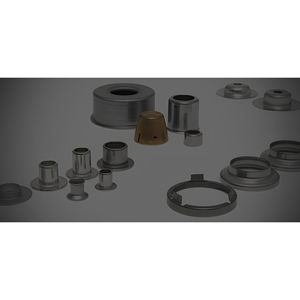
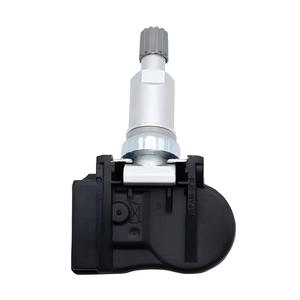
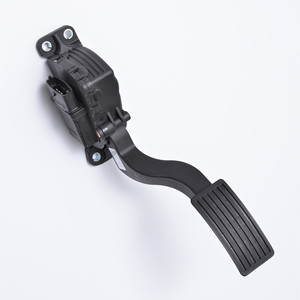
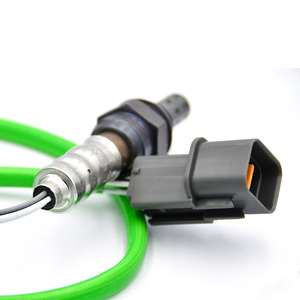
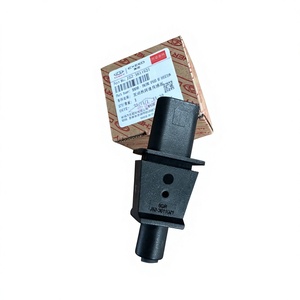
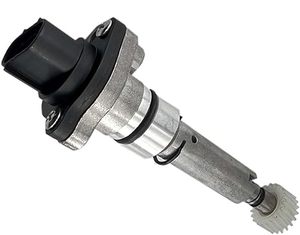
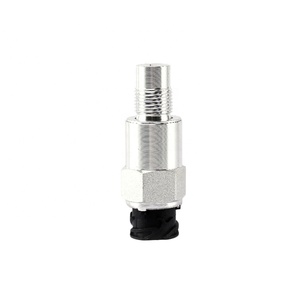
Over five decades of field engineering experience in challenging atmospheric conditions.
Certified quality management system continuously maintained and audited since 2003.
Millimeter-wave radar frequency bands offering sub-centimeter velocity accuracy.
Direct OEM supply chain partnerships ensuring global compliance and multi-system integration.
Understanding the technical evolution from simple inductive presence detection to high-resolution 4D millimeter-wave radar in smart mobility and automotive safety.
In modern automotive electronics and Intelligent Transportation Systems (ITS), selecting the appropriate sensor infrastructure directly determines systemic safety, real-time response latency, and environmental resilience. As modern vehicles transition toward Advanced Driver Assistance Systems (ADAS Level 2+ to Level 4) and smart cities deploy adaptive traffic management networks, FMCW (Frequency-Modulated Continuous Wave) radar sensors have emerged as an indispensable cornerstone of zero-failure perception architectures.
Unlike optical video sensors which suffer significant performance degradation in dense fog, heavy snow, solar glare, or extreme low-light environments, radar systems operating within the millimeter-wave spectrum (specifically 24GHz narrowband, 77GHz high-resolution, and 79GHz ultra-wideband frequencies) transmit high-frequency electromagnetic waves that seamlessly penetrate adverse atmospheric conditions. By calculating doppler frequency shifts, phase variances, and time-of-flight (ToF) metrics, radar sensors provide simultaneous distance measurements, velocity tracking, and angular trajectory calculations for multiple targets at microsecond intervals.
Optical camera systems require compute-heavy AI image recognition and are prone to contrast failure under adverse weather. In contrast, 77GHz/79GHz millimeter-wave radar directly outputs high-precision kinematic vectors (distance, azimuth, elevation, doppler velocity) without vision degradation, reducing edge-computing overhead by up to 60% while maintaining absolute reliability across extreme operating temperatures ranging from -40°C to +85°C.
Delivering up to 4 GHz available sweep bandwidth for ultra-fine range resolution down to 4 cm. Essential for micro-doppler pedestrian detection, lane discrimination, and advance stop-bar triggering.
IP67/IP68 sealed enclosures combined with dielectric radome covers guarantee operational continuity during blizzard conditions, torrential rain, ambient dust storms, and extreme thermal cycling.
Native support for CAN 2.0B, CAN-FD, RS-485, and NTCIP 1202/1203 protocol standards ensuring seamless handshake with vehicle ECU units or municipal central ATMS software.
An engineering benchmark evaluating Radar, LiDAR, Video Analytics, and Inductive Loops across crucial commercial and operational parameters.
| Performance Criterion | FMCW Radar (77/79GHz) | LiDAR (Light Detection) | Optical Video AI | Inductive Pavement Loops |
|---|---|---|---|---|
| All-Weather Operability | 99.9% (Unaffected by fog/snow) | 82% (Attenuated by heavy fog) | 75% (Failed by glare/snow/dust) | 90% (Degraded by pavement cracks) |
| Direct Velocity Measurement | Direct Doppler (Instantaneous) | Calculated via frame delta | Calculated via pixel flow | Dual-loop estimation only |
| Effective Range Capabilities | Up to 350+ Meters | 150 - 250 Meters | 80 - 150 Meters | 0 Meters (Stop-bar presence only) |
| Pavement Cut Requirement | None (Above-ground mount) | None (Above-ground mount) | None (Above-ground mount) | Heavy Saw-Cutting Required |
| Maintenance Overhead | Ultra-Low (Solid-State) | High (Optical cleaning required) | Medium (Lens cleaning required) | High (Pavement damage repairs) |
| 10-Year Lifecycle Cost | Optimal / Low TCO | Very High initial capital cost | Moderate capital & maintenance | High total cost due to retrofits |
Key strategic trends guiding global procurement directors, OEM design engineers, and municipal transportation authorities over the coming decade.
Global spectrum regulatory bodies (FCC, ETSI) are phasing out ultra-wideband 24GHz allocations in favor of 77-79GHz frequency bands. Future-proof procurement requires adopting high-frequency millimeter-wave sensors that offer 20x better range resolution and significantly smaller antenna footprint sizes.
Legacy radar provided 3D tracking (range, azimuth, velocity). Next-generation 4D Imaging Radar introduces high-density elevation point clouds, allowing systems to differentiate between an overhead road sign, a bridge structure, and a stalled vehicle in the driveable lane ahead.
Modern vehicle architectures demand sensor fusion directly at the edge module. Combining radar millimeter-wave raw target data with visual AI classification within a single compact processing unit reduces CAN bus bandwidth pressure and provides redundant fail-safe tracking.
With global automotive component lead times remaining volatile, procurement directors prioritize suppliers with ISO 9001 certified manufacturing, serialized batch tracking, full PPAP documentation, and multi-regional stocking warehouses across North America and Europe.
Built on 50 years of field implementation, ISO 9001 quality management, and complete OEM/ODM customization capabilities.
Every sensor component, pedal position assembly, speed sensor, and oxygen sensor undergoes rigorous end-of-line testing. Our ISO 9001 certified quality system ensures full lot traceability, material certifications, and compliance with stringent automotive TS16949 / IATF standards.
Prior to dispatch, all sensor units undergo thermal shock chamber testing (-40°C to +105°C), vibration tolerance stress tests, dielectric isolation verification, and salt-spray corrosion chamber exposure to guarantee survival in harsh winter climates.
Backed by regional distribution centers and bilingual technical assistance, our application engineers assist with wiring schematics, pinout configuration, CAN message database (.DBC files) integration, and on-site commissioning.
Our engineering team provides custom antenna design, custom housing deep-drawing, connector pinout matching, and fast-track sampling.
Addressing technical standards, export procedures, OEM replacement compatibility, and operational integration.
Connect directly with our senior application engineers to review technical drawings, request quotation packages, or arrange test evaluation units.