ISO 9001 certified since 2003 Quebec · Ontario · British Columbia 1-800-363-7481

Direct from ISO 9001 certified manufacturing facilities: Industrial-grade sensors, vehicle speed telemetry, and electronic control modules optimized for smart tolling environments.
Modern highway infrastructure is experiencing a paradigm shift from traditional physical plaza toll collection to high-speed, non-intrusive Multi-Lane Free-Flow (MLFF) Electronic Toll Collection (ETC) ecosystems. For infrastructure concessionaires, municipal transportation authorities, and turnkey systems integrators, selecting qualified toll systems factories requires evaluating rigorous hardware-software integration capabilities, environmental durability metrics, and international standard compliance.
As a leading provider in intelligent transportation engineering—anchored by Canadian engineering expertise established in 1974 and managed under an ISO 9001:2015 certified quality framework—our manufacturing mandate centers on zero-leakage toll revenue collection, ultra-low latency optical/RF sensing, and high-reliability roadside processing cabinets.
When evaluating top-tier toll equipment manufacturers, procurement committees must look beyond unit costs and scrutinize compliance with recognized global transportation standards, component-level traceability, and cabinet pre-assembly practices.
Enclosures built with 5052-H32 marine-grade aluminum, housing NEMA TS-2 Type 1/Type 2 controllers and Advanced Transportation Controller (ATC) standards to guarantee modular interchangeability.
Native implementation of National Transportation Communications for ITS Protocol (NTCIP) ensures seamless data backhaul integration into existing Advanced Traffic Management Systems (ATMS).
Optical arrays, dynamic message signs (DMS), and LED signal indicators engineered to exceed Institute of Transportation Engineers (ITE) and Canadian Standards Association (CSA) luminance metrics.
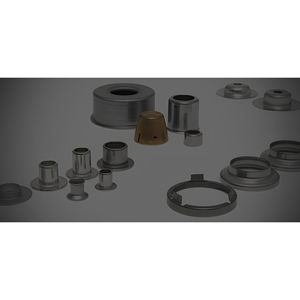
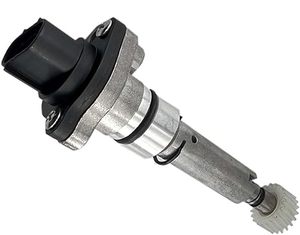
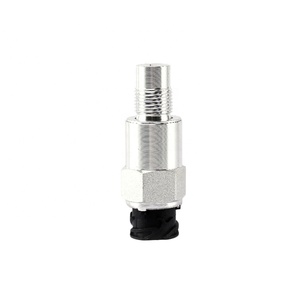
Every sub-assembly—from deep-drawn metal sensor casings to high-precision speed rotation telemetry—is batch-tracked with complete testing documentation under ISO 9001 controls certified since 2003.
An MLFF toll gantry relies on a multi-layered sensor matrix to detect, classify, and charge vehicles traveling at speeds up to 160 km/h without lane boundaries. Below is an engineering breakdown of how factory-integrated components perform critical tasks:
| Technology Layer | Primary Component | Operational Function | Key Factory Standard / Spec |
|---|---|---|---|
| Radio Frequency (RF) | DSRC / RFID Transceivers | Reads vehicle transponders (5.9 GHz DSRC / 900 MHz passive) for instant account debiting. | ISO 14816, 6C EPC Class 1 Gen 2 |
| Optical Recognition | ANPR / LPR HD Cameras | Captures front/rear high-resolution plate imagery under night, rain, or glare conditions. | Global Shutter, IR Illuminator, IP67 Enclosure |
| Vehicle Profiling | 3D LiDAR & 77GHz Radar | Calculates volumetric dimensions (length, width, height, axles) for accurate tariff tiering. | Class 1 Eye-Safe Laser, ±2cm Precision |
| Ground Presence | Magnetometers & Loops | Triggers camera shutter and validates vehicle passage across gantry zones. | NEMA TS-2 Card Compatibility |
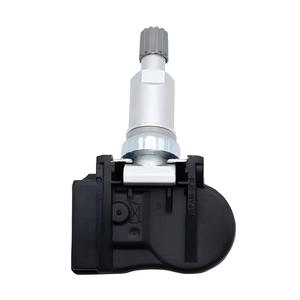
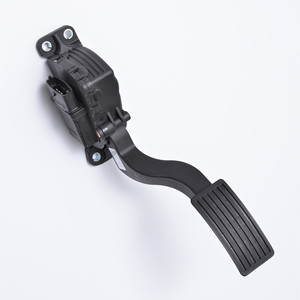
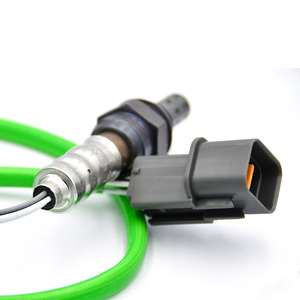
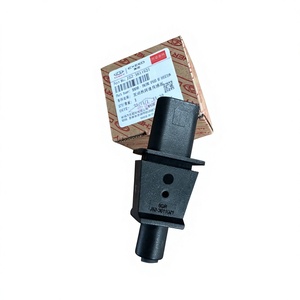
| Telemetry & Engine Data | Speed & Accelerator Position Sensors | Monitors heavy commercial transport compliance, emission telemetry, and speed verification. | 5V Electronic Throttle Control, OE Universal Fit |
In advanced logistics corridors and smart freight tolling schemes, toll operators are transitioning to dynamic distance-based and emission-based tolling. Factory-grade components such as Vehicle Speed Sensors (VSS), Accelerator Pedal Position Assemblies, and Commercial Vehicle Lambda/O2 Sensors are essential for OEM integration, roadside weigh-in-motion (WIM) systems, and telematics-enabled heavy vehicle tolling platforms.
Choosing a factory partner for toll and traffic control infrastructure requires long-term operational certainty. Built on five decades of field deployments across harsh North American climate zones—from -40°C freezing winters to corrosive coastal environments—our engineering methodology protects municipal and concessionaire capital investments.
Avoid costly field troubleshooting. Controllers, conflict monitors, power supplies, and communication switches are integrated, pre-wired, and stress-tested inside our factory before dispatch.
With headquarter facilities in Candiac (Quebec) and regional offices in Ontario and British Columbia, we supply bilingual technical sales, direct engineering submittals, and fast spare-part distribution.
Authorized representation for over 20 global ITS and parking technology pioneers allows our application engineers to evaluate radar vs. video vs. magnetometer performance based on true life-cycle costs rather than single-brand bias.
We supply comprehensive CAD wiring schematics, bill of materials (BOM), photometric validation sheets, and compliance certificates designed specifically for engineering consultants and turn-key tender review.
Procurement directors and transportation planners must design tolling assets with a 15-to-20-year operational horizon. Our research highlights four major technology shifts driving next-generation toll system factory design:
Rather than transmitting massive raw video streams to central servers, modern toll gantries integrate AI edge processors directly inside NEMA cabinets. Neural network models execute License Plate Recognition (LPR) and axle counting locally in under 15 milliseconds, reducing bandwidth consumption by 90%.
Virtual tolling powered by satellite navigation (GNSS) and vehicle-to-everything (V2X) DSRC units will complement physical gantries. Factories are now embedding cellular-V2X roadside units (RSUs) into traffic controller cabinets for hybrid physical-virtual tolling management.
Future toll algorithms will dynamically adjust tariffs based on real-time vehicle emissions, load weight, and congestion levels. Integrating OEM-grade sensor telemetry (such as fast-response oxygen and engine speed sensors) enables verified commercial fleet carbon accounting.
The barrier between highway ETC and urban Parking Access and Revenue Control Systems (PARCS) is dissolving. Modern toll factories produce cross-compatible transponders and LPR readers that operate seamlessly across expressways, municipal parking garages, and airport drop-off lanes.
Whether you are designing a high-speed Multi-Lane Free-Flow highway project, upgrading intersection speed telemetry, or building an integrated PARCS parking facility, our engineering specialists are ready to assist with compliant bills of material and factory pricing.