ISO 9001 certified since 2003 Quebec · Ontario · British Columbia 1-800-363-7481

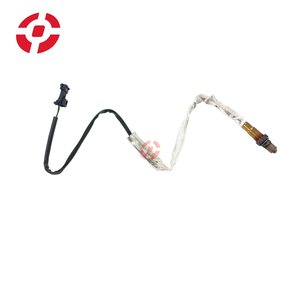
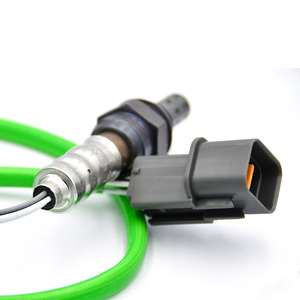
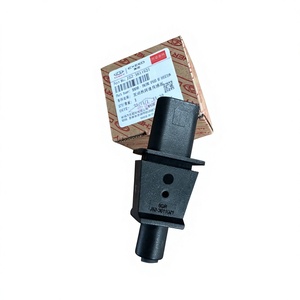
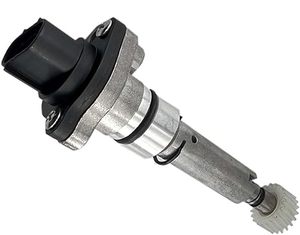
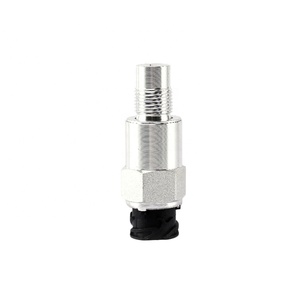
Factory-direct OEM/ODM radar modules, speed sensors, oxygen lambda sensors, and vehicle telemetry components certified under ISO 9001 quality management protocols.
Modern transportation networks demand real-time velocity, volumetric presence, and micro-classification data under conditions that degrade traditional optical sensing systems. As leading Traffic Radars Factories and Exporters, our engineering matrix focuses on FMCW (Frequency-Modulated Continuous Wave) and 77GHz–79GHz millimeter-wave radar architectures engineered to withstand extreme environmental challenges—from -40°C arctic freeze to high-salinity coastal environments.
Historically, municipal signal engineering relied upon inductive loop detection cut directly into asphalt. While inductive loops served as an early benchmark for stop-bar detection, their high lifecycle maintenance costs, susceptibility to pavement degradation during freeze-thaw cycles, and complete inability to provide multi-lane velocity profiling created severe operational bottlenecks. Modern smart city intelligent transportation systems (ITS) require multi-target tracking across up to 32 discrete traffic lanes simultaneously.
77GHz radar systems deliver 20x better range resolution over legacy 24GHz hardware. High bandwidth allows pinpoint differentiation between closely spaced motorbikes, passenger sedans, articulated buses, and non-motorized vulnerable road users (VRUs).
Unlike video analytics cameras that suffer from glare, heavy rain occlusion, fog, and nighttime headlight shadow false-triggers, millimeter-wave Doppler traffic radar operates at speed-of-light frequencies unaffected by atmospheric disruptions.
Seamlessly integrates into NEMA TS-1 / TS-2, ATC, and Type 170/2070 traffic control cabinets. NTCIP 1202/1203 open protocols allow centralized ATMS platform management without vendor lock-in.
| Technology Benchmark | Millimeter-Wave Radar (77-79GHz) | Video Analytics Camera | Inductive Pavement Loops | Magnetometer Wireless Grid |
|---|---|---|---|---|
| Detection Range | Up to 350 Meters (Advance & Stop-Bar) | Up to 150 Meters (Line-of-Sight) | Stop-bar Localized Only (< 5m) | Localized Spot Presence Only |
| Multi-Lane Tracking Capacity | Up to 32 Lanes / 128 Simultaneous Targets | 4 to 8 Lanes (Occlusion Dependent) | 1 Loop Per Lane (Single Point) | 1 Sensor Per Spot Grid |
| Weather Resilience (Snow/Fog/Sun Glare) | 100% Operational Immunity | Degrades in Heavy Rain/Fog/Glare | High Failure in Freeze/Thaw Cycles | Moderate (Pavement Shift Vulnerable) |
| Pavement Cut Requirement | Zero (Non-Invasive Above-Ground Mount) | Zero (Above-Ground Mount) | Heavy Saw-Cutting Required | Core Drilling Required |
| Velocity & Micro-Classification Data | High Precision Speed & 4D Profiling | Visual Classification Only | Basic Speed (Dual-Loop Only) | Binary Occupancy / Speed Estimate |
| Lifecycle Maintenance Cost | Extremely Low (MTBF > 100,000 hrs) | Moderate (Lens Cleaning Req.) | Extremely High (Road Resurfacing Risk) | Moderate (Battery Replacements) |
Key architectural shifts procurement departments, municipal engineers, and automotive tier-1 exporters must integrate into technical spec sheets.
Procurement teams are shifting away from standalone sensor purchases toward Sensor Fusion Nodes. By pairing 4D imaging radar data with optical AI camera feeds at the hardware edge, transportation agencies eliminate optical occlusion errors while generating high-definition visual event validation for incident management systems.
Next-generation traffic radars are no longer passive detectors; they act as cellular vehicle-to-everything (C-V2X) anchors. Real-time vehicle trajectory data calculated by intersection radar is broadcast directly to autonomous and connected vehicles via low-latency sub-6GHz radios to prevent intersection collisions.
Traditional 2D/3D traffic radar measured azimuth, range, and velocity. Future procurement specifications increasingly demand 4D Imaging Radar which adds height/elevation profiling. This capability prevents false-positive braking triggered by overhead highway gantries, bridges, and road signage.
With highway expansion stretching across rural corridors, radar units operating under ultra-low power envelopes (< 5 Watts) compatible with solar micro-grids and battery packs are dominating regional government tenders over high-draw thermal camera arrays.
Proprietary closed protocols are being blacklisted by municipal buyers. Exporters must provide fully documented APIs, compliant with NTCIP 1202/1203 and ISO 26262 functional safety benchmarks, allowing seamless integration into central SCADA and cloud-based traffic software.
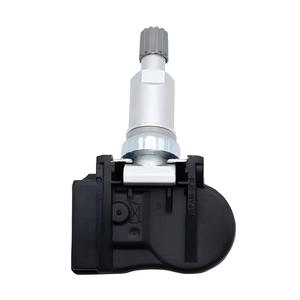
Commercial fleet operations are adopting universal OE replacement platforms (e.g., VOLVO OE 30637837, 40700-3AN0B, 8318112040). Universal sensor harnesses with pre-calibrated CAN-bus protocols lower repair turnaround times and fleet downtime globally.
Decades of field-proven engineering, rigorous quality auditing, and bespoke cabinet pre-wiring.
Our quality management system has been ISO 9001 certified continuously since 2003. Every single radar module, speed sensor, and pre-wired traffic control cabinet undergoes fully documented bench testing and photometric verification prior to global dispatch.
Engineered to satisfy North American and European specs: NEMA TS-1 / TS-2, ATC controller architectures, ITE/CSA photometric guidelines, MUTCD signing standards, and provincial traffic department specifications (MTO/MTQ).
We supply turnkey cabinet assemblies housing controllers, conflict monitors, surge suppressors, and radar interface cards pre-wired and burn-in tested. This slashes field commissioning times by up to 70% for contractors.
Beyond manufacturing, our internal technical engineering team prepares complete submittal packages, wiring schematics, bills of material, and photometric calculation models. Whether servicing municipal signal shops, ministry transportation corridors, or commercial parking operators, we provide vendor-neutral comparisons based on real-world field data rather than marketing claims.
Technical answers addressing signal compatibility, severe weather performance, calibration cycles, and international export logistics.
Our traffic cabinets, controllers, and radar detection platforms comply with standard North American specifications, including NEMA TS-1 / TS-2 and ATC (Advanced Transportation Controller) specifications. Communications utilize NTCIP 1202/1203 protocols to guarantee interoperability with central software like ATMS. Signal modules meet ITE, CSA, and MUTCD photometric and environmental standards.
Our radar sensors feature IP68 heavy-duty weatherproof enclosures engineered for harsh climates ranging from -40°C to +85°C. Unlike optical camera sensors, millimeter-wave signals penetrate heavy snowfall, dense fog, torrential rain, and airborne dust particles without signal decay or optics fogging.
Selection depends on site geometry and data goals. Inductive loops remain accurate for isolated stop-bar presence but require invasive pavement cutting. Video analytics offers visual verification but suffers in glare and fog. Millimeter-wave Doppler radar provides the ultimate balance: non-invasive mounting, 350m multi-lane coverage, precise speed measurement, and 100% all-weather uptime.
Yes. Equipped with standard NTCIP communications, field Ethernet switches, RS-485 serial ports, and optional cellular backhaul modules, our traffic radar systems report directly into existing central ATMS platforms, SCADA dashboards, or smart city open-data hubs without necessitating software replacement.
Absolutely. Our application engineers prepare full compliance submittal packages, custom wiring schematics, CAD mounting details, and localized bills of material tailored to consultant specifications and international municipal tender requirements across North America, Europe, Asia, and Latin America.
All items carry factory warranties backed by ISO 9001 quality tracking. We maintain spare-parts inventory, bench repair facilities, firmware update programs, remote diagnostic support, and step-by-step training modules for signal technicians and project contractors.
Access our full engineering product catalog, technical CAD drawings, NTCIP compliance documentation, and factory-direct pricing packages today.
Get Catalog