ISO 9001 certified since 2003 Quebec · Ontario · British Columbia 1-800-363-7481

Explore field-proven ITS components, variable message displays, and traffic telemetry hardware engineered for rugged highway performance and municipal arterial management.


The modernization of Mexico’s federal and municipal road networks presents unique engineering and procurement demands. Overseen by the Secretaría de Infraestructura, Comunicaciones y Transportes (SICT) and operated under concessions by organizations such as Caminos y Puentes Federales (CAPUFE) alongside private toll operators (e.g., Red de Carreteras de Occidente, Aleatica, and IDEAL), the national Intelligent Transportation Systems (ITS) landscape is undergoing rapid digital modernization. Central to this evolution is the deployment of high-reliability, CE-certified Dynamic Message Signs (DMS) and advanced vehicle telemetry systems capable of functioning seamlessly under Mexico's extreme environmental diversity—ranging from the high-altitude, intense ultraviolet environment of the Valley of Mexico to hyper-saline coastal corridors and scorching desert highways.
This technical guide serves infrastructure procurement officers, consulting engineers, system integrators, and concessionaires evaluating supplier qualification, optical performance, environmental resilience, protocol interoperability (such as NTCIP 1203 and EN 12966 standard alignment), and overall life-cycle economics of importing European-standard, CE-certified electronic sign displays and field sensor arrays into the Mexican market.
When procuring Dynamic Message Signs for Mexican projects, contractors frequently navigate an intersection of regulatory requirements. While federal tenders referenced by SICT historically leaned on MUTCD visual guidelines, international concessionaires increasingly mandate European EN 12966 CE Certification for optical performance, structural robustness, and energy efficiency. CE certification guarantees that dynamic sign displays undergo rigorous third-party laboratory verification across four key visual performance parameters:
Unlike basic factory self-declarations, CE EN 12966 certified signs mandate third-party physical testing by accredited European notified bodies. For Mexican concessionaires, installing CE-marked DMS translates directly to a 35% reduction in total energy draw through optimized optical lens cups and pulse-width modulation (PWM) dimming. Furthermore, CE certification mandates environmental enclosure testing against extreme thermal cycles (-40°C to +80°C internal housing temperatures), preventing thermal degradation of driver electronics common in non-certified imports.
Below is a comparative breakdown of key engineering specifications mandatory for Mexican highway tenders versus standard industrial displays:
| Parameter | Standard Commercial LED Display | CE EN 12966 Certified Highway VMS | SICT / CAPUFE Tender Impact |
|---|---|---|---|
| Luminance Output | 3,500 - 5,000 cd/m² (Unregulated) | Up to 12,400 cd/m² (Class L3*) | Eliminates sun-washout on East-West highway alignments |
| Contrast Ratio | Static 5:1 Ratio | Dynamic >16.7:1 (Class C2) | Guarantees 300m legibility at 120 km/h speeds |
| Ingress Protection | IP54 Indoor/Semi-Outdoor | IP66 Dual-Enclosure Seals | Prevents coastal salt-fog and fine desert dust penetration |
| Communication Protocol | Proprietary Serial / RS-232 | NTCIP 1203 v03 / SNMP / Modbus | Direct integration into regional C4/C5 Traffic Control Centers |
| Operating Temp Range | -10°C to +45°C | -40°C to +75°C (Class T3) | Resists extreme ambient thermal shifts across Mexican regions |
Deploying Dynamic Message Signs and telemetry systems across Mexico requires customized engineering tailored to regional environmental and operational challenges. Below are four primary deployment scenarios where CE-certified VMS systems provide exceptional field reliability and operational return on investment:
Locations: Autopista México-Acapulco (La Cima), México-Puebla (Cumbres de Maltrata), Durango-Mazatlán.
Engineering Challenge: Rapid weather changes, dense mountain fog, high humidity, freezing winter snaps, and steep grade elevation shifts.
Solution Architecture: Full-matrix RGB LED Variable Message Signs with dynamic automated fog warning logic. Displays integrate directly with roadside visibility sensors and weather stations (ESS) over fiber optic backhaul, automatically displaying real-time speed reductions and hazard pictograms in high-contrast amber/red graphics.
Locations: CDMX Periférico & Viaducto, Monterrey Avenida Constitución/Morones Prieto, Guadalajara Macrolibramiento.
Engineering Challenge: Extreme traffic density, severe vehicle emissions, intense thermal heat islands, and multi-lane gantry mounting restrictions.
Solution Architecture: High-density character-matrix or full-matrix VMS mounted on light-weight aluminum walk-in or front-access gantries. Featuring NTCIP 1203 compliance, these displays communicate with municipal C5 Traffic Management Centers to display automated travel-time estimations, lane management guidance, and emergency incident alerts.
Locations: Ports of Veracruz, Manzanillo, Altamira, Lázaro Cárdenas, and Riviera Maya corridors.
Engineering Challenge: High atmospheric salt content, tropical storm moisture ingress, hurricane-force wind loads, and intense UV degradation.
Solution Architecture: Marine-grade marine-alloy aluminum cabinets (5052-H32 or 316 stainless steel hardware) coated with fluoropolymer powder finishes rated for 3,000+ hours salt spray endurance (ASTM B117). Internal electronics are 100% protected via conformal coating (IPC-CC-830) and IP66 dual-sealed display modules.
Locations: Nuevo Laredo (World Trade Bridge), Tijuana (Otay Mesa), Ciudad Juárez (Pharr/Zaragoza).
Engineering Challenge: Bi-national commercial traffic bottlenecks, dual-language driver communication, continuous 24/7 operating cycles.
Solution Architecture: Ultra-bright multi-color dynamic lane allocation signs integrated with RFID toll transponders and weigh-in-motion (WIM) sensors. Dynamic displays instantly render dual-language (Spanish/English) border wait-time updates and commercial lane opening directives.
The procurement of traffic signage in Mexico is shifting rapidly from static reflective aluminum signs toward connected, intelligent roadside units. Key trends shaping specifications over the next five years include:
Historically, legacy Mexican highway installations suffered from vendor lock-in, where proprietary communication protocols prevented concessionaires from integrating signs from different manufacturers into a single Advanced Traffic Management System (ATMS). Modern SICT contracts strictly mandate NTCIP 1203 (National Transportation Communications for ITS Protocol for Object Definitions for Dynamic Message Signs). Suppliers exporting to Mexico must provide fully documented MIB (Management Information Base) files supporting NTCIP 1203 v03, enabling seamless centralized control via open ATMS platforms such as Kapsch, Siemens Concert, TransCore, or proprietary municipal C5 software.
Extensive stretches of Mexico’s federal highway network pass through remote rural sectors lacking reliable grid power connections. Modern CE-certified VMS utilize low-power LED technology combined with high-efficiency MPPT solar charge controllers and industrial lithium-iron-phosphate (LiFePO4) battery banks. By maintaining an operational power consumption under 45 Watts in ambient standby mode, full-matrix radar speed feedback signs and warning displays can operate 365 days a year purely on solar power, even during multi-day cloud cover in tropical storm seasons.
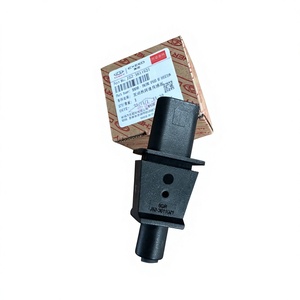
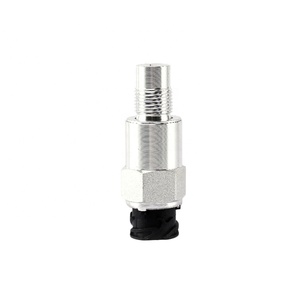
A Dynamic Message Sign no longer functions in isolation. Contemporary ITS deployments combine display cabinets with integrated roadside sensors. These include Doppler radar units for real-time speed enforcement and traffic queue detection, inductive loops and magnetometers for vehicle counting, and environmental sensor stations (ESS) for road surface temperature monitoring. For instance, combining vehicle speed sensors (such as OEM-grade rotation and speed sensors) with dynamic warning displays allows system operators to trigger automated driver alerts when truck speeds exceed safe limits on dangerous mountain descents.
Major Mexican population centers—including Mexico City (2,240m altitude), Toluca (2,660m), and Puebla (2,135m)—operate under reduced atmospheric density and significantly higher UV radiation levels than sea-level cities. Low atmospheric pressure impairs conventional forced-air convective cooling inside sealed electronic enclosures. Export-grade DMS destined for high-altitude Mexican installations must incorporate heat-pipe thermal exchange systems, UV-stabilized polycarbonate or aluminum louvers, and derated LED drive currents to prevent thermal runaway and premature LED lumen depreciation.
Navigating large-scale ITS installations requires an experienced partner capable of providing robust engineering submittal packages that pass rigorous consultant reviews. Building upon over five decades of traffic control legacy and an ISO 9001 certified quality management system (maintained continuously since 2003), our engineering team bridges the gap between international manufacturing excellence and localized field application.