ISO 9001 certified since 2003 Quebec · Ontario · British Columbia 1-800-363-7481

Factory-direct structural light poles pre-configured for smart city IoT nodes, traffic management sensors, and harsh maritime urban environments across Tokyo Bay and Kanto Plain.
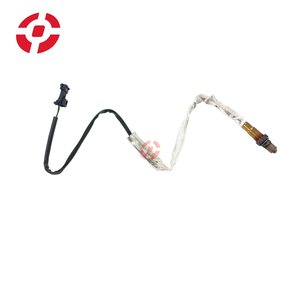
High-reliability environmental lambda sensing arrays integrated into smart light pole bases for localized Tokyo urban emission tracking.
Send an Inquiry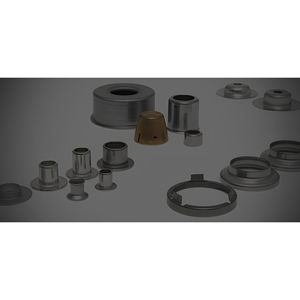
Weather-sealed precision deep-drawn housing components designed to protect pole-mounted IoT controllers and optical nodes against moisture.
Send an Inquiry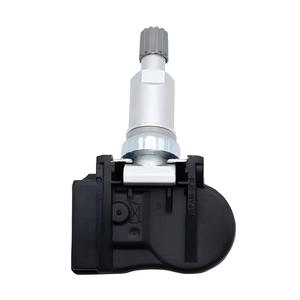
Specialized wireless telemetry sensors (OE 40700-3AN0B compatibility) engineered for real-time roadway pressure and vehicular monitoring poles.
Send an Inquiry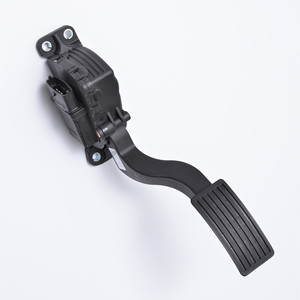
5V precision accelerator positioning sensor assembly (Model 611A) integrated into traffic signal poles for adaptive corridor control.
Send an Inquiry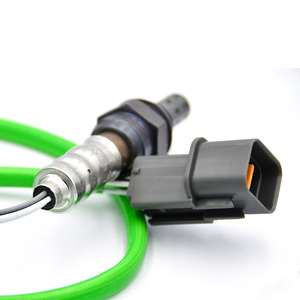
Commercial vehicle emissions monitoring hardware adapted for mounting on heavy-duty lighting and arterial traffic signal masts.
Send an Inquiry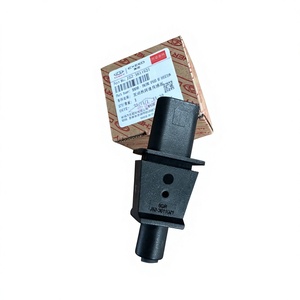
Precision rotational speed sensor (J52-3611021 architecture) providing 1-year operational integrity for municipal traffic analytics poles.
Send an Inquiry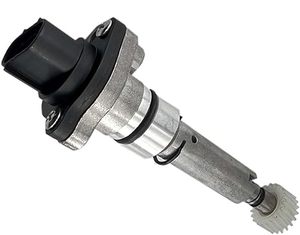
Universal fitment vehicle speed sensor system (OE 8318112040) designed for integration with smart highway and urban arterial poles.
Send an Inquiry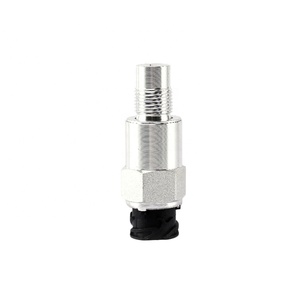
High-durability speed sensor unit (BQZ023C series) built for deployment on heavy-duty logistics mast arms across Tokyo port districts.
Send an InquiryRigorous quality management system certified since 2003 with full component traceability.
Structural engineering designed to withstand severe Kanto region typhoon wind loads.
Hot-dip galvanizing ensuring 50+ years of salt-spray corrosion protection along Tokyo Bay.
Five decades of field-proven intelligent transport and municipal lighting integration experience.
Manufacturing street light poles, high-mast towers, and smart city sensor columns for Tokyo, Japan requires an engineering approach vastly different from standard continental infrastructure projects. The Greater Tokyo Area sits atop a complex tectonic boundary while facing extreme seasonal typhoons blowing in from the Pacific Ocean, combined with highly corrosive salt air originating from Tokyo Bay. As a dedicated OEM/ODM factory and global supplier, our production standards bridge international Intelligent Transportation Systems (ITS) criteria with strict local compliance regulations.
To comply with Japanese construction standards (including guidelines set forth by the Ministry of Land, Infrastructure, Transport and Tourism - MLIT), light poles deployed across Shinjuku, Shibuya, Minato, and coastal Odaiba must be structurally engineered using Finite Element Analysis (FEA). Our poles are designed to absorb and dampen high-frequency kinetic energy generated by seismic events reaching Seismic Intensity 7 on the JMA scale, while resisting sustained wind gusts exceeding 60 meters per second (m/s).
Tokyo's dense urban topology requires poles with high ultimate tensile strength and dynamic flexibility. We utilize Q355B and Q460 high-strength low-alloy structural steel, hot-rolled and seam-welded via automated submerged arc welding (SAW).
The anchor base assemblies feature heavy-gauge ribbed gussets and high-tensile anchor bolts (Grade 8.8 / 10.9) that distribute moment loads evenly into reinforced concrete foundations, preventing structural notch fatigue over decades of constant micro-seismic activity.
Atmospheric salinity in coastal districts such as Shinagawa, Koto, and Chiba causes rapid oxidation on standard painted steel. Our factory enforces a multi-tier protective surface treatment protocol.
First, poles undergo full immersion hot-dip galvanization conforming to JIS H 8641 / ISO 1461 standards, achieving a zinc coating thickness exceeding 85 µm. This is followed by an architectural-grade fluoropolymer or electrostatic polyester powder coating, ensuring anti-graffiti properties and UV resistance against color fading.
| Pole Architecture Type | Standard Height (m) | Max Wind Velocity Rating | Primary Material Grade | Surface Protection Standard | Smart IoT / Sensor Compatibility |
|---|---|---|---|---|---|
| Octagonal Urban Street Pole | 4.0m - 10.0m | 60 m/s (134 mph) | JIS G 3101 SS400 / Q235B | Hot-Dip Galvanized + Powder Coating (120µm total) | NEMA / Zhaga Book 18 Photocell Receptacles |
| Conical Smart City Master Pole | 6.0m - 12.0m | 65 m/s (145 mph) | High-Strength Q355B Steel | JIS H 8641 Galvanized + Fluoropolymer Finish | Integrated 5G Small Cell, CCTV, Environmental Sensors |
| Heavy Traffic Mast Arm Column | 8.0m - 15.0m | 70 m/s (156 mph) | Q460E Structural Alloy | Dual-Layer Thermosetting Epoxy & Zinc Complex | Radar Vehicle Detectors, Speed Sensors, Signal Heads |
| High-Mast Logistics Tower | 18.0m - 35.0m | 75 m/s (167 mph) | Low-Alloy High-Yield Steel | Heavy-Duty Galvanized (Submerged >100µm) | Multi-Directional Floodlighting & Perimeter Radar |
Modernizing Tokyo's urban landscape requires customized pole configurations that integrate seamlessly into distinct neighborhood typologies, balancing historical aesthetics with cutting-edge Smart City capability:
In ultra-dense commercial hubs, multi-functional smart poles serve as the backbone for foot-traffic analytics, environmental micro-climate tracking, and 5G network densification. Internal cable routing channels, vibration-dampening dampeners, and hidden maintenance access doors keep streetscapes clean while housing complex power supplies and fiber-optic junction switches.
Operating in Odaiba, Ariake, and the Logistics Terminals near Haneda Airport, high-mast and traffic poles face elevated humidity and marine salt immersion. Our factory applies marine-grade stainless steel fasteners (SUS316), anti-seize hardware coatings, and enclosed IP67 electrical cabinets pre-wired to support heavy-vehicle telemetry and speed-detection sensors.
Aligned with the Tokyo Metropolitan Government's "Smart Tokyo" initiative and Zero-Emission strategy, municipal procurement is rapidly shifting away from single-purpose lighting poles toward unified, intelligent asset nodes. Key technological shifts driving our OEM manufacturing line include:
1. Decoupled Modular Sensor Architecture: Tokyo infrastructure authorities increasingly specify poles equipped with standardized mounting brackets and internal bus connectivity. This allows rapid plug-and-play installation of optical video analytics, radar vehicle detectors, air quality lambda sensors, and pedestrian emergency push-buttons without requiring site welding or structural modifications.
2. EV Charging Integrated Lighting Poles: To support Tokyo's aggressive transition toward electric mobility, street poles along residential and commercial curbsides are being re-engineered with internal 7kW to 22kW AC EV charging hardware, connected directly to smart grid energy management systems.
3. Autonomous Vehicle (V2X) Roadside Pole Nodes: As pilot autonomous shuttle networks expand in districts like Marunouchi, signal lighting poles are fitted with C-V2X (Cellular Vehicle-to-Everything) roadside units and optical sensors to transmit real-time signal phase and timing (SPaT) data directly to oncoming vehicles.
Our factory combines over 50 years of specialized manufacturing experience with ISO 9001 certified quality controls. We understand that Japanese engineering firms demand zero-defect manufacturing, precise dimensional tolerances, and meticulous submittal documentation.
Rigorous NDT Quality Inspection: Every structural seam weld undergoes Non-Destructive Testing (NDT), including Ultrasonic Testing (UT) and Magnetic Particle Inspection (MPI), to verify weld integrity prior to galvanization. Coating thickness measurements, cross-hatch adhesion testing, and salt-spray testing certificates are provided with every batch shipment.
Pre-Wired & Pre-Assembled Enclosures: To minimize expensive field labor costs in Tokyo, our factory offers fully pre-wired traffic cabinets, integrated junction boxes, terminal strips, and pre-calibrated sensor arrays. Contractors receive job-ready hardware that drops directly onto pre-cast foundation anchor bolts.
Yes. We routinely manufacture structural steel poles using steel grades (such as SS400, SM490, and STK400) conforming directly to JIS G 3101 and JIS G 3444 specifications. Furthermore, our hot-dip galvanizing process complies fully with JIS H 8641 standards, guaranteeing long-term durability under Tokyo climatic conditions.
All pole structures undergo computer-simulated wind load and dynamic vibration analysis based on MLIT design guidelines. We calculate base plate thickness, shaft taper ratios, and anchor bolt embedded depth to easily withstand sustained 60–70 m/s wind pressures and Level 2 earthquake ground motions.
Absolutely. As a direct factory supplier, we customize pole cross-sections (octagonal, conical, stepped tubular), internal mounting plates, cable access ports, NEMA controller housing brackets, and sensor arm extensions to match your exact CAD drawing specifications.
Standard production lead times range from 15 to 25 days depending on total order volume and galvanization schedules. Ocean freight from our primary container port to Tokyo Bay (Tokyo or Yokohama Port) typically takes 4 to 7 days, enabling fast project turnaround times for Kanto regional projects.
We provide comprehensive submittal packages including Mill Test Reports (MTR) for all steel batches, Galvanizing Inspection Certificates, FEA Structural Calculation Reports, Coating Thickness Test Data, and detailed 2D/3D CAD shop drawings stamped by senior structural engineers.
Poles are wrapped in heavy-duty protective bubble wrap, woven synthetic sleeves, and wooden dunnage separators to prevent surface abrasion during loading and sea shipping. Hardware, anchor bolts, and small sensor accessories are crated in export-grade fumigated plywood cases.
Speak directly with our senior infrastructure application engineers. We provide CAD drafting, submittal packages, structural calculations, and competitive factory-direct pricing for contractors, importers, and municipal planners serving Greater Tokyo.
Send an Inquiry