ISO 9001 certified since 2003 Quebec · Ontario · British Columbia 1-800-363-7481

Direct-exporter vehicle detection sensors, Doppler speed indicators, lambda monitoring kits, and rotational position encoders rigorously tested for Hanoi's dense tropical traffic corridors.
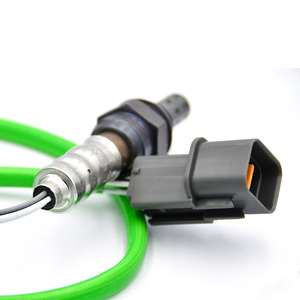
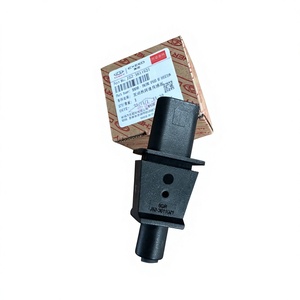
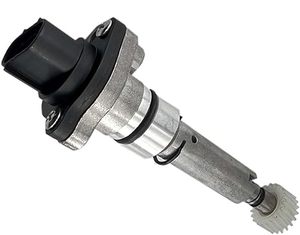
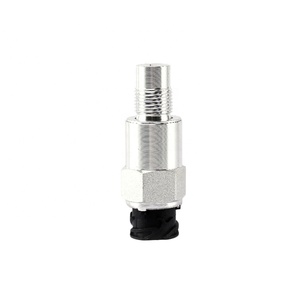
As Hanoi accelerates its vision under the Hanoi Smart City Master Plan 2030, municipal planners, Intelligent Transportation Systems (ITS) engineers, and commercial fleet operators face unprecedented mobility challenges. Hanoi’s traffic landscape is defined by one of the highest motorcycle densities globally—exceeding 6.5 million two-wheelers operating alongside passenger cars, electric buses, and heavy logistics trucks. Traditional in-pavement inductive loops fail rapidly under Hanoi’s intense asphalt temperatures, torrential monsoon seasons, and frequent road repaving initiatives along key arteries such as Ring Road 3 (Đường Vành Đai 3), Vo Nguyen Giap Expressway, and the Nhat Tan Bridge corridor.
As a global pioneer in intelligent transportation solutions, pre-wired traffic cabinets, and vehicle detection telematics since 1974, our organization exports military-grade Microwave Doppler Radar Detectors, Frequency-Modulated Continuous-Wave (FMCW) Radar Sensors, and automotive speed/position sensors customized for Vietnam’s severe tropical environment. By delivering true Information Gain—unfiltered, multi-object tracking data combined with localized hardware durability—we empower Hanoi’s traffic authorities and B2B buyers to transition from reactive signal control to proactive, predictive mobility networks.
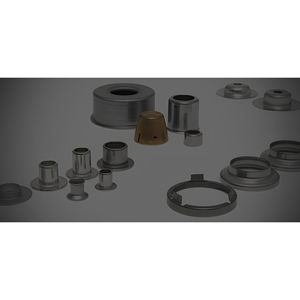
Hanoi experiences over 1,600mm of annual rainfall and humidity exceeding 90%. Our deep-drawn sensor enclosures and IP68 Doppler radars utilize hermetically sealed glass-to-metal connectors, eliminating signal drift caused by water ingress or tropical steam.
Standard radar detectors suffer from target occlusion when swarms of motorbikes surround heavy commercial trucks. Our 77GHz FMCW radar arrays utilize high-angular-resolution beamforming to isolate micro-mobility units down to 0.1m/s velocity differentials.
Whether integrating directly into municipal traffic control cabinets via NTCIP 1202/1203 or interfacing with commercial vehicle ECUs via J1939 CAN-Bus, our radar and speed sensors deliver plug-and-play architecture without proprietary software lock-in.
An objective engineering comparison evaluated across temperature fluctuations, monsoon rain, heavy vibration, and long-term lifecycle costs.
| Evaluation Criteria | Microwave FMCW Radar (Our Spec) | Optical Video Analytics | In-Pavement Inductive Loops |
|---|---|---|---|
| Tropical Monsoon Resistance (IP68) | 100% Unaffected by Heavy Rain/Fog | Degraded by lens fogging & heavy downpours | Prone to water intrusion & wire deterioration |
| Motorcycle Swarm Separation | High Precision (77GHz Doppler array) | High occlusion risk during rush hours | Fails to detect lightweight aluminum bikes |
| Asphalt Repaving Durability | Zero Maintenance (Above-ground mount) | Zero Maintenance (Above-ground mount) | Destroyed during road resurfacing |
| Advance Speed Detection Range | Up to 300 meters multi-lane | Limited to visual sightline (~75 meters) | Single fixed point measurement only |
| Mean Time Between Failures (MTBF) | > 100,000 Operating Hours | ~ 45,000 Hours (Lighting dependent) | ~ 20,000 Hours in hot tropical asphalt |
Hanoi’s elevated Ring Road 3 experiences extreme volumetric fluctuations, blending high-speed logistics trucks heading toward Bac Ninh industrial parks with city-bound commuter traffic. Operating in ambient temperatures reaching 40°C in summer, our 24GHz/77GHz Doppler radar detectors mounted on mast-arms provide continuous velocity telemetry, automatic incident detection, and speed warning outputs. By feeding real-time data into adaptive Dynamic Message Signs (DMS), traffic authorities actively prevent rear-end collisions during sudden tropical downpours.
Urban intersections in districts like Cau Giay and Ba Dinh require microsecond accuracy for green-wave signal optimization. Traditional pre-timed signal controllers create massive congestion backups. Integrating our radar vehicle detectors with pre-assembled NEMA/ATC traffic cabinets allows signal timing to dynamically expand or contract based on actual vehicle queue lengths and approaching velocity vectors, reducing idle emissions by up to 22%.
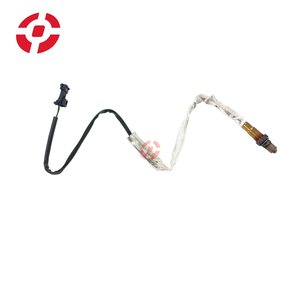
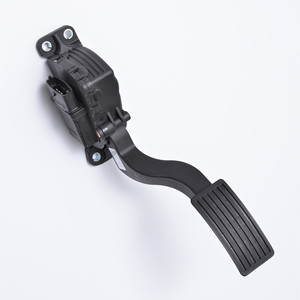
Commercial vehicle fleets, including the Hanoi Transport Corporation (TRANSERCO) bus network and regional logistics carriers operating along the Noi Bai Airport freight corridor, rely on precision drivetrain sensors. Our high-sensitivity Oxygen Sensors (OE 30637837), Fast-Response Lambda Sensors, and 611A Electronic Throttle Control Assemblies ensure optimal air-fuel ratios under continuous stop-and-go driving conditions, maximizing fuel efficiency while adhering to Vietnam’s EURO 5 emission mandates.
The urban growth of Hanoi and surrounding industrial hubs (Hai Phong, Bac Ninh, Vinh Phuc) is triggering a rapid shift toward automated, sensor-driven transportation infrastructure. Procurement teams evaluating radar and vehicle sensors must account for three critical industry trends:
When procuring mission-critical traffic sensors and radar equipment for Hanoi infrastructure or OEM automotive integration, reliability is paramount. Our factory and engineering teams operate under strict E-E-A-T (Experience, Expertise, Authoritativeness, and Trustworthiness) standards:
With over 50 years of experience in intelligent mobility, our engineers do not merely sell components from a catalog. We benchmark site geometry, mounting heights, thermal constraints, and backhaul communications to recommend vendor-neutral sensor configurations optimized for lifetime return on investment.
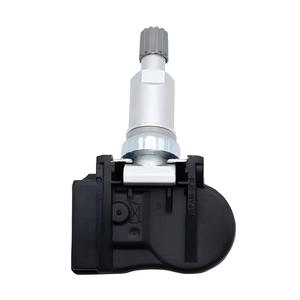
Every radar unit, speed sensor assembly, and throttle position module undergoes rigorous factory acceptance testing (FAT). Pre-wired cabinet integration and sensor signal calibration are completed on the bench prior to export, reducing field turn-on time and eliminating commissioning errors in Hanoi.
We supply full submittal packages—including wiring schematics, CAD mounting details, photometric verification sheets, Certificate of Origin (CO), and Certificate of Quality (CQ)—enabling Vietnamese contractors and engineering consultants to pass municipal tender audits without delay.