ISO 9001 certified since 2003 Quebec · Ontario · British Columbia 1-800-363-7481

Engineered to North American ISO standards and pre-configured for seamless integration into Bangkok's intelligent transportation framework and commercial automotive fleets.
Delivering reliable traffic & sensor architecture since 1974.
Certified standard quality control on every submittal & export order.
IP68 weatherproofing rated for severe monsoon rain attenuation.
Open communication protocol supporting global ATMS integration.
Metropolitan Bangkok presents one of the most complex, high-density traffic ecosystems in Southeast Asia. Characterized by extreme arterial congestion along primary corridors such as Sukhumvit Road, Rama IV, and Sathorn, the city's road infrastructure demands non-intrusive vehicle detection solutions capable of real-time multi-target tracking. As municipal authorities under the Bangkok Metropolitan Administration (BMA) accelerate smart city modernization initiatives, traditional inductive loop sensors—prone to frequent failure during pavement deformation and severe monsoon inundations—are rapidly being superseded by advanced Radar Vehicle Detection Systems (RVDS).
As premier suppliers and global exporters of intelligent transportation systems (ITS) and automotive sensor technology, our millimeter-wave FMCW (Frequency Modulated Continuous Wave) radar architectures are engineered specifically to overcome Bangkok's unique environmental and mobility challenges. Delivering uncompromised spatial accuracy across 12-lane arterials, radar sensing provides municipal traffic management centers with the accurate volume, speed, occupancy, and vehicle classification data required for dynamic adaptive signal timing.
The Imperative for Non-Intrusive Radar Technology in Thailand: Bangkok's severe tropical climate presents constant operational challenges to traffic monitoring hardware. Road surfaces frequently endure temperatures exceeding 40°C combined with high humidity and intense monsoon downpours that cause local flooding. Under these harsh conditions, physical loop detectors cut into the asphalt degrade quickly due to moisture ingress and heavy axial loads from mixed traffic fleets.
Modern 77GHz millimeter-wave radar detection operates completely above ground on mast arms, roadside poles, or gantries. Unaffected by ambient lighting variations, sun glare, heavy rain, or dense fog, microwave radar maintains over 99.5% presence detection accuracy. Furthermore, modern micro-mobility dynamics—including high volumes of motorcycles, tuk-tuks, and commercial transport vehicles—are reliably captured through high-resolution Doppler multi-target tracking algorithms.

To qualify as a enterprise-grade supplier for major traffic management projects across Thailand and international markets, vehicle detection equipment must conform to strict physical, electrical, and communication standards. Below is an engineering breakdown of our radar vehicle detection architecture:
Deploys high-frequency 77–81 GHz FMCW radar rays to map vehicle presence at intersection stop lines up to 100 meters. Supports up to 10 customizable detection zones per lane across 8 full lanes simultaneously.
Tracks approaching vehicles up to 300 meters from the intersection, calculating velocity, range, and time-to-stopbar. Dynamically extends green signal phases to eliminate red-light running hazards on high-speed expressways.
Performs real-time volume, average speed, headway, queue length, and 8-category vehicle classification (motorcycles, passenger cars, pickup trucks, buses, heavy articulated trucks).
NEMA TS-2 & ATC Cabinet Integration: Our radar systems connect seamlessly to modern ATC (Advanced Transportation Controller) units and standard NEMA TS-1 / TS-2 cabinet assemblies. Utilizing RS-485, industrial Ethernet, or contact closure cards, detector outputs report presence state directly to the local signal controller. Furthermore, compliance with NTCIP 1202 and NTCIP 1203 protocols guarantees interoperability with Bangkok's central SCATS, SCOOT, or proprietary ATMS software platforms.
Targeted ITS engineering solving specific mobility bottlenecks across Bangkok's expressways, urban intersections, and industrial transit corridors.
In high-density corridors such as Rama I, Asok Montri, and Ratchadapisek, traffic patterns vary drastically between peak hours and off-peak periods. Overhead radar detection sensors feed continuous queue-length and occupancy data to adaptive traffic controllers. By dynamically expanding green time for saturated approaches and truncating clear phases, municipal operators achieve up to a 22% reduction in corridor travel delays.
Along the Chalong Rat and Srirat Expressways operated by the Expressway Authority of Thailand (EXAT), long-range microwave radar sensors monitor vehicle velocity across multiple lanes. The system instantly flags anomalous decelerations, stopped vehicles, or reverse driving incidents, transmitting immediate alerts to variable message signs (VMS) and control centers to prevent secondary collisions.
Bangkok's Bus Rapid Transit (BRT) and public transit buses require priority clearance at crowded junctions to maintain service timetables. Dual-spectrum radar sensors distinguish high-occupancy buses from smaller private passenger vehicles based on volumetric radar cross-sections (RCS), automatically signaling the intersection controller to grant Transit Signal Priority (TSP) green extension.
During Bangkok's annual rainy season (May to October), flash flooding often submerges road curbings and renders optical cameras ineffective due to water droplets on lenses and steam reflections. IP68-sealed 77GHz radar sensors penetrate dense rain clouds, water spray, and darkness, providing uninterrupted 24/7/365 data integrity without requiring lens wiping or physical maintenance.
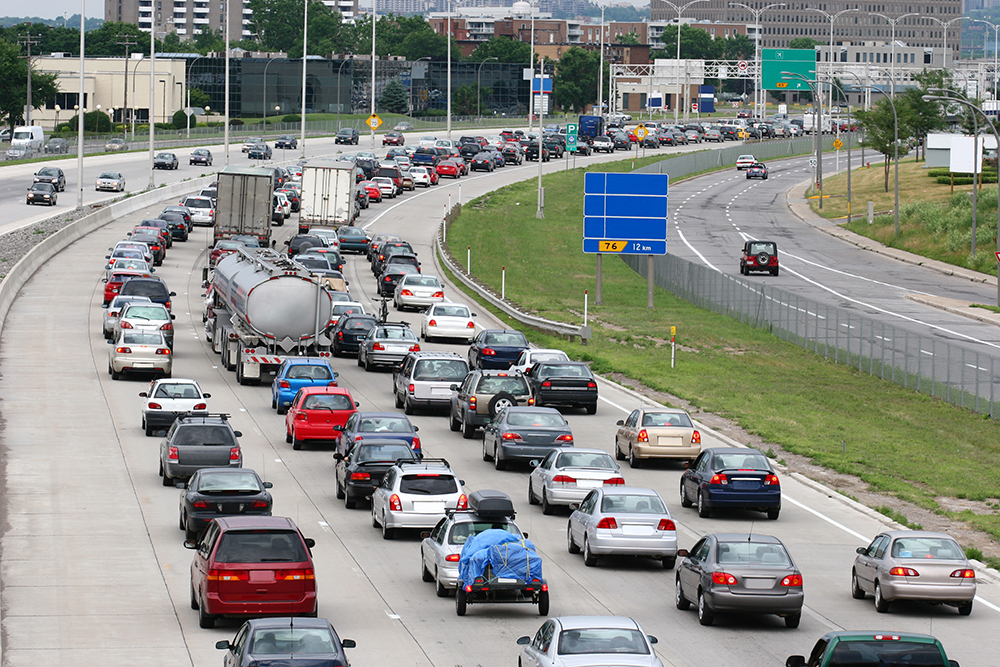
Under the national Thailand 4.0 economic strategy, the Ministry of Transport and BMA are heavily investing in Smart Mobility infrastructure across Bangkok and the surrounding Eastern Economic Corridor (EEC). Key development trends driving radar detection procurement include:
Delivering engineering rigor, vendor-neutral hardware selection, and factory-backed export support for infrastructure projects worldwide.
Our quality management process has been continuously ISO 9001 certified since 2003. Every radar sensor, traffic cabinet, and submittal component undergoes strict factory bench testing and serial calibration before export delivery.
To reduce field commissioning time for local Thai installation contractors, we offer complete pre-wired traffic cabinets integrated with conflict monitors, radar power supplies, surge protection, and edge communications backhaul.
Our specialized technical sales and engineering departments provide complete consultant submittal packages, wiring schematics, photometric reports, customs documentation, and international shipping logistics.
Technical answers addressing specification compliance, tropicalization, customs export, and integration into local Thai traffic infrastructure.
Our 77GHz FMCW radar vehicle detection systems are housed in IP68-rated weatherproof, UV-resistant NEMA 4X enclosures. Unlike optical video detection systems, which suffer from water droplet distortion and glare, microwave radar signals penetrate rain clouds, heavy fog, humidity, and standing water reflections with less than 0.2dB attenuation, ensuring uninterrupted presence detection accuracy above 99.5% regardless of weather severity.
Our systems comply with standard international controller architectures, including NEMA TS-1, NEMA TS-2 Type 1 & Type 2, ATC (2070 / 170), and European 230V signal controllers. Communication interface options include dry contact closure outputs, RS-485 serial interfaces, and native Ethernet operating over standard NTCIP 1202 / 1203 protocols for seamless connection to central traffic management software.
Yes. Utilizing high-resolution 3D/4D radar reflection mapping, our micro-doppler signal processing algorithms are optimized to separate and track small targets with small Radar Cross-Sections (RCS)—such as motorcycles, motor scooters, tuk-tuks, and non-motorized vehicles—even when they filter between larger trucks and buses in lane-sharing scenarios.
For every export project, our engineering team supplies a full submittal documentation package: Factory Acceptance Testing (FAT) certificates, ISO 9001 quality compliance certificates, CAD mounting schematics, complete wiring pinouts, Certificate of Origin (COO), and direct factory engineering escalation support for local Thai system integrators.
While inductive loops require saw-cutting into road asphalt—leading to pavement failure, high replacement costs, and lane closure disruption during maintenance—above-ground radar sensors mount onto existing roadside poles or mast arms in under two hours. With a mean time between failures (MTBF) exceeding 100,000 hours and zero road surface wear, radar reduces total 10-year lifecycle operational costs by over 45%.
Absolutely. Radar detection units stream real-time data logs—including volume counts, speeds, headways, and lane occupancy—via standard JSON, XML, or MQTT protocols over cellular gateway routers or fiber optic backhaul. This data connects effortlessly to municipal open-data platforms, parking guidance networks, or cloud-based traffic control centers.
Partner with an established global supplier for your next traffic engineering, radar vehicle detection, or smart city project in Bangkok. Access complete datasheets, compliance records, and direct B2B quote assistance.
Get Catalog