ISO 9001 certified since 2003 Quebec · Ontario · British Columbia 1-800-363-7481

Precision-engineered traffic cabinets, vehicle speed sensors, and intelligent transportation systems tailored for South American urban networks and highway corridors.

Heavy-duty aluminum signal enclosures integrated with high-performance conflict monitors, auxiliary power distribution, and NTCIP 1202 central communications.
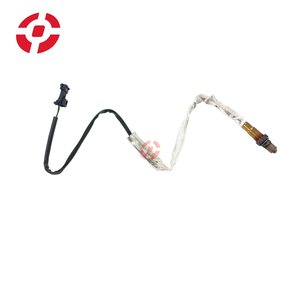
High-precision replacement oxygen sensors designed for municipal fleet maintenance, public transit buses, and heavy commercial vehicles operating across South America.
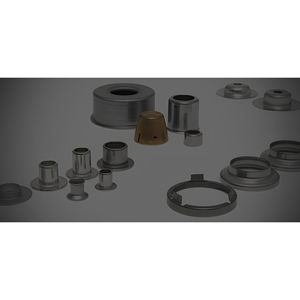
Custom metallic housing components for traffic management sensors, radar units, and roadside environmental monitoring devices installed along coastal corridors.
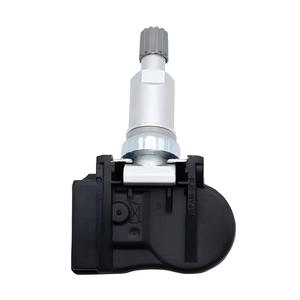
Advanced wireless tire pressure monitoring sensors designed for logistics fleets, BRT transit networks, and municipal service vehicles in Uruguay.
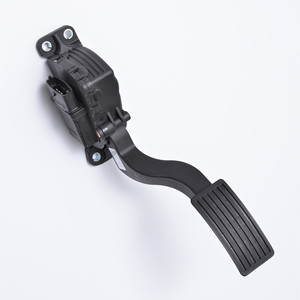
Dual-redundant hall-effect position sensors for electronic throttle control in urban transit buses, utility trucks, and heavy transport equipment.
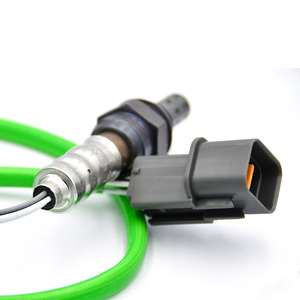
Wideband oxygen sensing units engineered for Euro 4/5/6 compliance in commercial fleets, minimizing emissions and maximizing operational uptime.
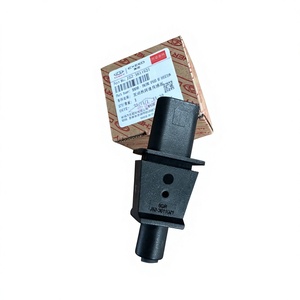
Industrial magnetic rotation sensors utilized in traffic gate automation, bridge draw-span monitoring, and heavy equipment speed telemetry.
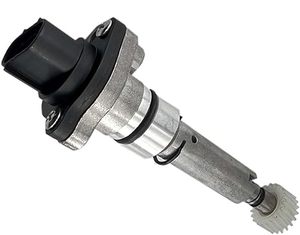
Rugged vehicle speed sensors providing accurate odometer and speed pulse data to traffic counters, onboard telemetry, and adaptive signal priority controllers.
Decades of manufacturing expertise in traffic control and sensor equipment since 1974.
Rigorous factory testing, batch traceability, and international quality management.
Specially formulated corrosion resistance for coastal salt mist along Río de la Plata.
Seamless interoperability with central ATMS software platforms used across South America.
As South America accelerates its investments in smart urban mobility and intercity corridor safety, selecting the appropriate traffic signal cabinets and associated vehicle detection hardware becomes a critical factor for long-term reliability. Uruguay, led by initiatives from the Ministerio de Transporte y Obras Públicas (MTOP) and municipal intendencias such as Montevideo, Canelones, and Maldonado (Punta del Este), requires roadside hardware that withstands aggressive humid subtropical environments while seamlessly executing complex adaptive signal timing plans.
Our manufacturing facility specializes in custom OEM/ODM production of NEMA TS-1, NEMA TS-2 (Type 1 and Type 2), and Advanced Transportation Controller (ATC) v6.21 cabinet architectures. By pairing structural durability with state-of-the-art power distribution and signal conflict monitoring, our exported cabinets serve as the dependable backbone for municipal Intelligent Transportation Systems (ITS).
Modern traffic management demands far more than basic signal phase toggling. A modern signal cabinet is a distributed computing node capable of hosting local edge analytics, emergency vehicle preemption receivers, pedestrian accessibility modules, and cellular backhaul gateways. Below is the structural composition of our specialized signal enclosures built for export to Uruguayan integrators:
Fabricated from 2.5mm unpainted 5052-H32 aluminum alloy or 316 stainless steel. Features dual-wall sunshades, thermostatically controlled forced-air ventilation (100+ CFM), and IP66 dual-gasket door seals to prevent moisture accumulation.
Equipped with 16-channel Malfunction Management Units (MMU2) or Malfunction Conflict Monitors (MCM). Features heavy-duty MOV surge protection rated up to 20kA on field signal outputs and incoming AC utility lines.
Engineered for full compatibility with open-standard central traffic management systems (ATMS), SCATS, and TRANSYT. Supports Ethernet, RS-232/485 serial, and optical fiber backhaul interfaces.
Modernizing transport networks in Uruguay requires adaptable hardware designed for distinct geographic and operational requirements. From heavily trafficked arterials in Montevideo to remote rural highway intersections along Ruta 1 (Montevideo - Colonia) and Ruta 9 (Rocha - Chuy), signal cabinets must deliver unfailing continuous uptime.
Deploying ATC v6 signal controllers integrated with video vehicle detection sensors to enable real-time adaptive signal control, reducing congestion along Avenida 18 de Julio and Rambla Sur.
Installing NEMA 4X 316-grade stainless steel cabinets fitted with internal humidity heating strips to counter severe ocean salt spray and high moisture along Maldonado coastal tourist corridors.
Solar-powered micro-grid signal cabinets featuring low-power DC flashers, lithium battery storage arrays, and cellular remote diagnostic telemetry for isolated intersections on Ruta 5 and Ruta 8.
Transportation project tender specifications within MERCOSUR member states prioritize standardized electrical distribution, modular backplanes, and low total cost of ownership (TCO). Our signal cabinet designs incorporate standard 19-inch rack frames, color-coded wiring harnesses, and toolless terminal block blocks. This ensures local technicians in Uruguay can conduct routine maintenance, module swaps, and diagnostic bench-testing without requiring proprietary toolsets.
Consulting engineers and municipal procurement departments evaluating traffic signal cabinets can reference the following architectural matrix to align project requirements with factory specification choices:
| Cabinet Parameter | NEMA TS-2 Type 1 | NEMA TS-2 Type 2 | ATC v6.21 Architecture | Uruguay Coastal Spec |
|---|---|---|---|---|
| Primary Material | 5052-H32 Aluminum (2.5mm) | 5052-H32 Aluminum (2.5mm) | 5052-H32 Alum / 304 SS | 316 Stainless Steel |
| Bus Interface Unit (BIU) | Serial Bus (SDLC) | Direct Hardwired Terminal | High-Speed Serial Ethernet | SDLC + Ethernet Dual Backhaul |
| Ingress Protection | NEMA 3R / IP54 | NEMA 3R / IP54 | NEMA 4 / IP65 | NEMA 4X / IP66 Sealed |
| Conflict Monitoring | 16-Channel MMU2 | 12-Channel MMU | High-Density CMU | 16-Channel Fault Recording MMU |
| Thermostatic Heating | Optional 150W Strip | Optional 150W Strip | Standard Dual-Strip 300W | Anti-Condensation Dual Heat |
| Power Utility Input | 120V AC, 60Hz | 120V AC, 60Hz | 120V/240V AC Autosensing | 220V AC 50Hz (Uruguay Grid) |
| Surge Protection | 10kA MOV Line Arrestor | 10kA MOV Line Arrestor | 20kA Hybrid Gas Tube | 20kA Heavy-Duty Dual Stage |
Below are technical, logistical, and compliance answers tailored for procurement managers, civil engineering consultants, and ITS contractors sourcing equipment for deployment in Uruguay.
While standard North American NEMA cabinets are configured for 120V 60Hz AC, our factory exports dedicated international configurations built specifically for 220V/240V AC 50Hz power inputs. All internal power supplies, transformers, bus interface units, conflict monitors, and LED flasher modules are rated for 220V 50Hz operation, eliminating the need for external step-down transformers and preventing unnecessary thermal generation inside the enclosure.
We supply cabinets fabricated from marine-grade 5052-H32 aluminum alloy or 316 stainless steel. Furthermore, all seams are continuously TIG welded without spot-weld gaps. Outer surfaces undergo a 5-stage iron phosphate pretreatment followed by a architectural-grade TGIC polyester powder coating (minimum 80-micron thickness). All external door hinges, handles, and lock cylinders are crafted from solid 316 stainless steel with neoprene gasket seals.
Yes. Our cabinet assemblies utilize controllers natively supporting NTCIP 1202 (National Transportation Communications for ITS Protocol) for traffic signal controller objects. They provide standard Ethernet interfaces, cellular routers (4G LTE/5G), or optical fiber transceivers that allow seamless integration into existing central traffic platforms operated by local intendencias or the MTOP.
Standard production lead time for customized export signal cabinets ranges between 3 to 5 weeks depending on order volume and specific backplane options. Ocean freight transit from our factory to the Port of Montevideo typically takes approximately 28 to 35 days. We handle complete export documentation, ISPM 15 heat-treated wooden crate packaging, and bill of lading preparations for streamlined customs clearance.
Absolutely. Every exported signal cabinet undergoes 100% Factory Acceptance Testing (FAT) before crating. We pre-wire load switches, flashers, conflict monitors, detector rack card cages, and power distribution panels. We perform bench testing under simulated full electrical load for 48 continuous hours to ensure zero dead-on-arrival (DOA) components arrive at your project site.
Yes. Our cabinet backplanes feature standardized plug-and-play modularity. Spare BIUs, load switches, flash transfer relays, detector cards, and surge suppressors are stocked for rapid air-freight dispatch. Detailed wiring schematics, pinout diagrams, and CAD drawings are provided with every cabinet shipment for ongoing facility maintenance.
With over five decades of specialized experience in intelligent transportation hardware, our company stands as a trusted manufacturing partner for government agencies, civil engineering firms, and urban tech contractors across South America.
Certified quality control protocols covering incoming raw material verification, precision CNC sheet laser cutting, robotic welding, thermal chamber testing, and electrical safety validation.
In-house mechanical and electrical design teams capable of customizing cabinet dimensions, internal mounting sub-panels, custom lock configurations, and specific terminal block layouts.
Comprehensive international shipping support, bilingual engineering documentation (English/Spanish), factory warranties, and remote diagnostic assistance for global project deployments.