ISO 9001 certified since 2003 Quebec · Ontario · British Columbia 1-800-363-7481

Explore our export-grade, field-proven signal illumination modules, vehicle position sensors, and intelligent mobility hardware tailored for municipal and industrial deployments across Italy.
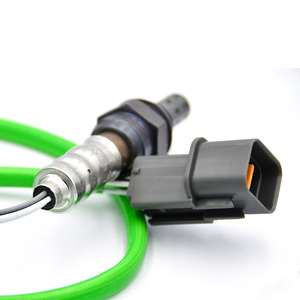
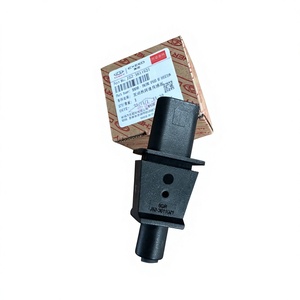
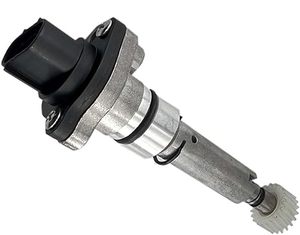
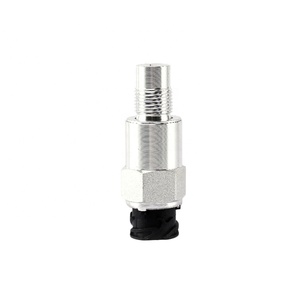
The modernization of Italian urban traffic networks and interregional highway corridors demands sophisticated signal control systems and vehicle detection electronics capable of meeting rigorous European Union standards. As specialized signal lights manufacturers serving Italy, our engineering framework integrates high-efficiency LED optics, advanced vehicle sensing arrays, and industrial-grade traffic control cabinets built specifically to handle the demanding climatic, architectural, and regulatory requirements of the Italian peninsula.
From the dense, historically sensitive urban centers of Rome, Milan, and Florence requiring specialized ZTL (Zona a Traffico Limitato) signal control, to the high-speed transit corridors operated by ANAS S.p.A. across the Apennines and coastal routes, traffic signals must maintain flawless photometric visibility while resisting extreme environmental degradation. Below is an authoritative technical overview of how modern signal manufacturing aligns with Italian municipal specifications, European directives, and smart transportation ecosystems.
Optical assemblies engineered to pass Class 3/2 luminous intensity thresholds, Class E ambient temperature ranges (-40°C to +60°C), and phantom light reflection class A limits.
Advanced constant-current LED engines operating at < 8W per signal head, yielding up to 85% energy reduction compared to legacy incandescent lamps while guaranteeing 100,000+ operational hours.
Seamless communication interface supporting NTCIP 1202/1203, MODBUS RTU, and Ethernet backhaul for direct integration into Italian central traffic management platforms (ATMS).
Sun phantom light—a critical safety hazard caused by intense solar radiation reflecting off signal lenses—is especially prevalent in Mediterranean countries like Italy. Our manufacturing process incorporates precision-molded Fresnel lenses paired with specular black anti-glare visors and secondary diffuser optics. This optical layout isolates incoming sunlight from internal reflections, satisfying EN 12368 Class A anti-phantom standards. Luminous output automatically adjusts based on real-time ambient lux levels, preventing blinding glare during night operation while maintaining high contrast in peak midday sun.
Furthermore, structural housings are constructed from high-impact UV-stabilized polycarbonate or die-cast aluminum alloys treated with anti-corrosive powder coatings. These enclosures withstand continuous exposure to marine salt-spray along the Ligurian and Tyrrhenian coastlines, as well as sub-zero freezing and de-icing chemicals in the northern Alpine transport hubs of Lombardia, Veneto, and Piedmont.
| Performance Parameter | Standard / Specification | Technical Benchmark / Value | Operational Benefit in Italy |
|---|---|---|---|
| Optical Performance | UNI EN 12368 / CE Marking | Luminous Intensity Class 3/2 (>400 cd red/green) | Crystal-clear visibility on high-speed suburban arterials. |
| Phantom Light Resistance | EN 12368 Clause 6.4 | Class A Signal Contrast Ratio | Eliminates false signal readings under blinding Mediterranean sunlight. |
| Ingress & Impact Protection | EN 60529 / EN 50102 | IP65 / IP66 & IK08 High-Impact Enclosure | Prevents moisture, dust, and vandalism damage in dense urban zones. |
| Electromagnetic Compatibility | EN 50293 Standards | High Transient Immunity & Low Harmonic Distortion | Protects signal electronics against power surges and grid fluctuations. |
| Enclosure Thermal Rating | EN 60068-2 Climate Testing | Operational Range: -40°C to +75°C | Reliable continuous operation from Alpine frost to Sicilian summer heat. |
Deploying targeted traffic signal controllers, vehicle detection sensors, and LED visual modules engineered for Italy's unique urban geometries and transit requirements.
Compact, architectural-grade LED signal heads installed in historic centers (Rome, Florence, Naples). Designed to blend visually with heritage architecture while integrating ANPR/LPR cameras and optical vehicle presence sensors to manage Limited Traffic Zones (ZTL) and pedestrian priority phases.
High-luminance 300mm LED traffic signals and overhead Dynamic Message Signs (DMS) deployed along major Autostrade corridors. Integrated with radar speed detection sensors to deliver adaptive speed warning signals, lane control indications, and real-time fog advisory notices in northern valley regions.
Priority signal hardware engineered for municipal transit agencies (e.g., ATM Milan, ATAC Rome). Utilizing optical or radio-frequency priority emitters and directional loop detectors, the signal controller dynamically extends green phases for approaching public trams and emergency vehicles.
Heavy-duty, salt-resistant IP66 industrial signal towers and barrier control indicators deployed at critical logistics hubs in Genoa, Trieste, and Gioia Tauro. Built to handle heavy truck vibration, explosive atmospheric dust, and severe weather exposure.
The Italian intelligent transportation system (ITS) landscape is undergoing rapid transformation, accelerated by European Green Deal initiatives, National Recovery and Resilience Plan (PNRR) funding, and municipal smart city directives. Signal light manufacturers must adapt to three core market shifts currently re-shaping procurement requirements across Italy:
With rising municipal energy costs, Italian procurement authorities are specifying traffic signals that utilize extra-low voltage (42V AC / 24V DC) LED engines. These systems drastically reduce power loss across cabling, allow thinner copper wiring during installation, and support seamless integration with battery-backed solar micro-grids at rural intermodal intersections where grid connection costs are prohibitive.
Italy is actively testing Cooperative Intelligent Transportation Systems (C-ITS) along key European transit corridors. Modern traffic signal controllers manufactured for the Italian market now incorporate C-V2X (Cellular Vehicle-to-Everything) roadside units. This allows signal controllers to broadcast SPaT (Signal Phase and Timing) data directly to autonomous or connected vehicles, improving traffic smoothing and eco-routing in urban centers.
Italian decree directives on CAM (Criteri Ambientali Minimi) require public works equipment to contain high percentages of recyclable polycarbonates and aluminum alloys. Forward-thinking manufacturers must design signal housing modules for easy end-of-life disassembly, zero hazardous substance compliance (RoHS 3), and maximum resource recovery.
Combining five decades of field engineering experience, ISO 9001 certified manufacturing, and vendor-neutral systems expertise to deliver turnkey mobility solutions.
Every signal head, cabinet, and vehicle sensor order shipped to Italy is backed by rigorous factory quality assurance. Prior to dispatch, complete signal assemblies undergo bench testing, conflict monitor simulation, and photometric verification against applicable NEMA, ATC, NTCIP, and UNI EN specifications.
This comprehensive pre-commissioning methodology cuts field installation turn-on times by up to 60%, drastically reducing traffic disruption during municipal signal upgrades and ensuring immediate compliance upon inspection by Italian transportation authority engineers.

Full component-level traceability on every circuit board, lens, and housing. Quality management processes continuously audited to guarantee zero-defect delivery.
Tailored mounting brackets, custom wiring harnesses, specific voltage configurations, and private-label branding for Italian system integrators and distributors.
Guaranteed 10+ year replacement part availability, rapid bench repair services, and technical submittal support for consultants building tender packages.
Expert insights covering certification, custom manufacturing, logistics, and central management software integration for Italian infrastructure projects.
Speak directly with our application engineering team to request technical datasheets, photometrics, sample units, or customized volume quotations for signal lights and vehicle sensing systems.