Global ITS Engineering & Export Whitepaper

Transit Signal Priority Systems Manufacturers & Exporters for the South Africa Market

Export Hardware & Sensor Catalogue

Vehicle Detection, Telemetry & Priority Hardware for SADC Corridors

ISO 9001:2015 certified vehicle speed sensors, electronic position units, and telemetry components deployed for municipal Bus Rapid Transit (BRT) networks, heavy vehicle priority, and corridor management.
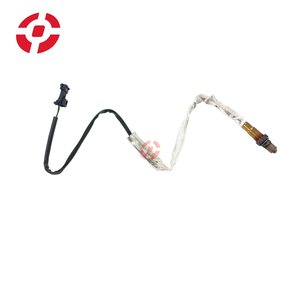
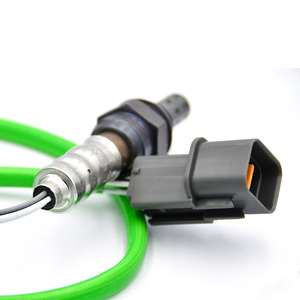
Car O2 Sensor Reliable Automotive Oxygen Sensor High Quality Oxygen Sensor Replacement Kit Wholesale Price for VOLVO OE 30637837
Application: Fleet Telemetry / Emission Control
Get Catalog
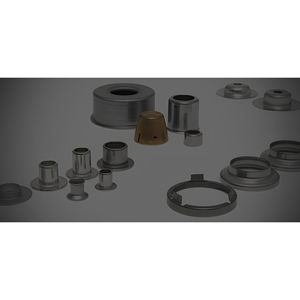
Deep-Drawn Auto Sensors Parts For Automotive Use
Application: Precision Enclosures / Roadside Hardware
Get Catalog
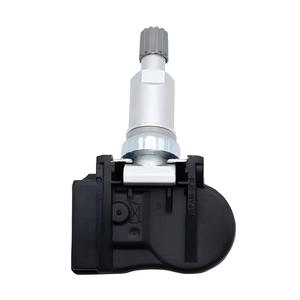
other Tire Pressure Sensor 40700-3AN0B
Application: BRT Bus Safety / Wireless Monitoring
Get Catalog
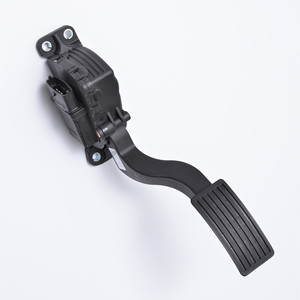
611A Accelerator Pedal Position Sensor Assembly 5V for Car Truck Bus Vehicle Electronic Throttle Control System
Application: Bus Electronic Throttle & Control
Get Catalog
Fast Response High Efficiency Automotive Lambda Sensor Suitable for Commercial Vehicle
Application: Commercial Transit Exhaust Monitoring
Get Catalog
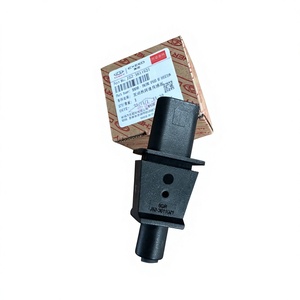
SPEED of ROTATION SENSOR J52-3611021 New Pressure Sensor with 1 Year Warranty for CHERY
Application: Wheel Speed & Dwell Time Calculation
Get Catalog
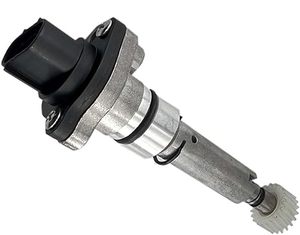
Vehicle Speed Sensor 8318112040 Compatible with Prizm/Geo Prizm/Es300 /Yaris Rav4 Echo Solara Camry Corolla Celica
Application: Pulse Transmission / ETA Prediction
Get Catalog
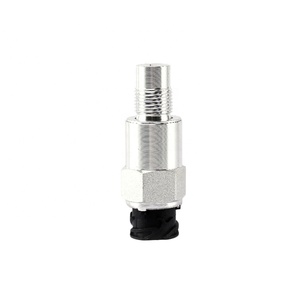
New High Quality Automotive Speed Sensor BQZ023C for Truck (OE 500754709901 Universal Fitment)
Application: Heavy Vehicle Priority (HVP) Telemetry
Get Catalog
28%
Dwell Time Reduction
Achieved on congested metropolitan BRT routes
ISO 9001
Certified Quality
Documented traceability & pre-tested assemblies
< 150ms
NTCIP Latency
Rapid request-to-phase priority switching
24/7
Grid Resilience
Integrated solar-assisted UPS for Load Shedding

1. Executive Overview: Smart Mobility Transformation in South Africa

Rapid urbanization across South Africa's primary economic nodes—including the City of Johannesburg, City of Cape Town, eThekwini Municipality (Durban), and the City of Tshwane (Pretoria)—has placed immense stress on municipal road infrastructure. As public transportation authorities strive to optimize urban mobility, reduce carbon emissions, and enhance commuter satisfaction, the deployment of Transit Signal Priority (TSP) Systems has evolved from a luxury to a critical operational necessity.

Unlike emergency vehicle preemption (EVP) which forcibly interrupts signal cycles, Transit Signal Priority provides an intelligent, rule-based modification of traffic signal timing. By providing preferential treatment to scheduled public transit buses and Bus Rapid Transit (BRT) vehicles, TSP drastically cuts intersection delay without causing catastrophic network breakdown for general traffic. For manufacturers and international exporters targeting the South Africa market, delivering hardware and software that seamlessly integrate with legacy controllers, regional standards, and South Africa's unique grid conditions represents a multi-million rand growth vector.

Key Takeaway for South African Municipal Procurement Teams
Modern TSP integration in South Africa must balance high functional performance with resilience against localized power disruptions (Load Shedding Stages 1–6). Solutions must support decentralized edge-based priority logic alongside NTCIP-compliant central management.

2. Technical Architecture of Advanced Transit Signal Priority Systems

A robust Transit Signal Priority system relies on a tightly integrated hardware and communication stack operating across three primary architectural pillars: Vehicle Detection, Controller Logic Processing, and Central Management Backhaul.

A. Multi-Modal Vehicle Detection & Telemetry

Modern TSP relies on high-precision detection architectures to establish accurate Estimated Time of Arrival (ETA) at the stop bar. Historical deployments utilized physical in-pavement inductive loops. However, leading exporters to South Africa now supply hybrid non-intrusive detection arrays, including:

  • Optical & Infrared Emitters: Line-of-sight high-frequency encoded optical communication mounted on BRT windshields.
  • Sub-GHz RF & Dedicated Short-Range Communication (DSRC / C-V2X): 5.9 GHz V2I (Vehicle-to-Infrastructure) telemetry capable of transmitting real-time transit telemetry including bus ID, occupancy count, and schedule adherence status.
  • Radar & AI Video Analytics: Above-ground radar sensors (such as 77GHz millimeter-wave units) combined with AI license plate recognition (LPR) cameras that validate transit vehicle presence in dedicated lanes.
  • Internal Vehicle Sensors: High-reliability speed and rotation sensors (e.g., electronic pulse generators, 5V throttle position sensors, and wheel-speed monitors) that interface with on-board units (OBU) to transmit exact vehicle dynamics to the signal controller.
B. Signal Controller Priority Algorithms

Once a priority request is received by the intersection's Advanced Transportation Controller (ATC) or NEMA TS-2 cabinet, the traffic controller evaluates the request against safety parameters (such as minimum pedestrian clearance times) and executes one of the following priority routines:

1. Green Extension: If the signal is currently green for the transit approach, the controller extends the green phase up to a pre-configured maximum threshold, allowing the delayed bus to clear the intersection without stopping.

2. Early Red (Truncation): If the transit vehicle approaches during a red phase, non-conflicting phases are safely truncated (respecting yellow change and red clearance intervals) to advance the green phase for the transit corridor.

3. Phase Insertion: A dedicated, non-actuated transit phase (such as a queue-jump signal) is inserted into the normal signal sequence to allow buses to bypass queueing traffic at major arterial slip lanes.

Detection Technology Detection Range Installation Complexity Load Shedding Vulnerability SABS / South Africa Suitability
In-Pavement Inductive Loops Fixed (Stop Bar / Check-In) High (Saw-cutting required) Low (Passive field element) Legacy Standard (High Maintenance)
Sub-GHz RF / V2X Wireless 200m – 800m Adjustable Low (Pole & Vehicle Mounted) Medium (Requires UPS on OBU/RSU) High (Preferred for New BRT)
Above-Ground Radar / Video 50m – 250m Dynamic Medium (Bracket & Cabinet Wiring) Medium (Cabinet UPS dependent) High (Resistant to Road Wear)
GPS / Cellular Cloud TSP Unlimited (Virtual Geofence) Very Low (Software Based) High (Cellular Tower Outages) Emerging (Requires Hybrid Fail-Safe)

3. Localized Application Scenarios Across South African Transport Networks

South Africa represents a dynamic market with varied operational topographies. Importers and municipal specification engineers must tailor TSP deployments to the unique structural realities of specific metro corridors:

City of Cape Town: MyCiTi BRT Corridor

Cape Town's Integrated Rapid Transit (IRT) system demands high-reliability priority along trunk routes (e.g., R27 corridor, Mitchells Plain, Khayelitsha). Deployments prioritize optical and sub-GHz radio priority to overcome coastal salt air corrosion and dense morning commuters.

Johannesburg: Rea Vaya & JRA Arterials

Managed under the Johannesburg Roads Agency (JRA), Rea Vaya corridors require conditional TSP. Priority is granted only if the vehicle is trailing behind its published timetable, preventing schedule bunching along severe bottlenecks like Empire Road and Soweto Highway.

City of Tshwane: A Re Yeng Network

Pretoria's A Re Yeng network utilizes dedicated lane queue-jump phases integrated with NEMA and ATC-compliant cabinets. System architecture must support mixed-traffic intersections near high-density university and government precinct gates.

eThekwini: GO!Durban Integrated Transit

Durban’s C3 corridor demands ruggedized roadside hardware able to withstand high ambient humidity and torrential summer downpours. Above-ground radar vehicle sensors paired with high-performance speed detectors provide reliable presence data.

4. Overcoming Localized Infrastructure Challenges: Load Shedding & Grid Stability

The single greatest operational challenge facing intelligent transportation systems in South Africa is state-sponsored rotational power cuts, known locally as Load Shedding (spanning Stages 1 to 6). During grid collapse or extended power interruptions, non-hardened signal controllers drop offline, causing widespread gridlock and rendering traditional TSP systems non-functional.

Engineering Specification: Solar-Assisted Uninterruptible Power Supply (UPS)

Exporters catering to South Africa must supply traffic control cabinets equipped with ruggedized Lithium Iron Phosphate (LiFePO4) battery back-up systems, pure sine wave inverters (minimum 1000W to 2000W capacity), and automated cold-start MPPT solar controllers. This guarantees that intersection signal heads, priority receivers, and conflict monitors remain fully operational for up to 8–12 hours during continuous grid downtime.

Furthermore, field-deployed hardware must feature non-volatile solid-state memory. When main utility power toggles back on, signal controllers must initiate zero-latency recovery, automatically resynchronizing with central NTCIP traffic management platforms without requiring manual technician dispatch.

5. SABS Compliance, NTCIP Protocols & Manufacturing Baseline

To pass rigorous engineering reviews by consulting firms and municipal tender boards across South Africa (including SANRAL, MTO, and local municipal transport departments), exported TSP systems must adhere to strict international and domestic specifications:

  • SABS / SANS Standards: Compliance with South African Bureau of Standards specifications for electrical equipment, environmental enclosure protection (IP65 / IP66), and traffic control equipment safety.
  • NTCIP 1211 Compliance: System software and controllers must support National Transportation Communications for Intelligent Transportation System Protocol (NTCIP) Object Definitions for Signal Control Priority (SCP), ensuring seamless multi-vendor interoperability.
  • ISO 9001:2015 Certification: Manufacturing facilities must maintain certified quality management systems governing every circuit assembly, wiring harness, and environmental stress screening (ESS) test prior to containerized export.
  • Full Submittal & Wiring Packages: Every export order includes CAD schematics, photometric reports, conflict monitor test cards, and bilingual technical support documentation.
Procurement & Technical FAQ

Frequently Asked Questions for South African Buyers

Technical insights for traffic signal technicians, municipal engineers, and international procurement contractors.

Emergency Vehicle Preemption (EVP) immediately aborts current traffic signal phases to grant an absolute right-of-way green corridor to emergency services (fire, police, ambulance). Transit Signal Priority (TSP), by contrast, is an operational adjustment that works within normal safety constraints. TSP extends or advances green phases for buses without violating pedestrian clear times or causing severe network disruption for surrounding traffic.
Yes. Our TSP field controllers and priority request generators (PRG) support open NTCIP 1202 and NTCIP 1211 protocols, as well as classic contact closure interfaces. This allows seamless integration into NEMA TS-1, NEMA TS-2, Type 170/2070, and modern ATC cabinet assemblies commonly deployed across South African municipalities.
All roadside TSP equipment exported for the South Africa market can be supplied with hardened 24V/48V DC power inputs designed for direct pairing with solar arrays and Lithium Iron Phosphate (LiFePO4) UPS cabinets. In the event of grid drop-out, the system maintains continuous priority processing for up to 12 hours. Non-volatile RAM ensures instant reboot with zero parameter loss when utility power recovers.
Unconditional TSP grants signal priority every time a transit vehicle is detected. Conditional TSP evaluates real-time telemetry—such as schedule adherence (whether the bus is running late), passenger load factors, and headway time—granting priority only when specific efficiency criteria are met. This prevents schedule bunching and preserves arterial capacity.
All export orders are delivered with factory acceptance test (FAT) documentation, ISO 9001 compliance certificates, complete CAD wiring diagrams, and technical submittal packages suitable for consulting engineer review. Hardware is backed by a standard factory warranty, with options for local spare parts staging and remote commissioning support.

Request Complete Transit Priority & Sensor Catalogues

Partner with an established manufacturer and international exporter of intelligent transportation systems. Get full technical specifications, submittal packages, and direct engineering support tailored for the South Africa market.