Intelligent Mobility Systems Since 1974

Next-Generation Transit Signal Priority Systems: Technical Integration & Global Procurement Guide

Empowering transit authorities, municipal agencies, and consulting engineers with NTCIP 1202-compliant, C-V2X ready, and adaptive Transit Signal Priority (TSP) solutions. Engineered and field-tested across North America to optimize BRT and LRT schedule adherence without disrupting corridor synchronization.

Engineering Authority & Information Gain

Unlocking Operational Efficiency Through Dynamic Transit Signal Priority (TSP)

As urban populations grow and transit agencies strive to improve schedule reliability, traditional fixed-time signal plans fall short. Modern Transit Signal Priority Systems (TSP) utilize advanced field detection, NTCIP 1202 protocol messaging, and connected vehicle backhaul (C-V2X / DSRC) to extend green phases or truncate red phases for delayed buses and light rail transit (LRT). Electromega delivers turnkey, ISO 9001-certified TSP architectures engineered for harsh winter conditions and high-density municipal corridors.

25% Transit Delay Reduction

Field-proven reduction in intersection dwell time for Bus Rapid Transit (BRT) and Light Rail Transit (LRT) corridors across North American deployments.

1974 Engineering Legacy

Five decades of specialized experience specifying, wiring, bench-testing, and deploying traffic signal controllers and intelligent transportation systems.

9001 ISO Certification

Quality management systems certified since 2003, providing full component traceability, rigorous bench-testing, and standardized submittal documentation.

100% NTCIP Interoperability

Full compliance with NTCIP 1202 v03 standards, enabling smooth integration with central ATMS, legacy NEMA cabinets, and multi-vendor networks.

System Architecture & Protocol Standards

How Modern Transit Signal Priority Works: Technical Blueprint

Understanding the mechanics of modern TSP is vital for procurement officials, traffic operations engineers, and systems integrators. Unlike Emergency Vehicle Preemption (EVP), which abruptly halts cycle coordination to guarantee immediate right-of-way, TSP operates conditionally to balance transit efficiency against cross-street delay.

1. Passive vs. Active vs. Conditional TSP

Passive TSP: Operates on static signal timing optimization, providing pre-calculated green windows based on historical transit schedules. Highly restrictive and non-adaptive.

Active TSP: Serves priority whenever a transit vehicle triggers a physical upstream sensor (optical, loop, or radar), irrespective of whether the vehicle is on time or late.

Conditional Adaptive TSP (Industry Standard): The vehicle sends an intelligent Priority Request Generator (PRG) message containing schedule adherence, route ID, and passenger occupancy. The traffic controller's Priority Request Server (PRS) evaluates local coordination limits before granting an adjustment.

  • Green Extension
  • Early Green (Red Truncation)
  • Phase Insertion
  • Cycle Recovery

2. NTCIP 1202 & Controller Integration Stack

At the intersection cabinet level, Electromega integrates Advanced Transportation Controllers (ATC 5201) running standardized Linux environment firmware with NEMA TS-2 Type 1/Type 2 or Caltrans 170/2070 cabinet assemblies.

Priority requests follow NTCIP 1202 v03 Clause 7, defining standardized data objects for Priority Requests, Status, and Configuration. This ensures seamless interoperability between vehicle On-Board Units (OBU), Roadside Units (RSU), and the Central Advanced Traffic Management System (ATMS).

  • NTCIP 1202 v03
  • ATC 5201
  • NEMA TS-2 SDLC
  • C-V2X (SAE J2735)

Comparative Matrix: Transit Signal Priority (TSP) vs. Emergency Vehicle Preemption (EVP)

Parameter Transit Signal Priority (TSP) Emergency Vehicle Preemption (EVP)
Primary Objective Improve public transit schedule adherence & throughput Clear intersection safely for emergency first responders
Priority Level Low to Medium (Conditional / Soft Priority) Highest Priority (Mandatory / Hard Override)
Impact on Coordination Preserves background cycle offsets & phase sequences Interrupts coordination; forces immediate phase transition
Pedestrian Clearance Mandatory minimum Walk and Flash Don't Walk served Can truncate pedestrian timing under strict state safety rules
Trigger Criteria Schedule delay (+X mins late), occupancy rate, route ID Continuous vehicle presence (Optical, Siren, Radar, C-V2X)
Communication Protocol NTCIP 1202 v03, GTFS-RT API, C-V2X BSM / SRM NTCIP 1202 Preemption Objects, Direct Phase Harnessing

Product Recommendations & Field Hardware

Recommended TSP Hardware & Connected Mobility Solutions

Electromega partners with tier-one global manufacturers to provide fully integrated, pre-wired, and bench-tested Transit Signal Priority hardware. Explore our core system components:

ATC Traffic Signal Controller for TSP

High-performance Linux ATC 5201 controllers pre-loaded with NTCIP 1202 TSP software routines for real-time priority resolution.

ATC Controllers & Cabinets

Connected Vehicle C-V2X Roadside Unit for TSP

Hardened C-V2X & DSRC Roadside Units (RSU) enabling direct sub-10ms Signal Request Message (SRM) parsing from approaching buses.

C-V2X / DSRC Roadside Units

Radar and Video Vehicle Detection Sensors

Above-ground multi-lane radar and AI video analytics sensors providing accurate advance arrival tracking and cross-street queue detection.

Multi-Modal Detection

Industrial Ethernet Switch and Wireless Routing

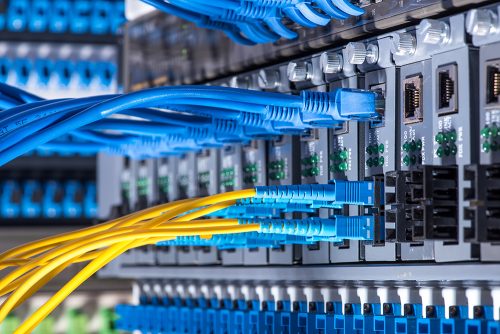
Managed industrial Ethernet switches, hardened cellular gateways, and optical transceivers for secure cloud-to-cabinet telemetry.

ITS Communication Backhaul

Need a Customized TSP Equipment Specification?

Our application engineers create complete submittal packages, cabinet wiring schematics, and NTCIP testing protocols tailored to your municipal tender specs.

Get a Quote

Industry Insights & Market Intelligence

Municipalities and transit agencies worldwide are shifting from standalone hardware setups toward scalable, data-driven, and cloud-integrated mobility management platforms. Key procurement trends shaping the future of Transit Signal Priority include:

1. Cloud-to-Cloud Virtual TSP (GTFS-RT)

Rather than installing physical hardware detectors at every signalized intersection, agencies are adopting cloud-based virtual TSP. Onboard CAD/AVL systems transmit vehicle locations to a cloud server via GTFS-Realtime (GTFS-RT). The cloud server calculates estimated time of arrival (ETA) and sends priority requests directly to the city's ATMS via NTCIP 1206/1202 protocols. This drastically reduces field capital costs while retaining edge security.

2. Passenger Occupancy-Weighted Priority

Next-generation TSP algorithms integrate Automatic Passenger Counter (APC) data. An empty bus running 5 minutes late may be denied priority, whereas a articulated Bus Rapid Transit (BRT) vehicle carrying 120 passengers receives maximum green extension. This shifts municipal KPI evaluation from "vehicle delay reduction" to total "person-delay reduction," drastically improving social ROI.

3. Multi-Modal Corridor Management (MMICM)

Modern tenders demand unified prioritization engines capable of handling Transit Signal Priority (TSP), Emergency Vehicle Preemption (EVP), Freight Signal Priority (FSP), and Pedestrian Safety Flashers simultaneously. Electromega's ATC cabinet solutions enforce strict rule-based hierarchy matrices to ensure life safety without corrupting transit scheduling.

Why Electromega Leads in TSP Integration

Five Decades of Proven Field Performance & ISO 9001 Quality Control

When procuring critical transit infrastructure, system reliability cannot be compromised. Electromega combines deep engineering expertise with rigorous quality assurance processes so your project passes technical review, inspection, and multi-year field operation without friction.

  • ISO 9001 Quality System: Certified since 2003 with full component serial traceability, documented QA sign-offs, and standardized factory acceptance testing (FAT).
  • Factory Cabinet Pre-Wiring: All controllers, conflict monitors (MMU/CMU), harness assemblies, and communication switches are integrated and bench-tested prior to site delivery.
  • Coast-to-Coast Technical Coverage: Operational facilities in Quebec (Head Office), Ontario, and British Columbia providing localized bilingual technical support (English/French).
  • Vendor-Neutral Systems Integration: Authorized representative for 20+ top ITS manufacturers, delivering unbiased, objective solution recommendations based on site geometry and operational budgets.
Get a Quote

Authorized Technology Partners

World-Class Manufacturers behind Electromega TSP Deployments

We work with global leaders in priority control, connected vehicles, and traffic sensing to build reliable, scalable transit priority solutions.

Global Traffic Technologies GTT Opticom TSP Siemens Mobility Traffic Control Mobotrex Signal Cabinets EDI Eberle Design Conflict Monitors Image Sensing Systems Video Radar TransCore RFID Systems Encom Wireless Communications Pelco Products Hardware

Frequently Asked Questions (FAQ)

Transit Signal Priority Systems: Procurement & Engineering FAQ

Answers to the most critical technical and purchasing queries faced by traffic management teams, municipal procurement leaders, and system designers.

Emergency Vehicle Preemption (EVP) is an absolute, high-priority safety command designed for emergency service vehicles (fire trucks, ambulances, police). Upon request, the traffic signal controller immediately terminates non-emergency signal phases, skips pedestrian clearances if permitted by jurisdiction, and forces a green signal to clear the path. EVP disrupts signal coordination and requires several signal cycles to recover.

Transit Signal Priority (TSP), by contrast, is an operational efficiency request for public transit (buses, BRT, LRT). TSP operates conditionally—it only grants minor phase modifications (such as extending an active green phase by 5–15 seconds or shortening an opposing red phase) if pedestrian minimums, phase safety timings, and network coordination offsets can be preserved. TSP seeks to keep public transit on schedule without causing network breakdown for surrounding traffic.

Modern TSP deployments adhere to several standardized engineering protocols:

  • NTCIP 1202 v03: National Transportation Communications for ITS Protocol governing actuated traffic signal controllers, specifically Clause 7 for Priority and Preemption objects.
  • ATC 5201 Standard: Defines open-architecture Advanced Transportation Controllers capable of running modular Linux priority software.
  • SAE J2735 & IEEE 1609: Messages specifications for V2X communications, specifically Dedicated Short Range Communication (DSRC) and Cellular Vehicle-to-Everything (C-V2X) Signal Request Messages (SRM) and Signal Status Messages (SSM).
  • NEMA TS-2 / Caltrans 2070 Specs: Hardware, cabinet architecture, and SDLC bus communication standardizations.

Conditional TSP software evaluates pre-set parameters prior to granting a priority request. If a bus is running on schedule, the system denies priority to preserve cross-street green split time. If priority is granted, the software strictly enforces mandatory safety minimums, including minimum green times, pedestrian Walk, and Flash Don't Walk (FDW) intervals. Furthermore, adaptive cycle recovery algorithms incrementally adjust cycle splits over 1 to 3 cycles post-priority to gently bring the corridor back into perfect synchronization.

Yes. Cloud-to-cloud virtual TSP utilizes vehicle GTFS-Realtime feeds sent to a central server, which communicates directly with the Central ATMS software. The ATMS then sends NTCIP priority requests over IP communications to field cabinets. If field cabinets utilize older NEMA TS-1 or TS-2 Type 2 controllers lacking native IP capability, Electromega provides pre-wired field communications bridge modules or updated ATC controller drop-ins that bridge legacy field wiring with modern NTCIP priority software seamlessly.

Integrated TSP platforms can evaluate passenger load data supplied in real time by transit vehicle APC sensors via the GTFS-RT feed or vehicle gateway. The Priority Request Generator (PRG) assigns a weighted score to the request based on passenger volume (e.g., >50 passengers = High Priority; <10 passengers = Low Priority). This optimizes urban mobility by prioritizing vehicle movements based on total passenger-delay reduction rather than simple vehicle counts.

Every cabinet and ITS assembly built by Electromega undergoes full factory bench-testing under our ISO 9001 certified quality management system. Procurement teams receive a comprehensive submittal package including CAD wiring diagrams, NTCIP compliance checklists, bill-of-materials (BOM) validation, environmental rating certificates (-40°C to +75°C operating range), and formal Factory Acceptance Test (FAT) execution sheets.

Start Your Transit Priority Project

Ready to Modernize Your Corridors with High-ROI TSP Solutions?

Whether you are drafting a municipal RFP, evaluating NTCIP 1202 controller upgrades, or designing a high-capacity Bus Rapid Transit (BRT) corridor, Electromega’s engineering team is ready to assist with technical specifications, budget estimates, and demonstration units.

Get a Quote Contact Engineering Team

ISO 9001 Certified Quality · Bilingual Support (English/French) · Toll-Free: 1-800-363-7481